A Study in Urban Solitude: Decoding Hopper’s “The City”
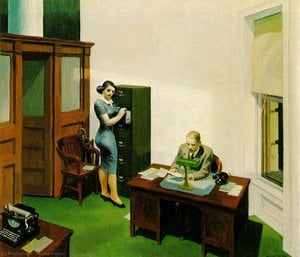
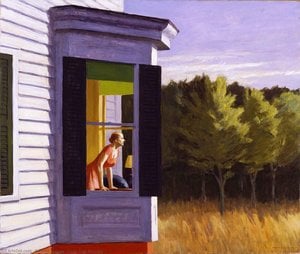
Edward Hopper's "The City," painted in 1927, stands as a cornerstone of American Modernism and a masterful distillation of the anxieties inherent within the burgeoning metropolis. More than just a depiction of a street scene—though undeniably striking in its architectural precision—the painting embodies a profound exploration of human isolation amidst the bustling energy of urban life. Hopper’s New Realism style eschews romantic idealism, opting instead for unflinching observation and capturing the quiet desperation felt by individuals navigating the impersonal landscape of the 1920s American cityscape.
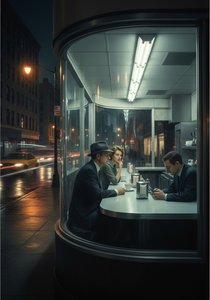
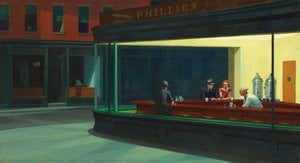
- Subject Matter: The canvas portrays a darkened street corner dominated by towering buildings—a familiar motif in Hopper’s oeuvre—illuminated by a single, diffused lamp casting long shadows across the pavement.
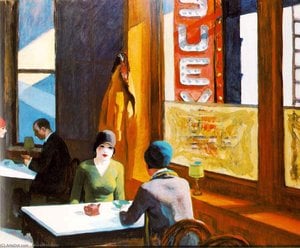
- Style & Technique: Hopper employs geometric simplification and muted color palettes characteristic of New Realism. Precise lines delineate architectural forms, emphasizing their solidity and detachment from human presence. The subdued tonal range contributes to an atmosphere of melancholy and introspection.
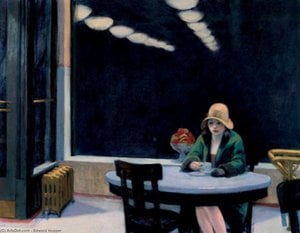
The painting’s historical context is crucial to understanding its emotional resonance. Emerging in the wake of World War I and fueled by rapid industrialization and urbanization, America wrestled with questions of identity and purpose. Hopper's work reflects this societal unease, portraying figures seemingly adrift within a larger framework—a woman seated alone at a table, bathed in lamplight, gazing out into the darkness; a man walking past windows, his back turned to the viewer. These postures convey a palpable sense of disconnection and unspoken longing.
Symbolism: The lone bird perched atop one building serves as a poignant emblem of vulnerability and yearning for connection—a counterpoint to the impassive facades surrounding it. Similarly, the fire hydrant symbolizes practicality amidst emotional emptiness, grounding the scene in everyday reality while simultaneously highlighting its lack of warmth or companionship. Hopper deliberately avoids grand narratives, focusing instead on capturing fleeting moments of human experience.
- Emotional Impact: “The City” evokes a powerful feeling of melancholy and contemplation. It’s not merely beautiful; it compels viewers to confront the complexities of modern existence—the solitude inherent in urban environments and the difficulty of forging meaningful relationships.
- Interior Design Considerations: Reproductions of "The City" can inject a sense of understated elegance into interior spaces, particularly hallways or entryways. Its muted tones and geometric composition create a calming yet intellectually stimulating backdrop.
Ultimately, Hopper’s “The City” transcends its visual representation to become an enduring meditation on the human condition—a testament to his ability to distill profound psychological truths into deceptively simple compositions. It remains a captivating piece of art that continues to resonate with audiences today, prompting reflection on themes of isolation, observation, and the elusive pursuit of connection.



 Tabloyu Sipariş Et
 Paylaş
 Paylaş
 Detaylar

 İndir
İndir
 Benzerlerini gör
 X-Işını
 Slayt Gösterisi
 Tümünü Gör






































 Cam seçeneği yalnızca 110 cm altındaki boyutlar için mevcuttur.