A Portrait of Melancholy Under Canopy
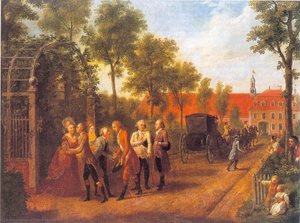
Edvard Munch’s “untitled (619)” stands as a haunting testament to the artist's profound engagement with themes of isolation, vulnerability, and the pervasive influence of psychological distress—a hallmark of Expressionism. Painted sometime between 1893 and 1900, this canvas depicts two figures positioned beneath a solitary tree, their relationship underscored by the presence of a basket nestled between them. The composition immediately draws the eye to the central pair, rendered with meticulous detail despite the subdued palette—primarily muted browns and greens—that speaks volumes about Munch’s artistic intention.
- Subject Matter: The painting portrays a man and woman engaged in quiet contemplation beneath a tree. Their posture conveys a sense of stillness juxtaposed with unspoken emotion, hinting at a connection burdened by melancholy.
- Style & Technique: Munch’s masterful brushwork—characterized by swirling lines and textured surfaces—captures the turbulent inner state of mind he sought to convey. The artist employed oil paint on canvas, utilizing layering techniques to build up depth and luminosity while simultaneously emphasizing textural irregularities that mirror the anxieties inherent in the scene.
- Historical Context: “untitled (619)” emerged during Munch’s formative years as an Expressionist, aligning with a broader artistic movement concerned with portraying subjective experience rather than objective reality. The painting reflects the intellectual currents of its time—particularly Nietzschean philosophy—which questioned traditional moral values and championed individualism against societal constraints.
Symbolism permeates every element of the artwork. The tree itself serves as a potent emblem of resilience amidst adversity, yet its drooping branches suggest vulnerability and decay – mirroring the emotional fragility of the figures depicted. Notably, the inclusion of birds—one perched high in the upper right corner and another positioned centrally—adds to the painting’s symbolic richness. Birds often represent freedom and aspiration, but their placement within this scene subtly underscores a yearning for transcendence amidst despair.
Furthermore, the presence of a knife resting on the ground between the figures introduces an unsettling element of potential violence or disruption. It serves as a visual counterpoint to the tranquility suggested by the tree and the couple’s stance, hinting at unresolved conflicts and anxieties lurking beneath the surface. Munch's deliberate use of color—particularly the dominant browns and greens—contributes significantly to the painting’s emotional impact, fostering a mood of quiet sadness and introspection.
Ultimately, “untitled (619)” transcends mere representation; it embodies Munch’s deeply personal exploration of human emotion. It invites viewers to contemplate themes of loneliness, mortality, and the inescapable burden of psychological experience—themes that continue to resonate powerfully with audiences today. This artwork exemplifies Munch's ability to transform inner turmoil into visual splendor, cementing his legacy as one of the most influential artists of the late nineteenth century.



 Tabloyu Sipariş Et
 Paylaş
 Paylaş
 Detaylar

 İndir
İndir
 Benzerlerini gör
 X-Işını
 Slayt Gösterisi
 Tümünü Gör






































 Cam seçeneği yalnızca 110 cm altındaki boyutlar için mevcuttur.