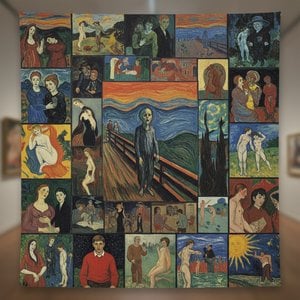
A Portrait of Discord: Unpacking Edvard Munch’s “Jealousy”
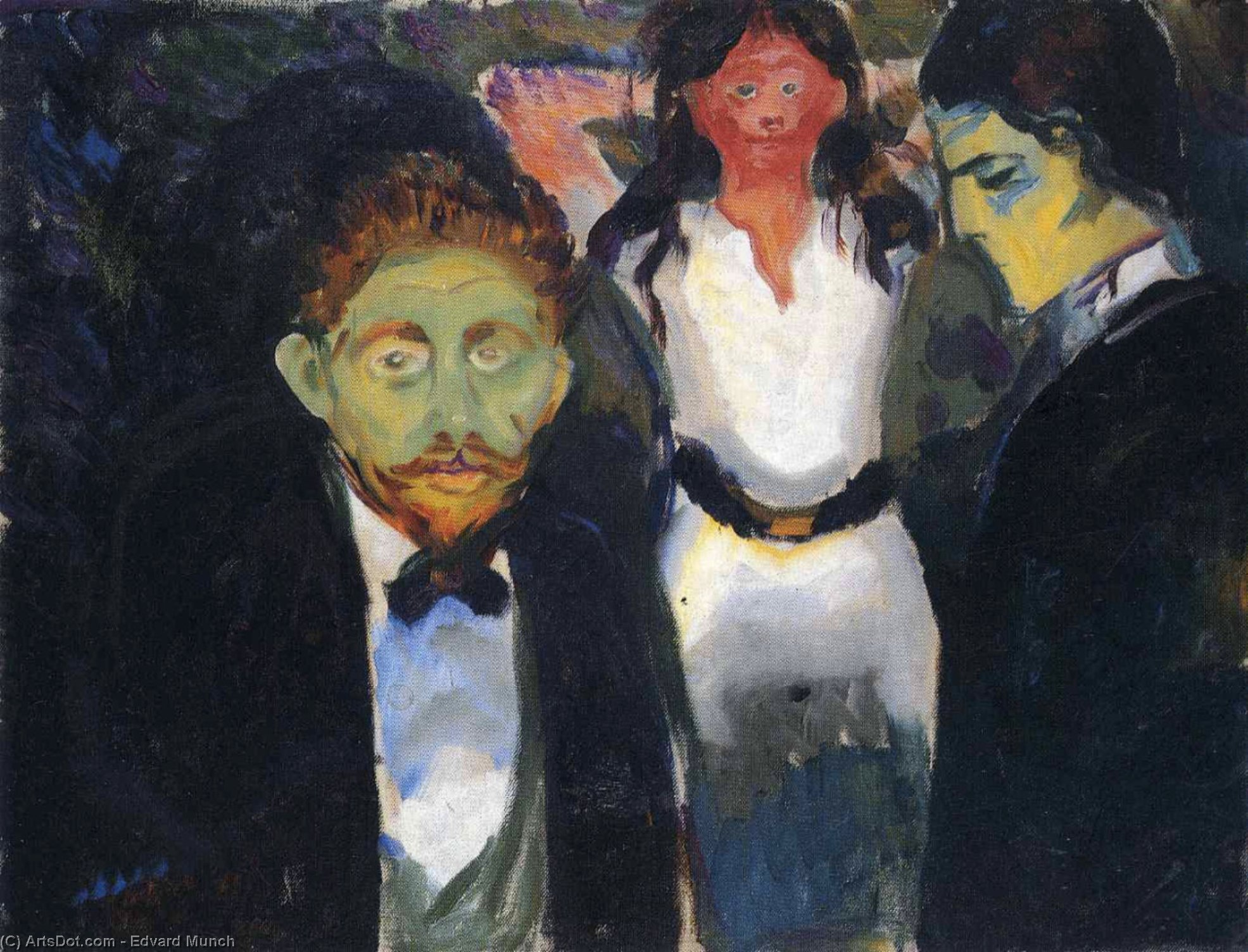
Edvard Munch's "Jealousy," painted in 1907, isn’t merely a depiction of three figures; it’s a visceral embodiment of psychological distress. The painting immediately arrests the viewer with its startling color palette – a jarring clash of greens and reds that speaks to an underlying turmoil far deeper than simple envy. Munch, already a master of conveying inner experience through his art, pushes this exploration into a realm of raw emotion, creating a work that continues to resonate powerfully over a century later. The painting’s genesis lies within Munch's intensely personal life, shaped by profound loss and a lifelong struggle with mental health; these experiences are not simply biographical details but the very foundation upon which he built his artistic language.
Subject and Composition: Intimacy and Confrontation
The composition itself is remarkably intimate. The three figures – a man and two women – are positioned in close proximity, almost crowding one another. This closeness isn’t comforting; rather, it intensifies the sense of unease. Their faces, rendered with an unsettling vibrancy, dominate the canvas. The man on the left, his skin a sickly green, appears to be radiating a palpable sense of resentment. His bow tie, a small detail that adds to the overall strangeness, seems almost deliberately placed as a symbol of artificial composure masking inner turmoil. The woman in the center, her face flushed crimson, embodies passionate fury, while the second man mirrors her intensity with his own scarlet complexion. The direct gaze exchanged between them suggests a confrontation—a silent battle waged within the confines of their shared space.
Symbolism and Color Theory: A Language of Emotion
Munch’s masterful use of color is central to understanding “Jealousy.” The dominant greens, often associated with envy, sickness, and decay, are juxtaposed against the fiery reds of rage and passion. This chromatic dissonance isn't accidental; it’s a deliberate attempt to visually represent the conflicting emotions at play. Munch himself described his use of color as an extension of feeling, stating that he “painted what I felt, not what I saw.” The black background serves to heighten the intensity of the colors, isolating the figures and amplifying their emotional impact. The green faces can also be interpreted symbolically – perhaps representing a corruption of innocence or a loss of control. It’s a potent visual metaphor for the destructive power of jealousy.
Contextualizing the Work: Munch's Exploration of Modern Anxiety
"Jealousy" was created during a period of significant social and psychological upheaval in Europe. The late 19th and early 20th centuries witnessed rapid industrialization, urbanization, and a growing sense of alienation – themes that deeply resonated with Munch’s artistic vision. His work reflects the anxieties of a modernizing world, grappling with questions of identity, mortality, and the fragility of human relationships. Furthermore, Munch's own personal struggles—his mother's death from tuberculosis, his sister’s subsequent illness, and his brother’s descent into madness – undoubtedly informed this exploration of emotional distress. “Jealousy” stands as a powerful testament to Munch’s ability to translate these deeply felt experiences into a universally understood language of psychological torment.
WahooArt offers meticulously crafted hand-painted reproductions of Edvard Munch's "Jealousy," allowing you to bring this emotionally charged masterpiece into your home or office. Our artists replicate the painting’s distinctive style and vibrant colors with exceptional detail, ensuring a faithful representation of Munch’s profound vision. Explore our collection today and experience the raw intensity of this iconic work firsthand.



 Tabloyu Sipariş Et
 Paylaş
 Paylaş
 Detaylar

 İndir
İndir
 Benzerlerini gör
 X-Işını
 Slayt Gösterisi

 Tümünü Gör






































 Cam seçeneği yalnızca 110 cm altındaki boyutlar için mevcuttur.