A Moment Frozen: The Essence of Impressionism
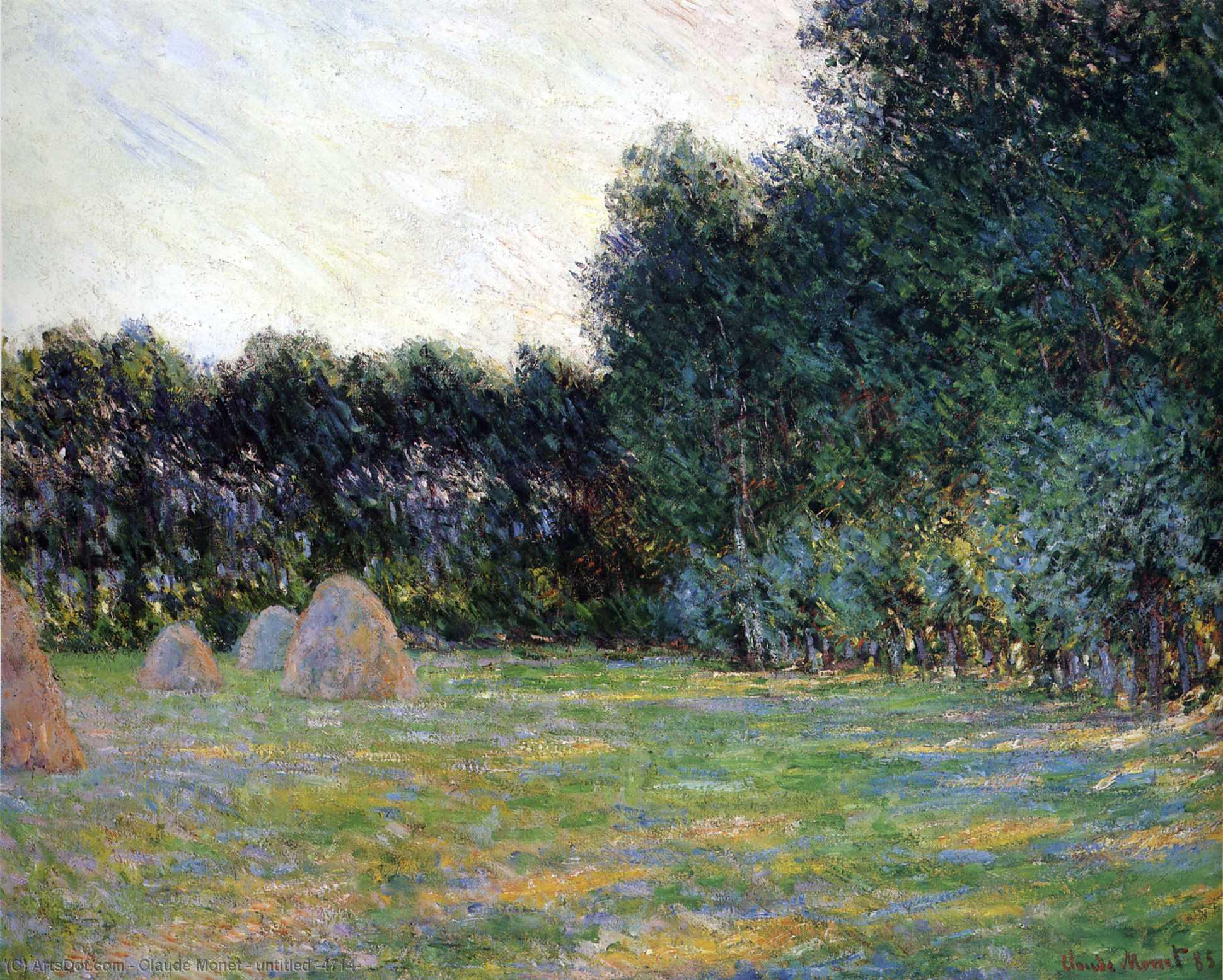
Claude Monet's “Untitled (4714),” a seemingly simple depiction of a grassy field punctuated by weathered rocks and the suggestion of hay bales, is far more than a mere landscape. It’s a distilled essence of the Impressionist philosophy – a fervent attempt to capture not just what the eye sees, but the fleeting, subjective experience of light and atmosphere. Painted likely around 1870-1876, during a period when Monet was deeply immersed in plein air painting, this work embodies his revolutionary approach to art, moving away from academic realism towards a celebration of sensory perception.
The scene unfolds with remarkable immediacy. The sky, rendered in soft, billowing clouds, dominates the upper portion of the canvas, hinting at an approaching storm or simply the diffused light of a late afternoon. These clouds aren’t sharply defined; instead, they dissolve into hazy washes of blue and grey, creating a sense of atmospheric depth and movement. Below, the field stretches out towards the horizon, its verdant grasses painted with short, broken brushstrokes – a technique crucial to Monet's Impressionistic style. These strokes don’t aim for photographic accuracy; rather, they capture the *impression* of color and texture, allowing the viewer’s eye to blend them together.
The Language of Light: Technique and Color
Monet’s mastery lies in his manipulation of light. He employs a technique known as “optical mixing,” where he places small strokes of pure color side-by-side, allowing the viewer's eye to blend them optically rather than physically mixing them on the palette. This creates a vibrant, luminous effect – particularly noticeable in the highlights reflecting off the rocks and the distant trees. The subtle variations in tone and hue suggest the shifting qualities of light throughout the day, a key element of Monet’s artistic exploration.
The color palette is restrained yet remarkably evocative. Dominant greens and browns ground the composition, while touches of ochre and pale blue introduce warmth and depth. The hay bales, strategically placed in the foreground, serve as anchors for the eye, drawing us into the scene and providing a sense of scale. Notice how Monet doesn’t attempt to render the colors realistically; instead, he uses them expressively, prioritizing their visual impact over strict adherence to nature.
A Pastoral Vision: Symbolism and Context
This landscape isn't simply a depiction of rural France; it’s imbued with a sense of tranquility and rustic beauty. The scattered rocks suggest the enduring presence of nature, while the hay bales evoke images of harvest and abundance. Monet was deeply fascinated by the changing seasons and the rhythms of rural life – themes that frequently appeared in his work during this period.
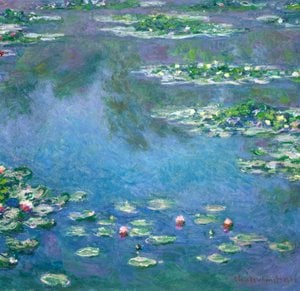
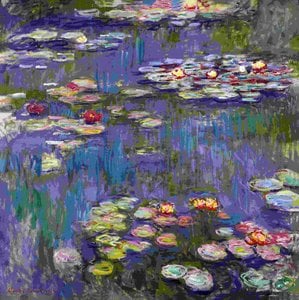
It’s important to consider Monet's artistic journey at the time. Following his pivotal encounter with Eugène Boudin, who championed *en plein air* painting, Monet was actively experimenting with capturing fleeting moments and atmospheric effects. This piece reflects that experimentation – a step away from more formal subjects towards a celebration of the natural world as perceived by the artist’s eye. The work aligns with his broader exploration of light and color during this period, foreshadowing the development of his iconic Water Lilies series.
Bringing Monet to Your Space: A High-Quality Reproduction
WahooArt offers meticulously crafted hand-painted reproductions of Claude Monet’s “Untitled (4714),” allowing you to experience the beauty and emotional resonance of this masterpiece in your own home. Our skilled artists replicate Monet's delicate brushwork, vibrant colors, and atmospheric effects with exceptional precision. Whether you are an art enthusiast, a collector, or simply seeking to add a touch of Impressionistic charm to your interior design, our reproductions provide an authentic and captivating representation of this iconic work.



 Baskıyı satın al
 Paylaş
 Paylaş
 Detaylar

 İndir
İndir
 Benzerlerini gör
 X-Işını
 Slayt Gösterisi

 Tümünü Gör






































 Cam seçeneği yalnızca 110 cm altındaki boyutlar için mevcuttur.