A Collision of Worlds: Deconstructing Warhol’s Untitled Composition
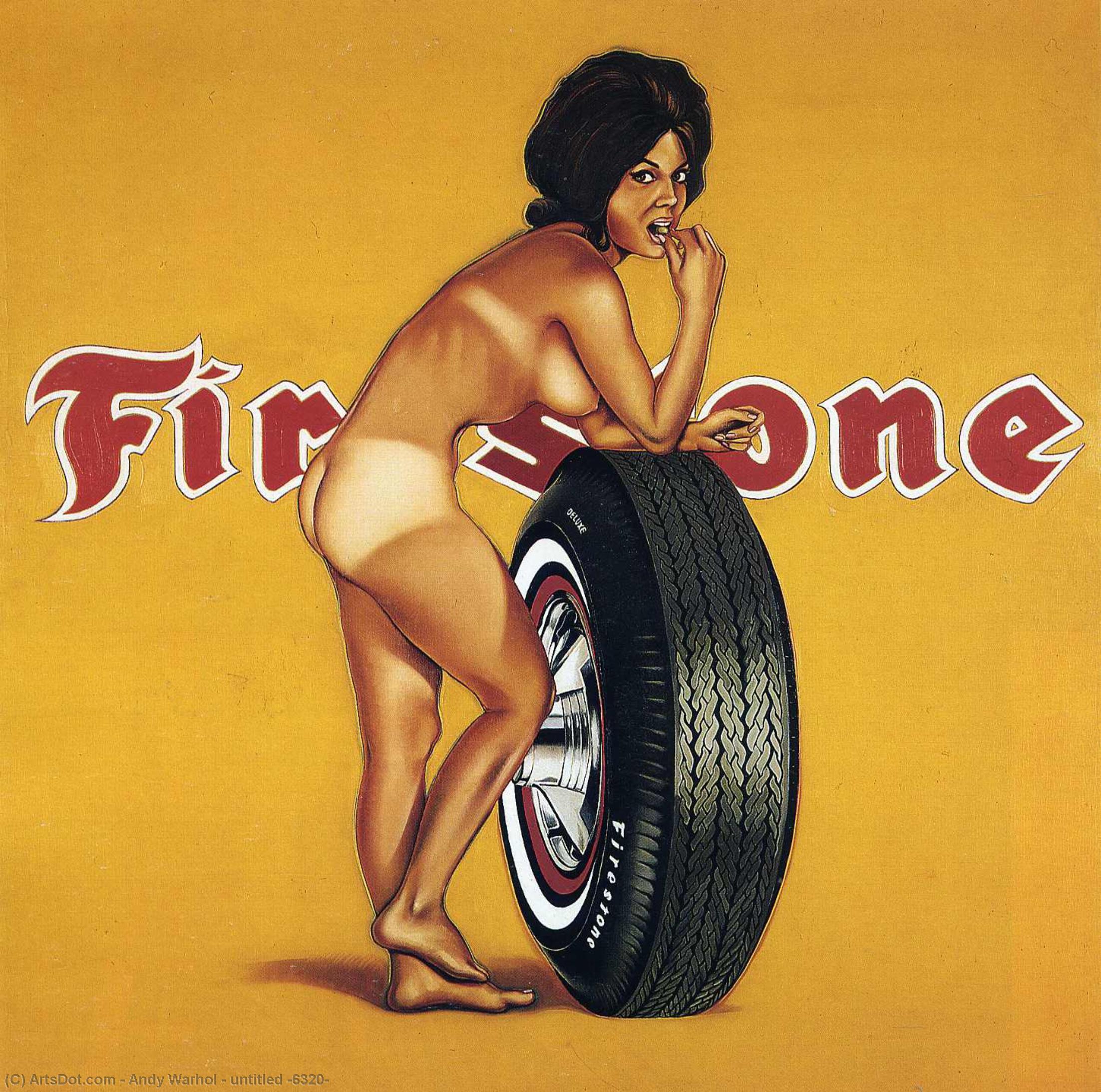
Andy Warhol's “Untitled (6320)” is a striking enigma, a work that immediately arrests the viewer with its stark contrast and unsettling juxtaposition. A nude woman, poised in a moment of quiet contemplation or perhaps veiled anxiety – her hand delicately pressed to her lips – shares space with an industrial tire. Rendered entirely in black and white, the painting eschews the vibrant color palettes Warhol became famous for, instead opting for a timeless aesthetic that feels both classic and profoundly modern. This isn’t merely a depiction of a figure alongside an object; it's a deliberate collision of worlds – the organic vulnerability of the human form against the cold, mechanical precision of industrial design.
The Echoes of Pop and Beyond
To understand “Untitled (6320)” requires acknowledging Warhol’s pivotal role in the Pop Art movement. Emerging in the 1950s as a reaction against Abstract Expressionism's perceived elitism, Pop Art embraced popular culture – advertising, comic books, celebrity imagery – as legitimate subject matter for fine art. While this particular work doesn’t immediately scream “Campbell’s Soup Cans” or “Marilyn Monroe,” it embodies the core tenets of Warhol’s artistic philosophy: a fascination with mass production, an exploration of consumerism, and a blurring of boundaries between high and low culture. The tire, a ubiquitous symbol of modern life and industrial progress, is elevated to the same visual plane as the human figure, prompting questions about our relationship with technology and its impact on our bodies and identities.
Technique and Emotional Resonance
The painting’s monochrome palette isn't simply an aesthetic choice; it amplifies the emotional weight of the scene. The absence of color forces us to focus on form, texture, and composition. Warhol’s technique, likely employing silkscreen printing – a method he famously perfected – lends a certain flatness and reproducibility to the image, mirroring the mass-produced nature of the objects depicted. This deliberate lack of painterly flourish contributes to the work's detached, almost clinical feel. The woman’s pose is particularly compelling. Her averted gaze and hand gesture suggest a sense of introspection or perhaps even apprehension. Is she reacting *to* the tire? Or is it merely a silent witness to her internal state? This ambiguity invites viewers to project their own interpretations onto the scene, creating a deeply personal connection with the artwork.
A Legacy of Provocation
Warhol wasn’t interested in providing answers; he was interested in asking questions. “Untitled (6320)” is a testament to his ability to provoke thought and challenge conventional notions of beauty, art, and culture. It's a work that continues to resonate today, as we grapple with the ever-increasing influence of technology and its impact on our lives. Owning a reproduction of this piece isn’t just acquiring an image; it’s inviting a conversation starter into your space – a subtle yet powerful reminder of Warhol’s enduring legacy and his ability to capture the complexities of the modern human condition.



 Tabloyu Sipariş Et
 Paylaş
 Paylaş
 Detaylar

 İndir
İndir
 Benzerlerini gör
 X-Işını
 Slayt Gösterisi

 Tümünü Gör






































 Cam seçeneği yalnızca 110 cm altındaki boyutlar için mevcuttur.