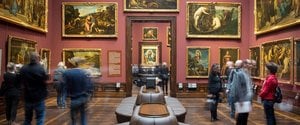
Pietro Rotari, 1707 – 1762

Pietro Rotari Sanatçısının En Ünlü 53 Tablosu

Pietro Rotari ismini duyuran tablo Girl with a book eseridir. Alexander the Great and Roxane (1756) ve Portrait of Maria Josepha of Austria (1755) ise koleksiyonerlerin ve müze ziyaretçilerinin kalbinde onları takip ediyor. Katalogumuzdaki Pietro Rotari imzalı 56 eser arasından en çok beğenilen bu 53 eser; yapıldığı tarih, sergilendiği müze ve onu eşsiz kılan özellikleriyle birlikte sunulmuştur.

Her bir eser için yapılan aramalar, ziyaretler ve siparişlerin birleşimiyle oluşturulan popülerlik puanımıza göre sıralanmıştır. Ekim 2026 tarihinde güncellenmiştir. Bu sayfadaki her bir şaheser, seçtiğiniz boyutta müze kalitesinde, el yapımı yağlı boya reprodüksiyon veya sanat baskısı olarak sipariş edilebilir.

Pietro Rotari portresi
Pietro Rotari · 1707 – 1762
Doğum · ölüm
1707 – 1762, Verona
Akım
Baroque
Kataloğumuzdaki eserler
56
En ünlüları
Girl with a book
En çok eser şu müzede
Staatliche Kunstsammlungen Dresden

Pietro Rotari: on başyapıt

Girl with a book tarafından Pietro Rotari
1

Girl with a book

Oil On Canvas

The painting titled Girl with a book is a work by the artist Pietro Rotari. This portrait captures a quiet moment of study, rendered in oil on canvas. It belongs to the period of the artist's career spanning c. 1756 - 1762. The subject holds a book, a singular object that anchors the composition and defines the sitter's immediate purpose.

Hand-painted oil reproduction from $181 27 × 37 cm
Alexander the Great and Roxane (1756) tarafından Pietro Rotari
2

Alexander the Great and Roxane

1756 · Oil On Canvas · Hermitaj Müzesi, Saint Petersburg

Pietro Antonio Rotari’s “Alexander the Great and Roxane,” completed in 1756, stands as a testament to Baroque grandeur fused with meticulous realism—a captivating portrayal of one of history's most celebrated military figures and his enigmatic consort. The painting resides within the esteemed collections of the Hermitage Museum in Saint Petersburg, Russia, where it continues to inspire admiration for its masterful execution and profound symbolic resonance.

Hand-painted oil reproduction from $181 29 × 35 cm Same size as the original $1619 202 × 243 cm Order at original size →
Portrait of Maria Josepha of Austria (1755) tarafından Pietro Rotari
3

Portrait of Maria Josepha of Austria

1755 · Oil On Canvas · Varşova Ulusal Müzesi, Varşova

In this 1755 oil portrait, we encounter Maria Josepha of Austria, the wife of King Augustus III of Poland. The sitter is presented in a three-quarter length view, her posture conveying a quiet, steady authority. There is a certain stillness to her presence, a composure that suggests the weight of her station without the need for overt drama. The light, descending from the upper left, gently sculpts the contours of…

Hand-painted oil reproduction from $206 27 × 37 cm Same size as the original $384 72 × 95 cm Order at original size →
Sleeping boy (1734) tarafından Pietro Rotari
4

Sleeping boy

1734 · Oil · Staatliche Kunstsammlungen Dresden, Dresden

A young boy rests in the center of the frame, his head tilted in the heavy stillness of sleep. The composition is tight, focusing on the soft curve of his neck and the gentle rise of his shoulders. He wears a vest of muted brown over a creamy white shirt, the fabric rendered with a smooth, painterly touch. His hair falls in wavy, dark locks across his forehead, catching a…

Hand-painted oil reproduction from $181 28 × 35 cm Same size as the original $198 35 × 44 cm Order at original size →
Portrait of Jerzy August Mniszech (1715–1778), his own coat of arms (1746) tarafından Pietro Rotari
5

Portrait of Jerzy August Mniszech (1715–1778), his own coat of arms

1746 · Oil On Canvas · Varşova Ulusal Müzesi, Varşova

A single gaze meets the observer from the year 1746. Jerzy August Mniszech sits in a three-quarter pose, his body angled toward the left while his eyes remain fixed upon us. He is a man of the mid-18th century, draped in a heavy red coat that holds the light in its deep folds. A blue sash cuts across his torso, a cool stripe of color against the warmth of his…

Hand-painted oil reproduction from $181 28 × 35 cm Same size as the original $431 86 × 108 cm Order at original size →
Young boy (1734) tarafından Pietro Rotari
6

Young boy

1734 · Oil · Staatliche Kunstsammlungen Dresden, Dresden

A young boy sits in a space of profound stillness, his presence filling the frame with a quiet, heavy introspection. He is caught in a moment of deep thought, his chin resting near his hand as he gazes out with eyes that seem to hold a weight beyond his years. The light, soft and directional, spills from the upper left, brushing against the gentle contours of his face and the…

Hand-painted oil reproduction from $181 28 × 36 cm Same size as the original $198 36 × 44 cm Order at original size →
A Sleeping Girl (1760) tarafından Pietro Rotari
8

A Sleeping Girl

1760 · Oil On Canvas · National Gallery of Art, Washington

A single moment of stillness defines this portrait. A young woman rests in a three-quarter profile, her eyes closed against the world. Her skin possesses a porcelain quality, luminous and pale under a soft light that descends from the upper left. This light traces the gentle curve of her neck and the soft folds of her white linen collar. A red cap sits upon her head, its plush fur trim…

Hand-painted oil reproduction from $181 28 × 36 cm Same size as the original $200 35 × 45 cm Order at original size →
Queen Maria Josepha, Wife of King Augustus III of Poland (1755) tarafından Pietro Rotari
9

Queen Maria Josepha, Wife of King Augustus III of Poland

1755 · Oil On Canvas · Gemäldegalerie Alte Meister, Dresden

In the grand tapestry of eighteenth-century portraiture, few works capture the intersection of sovereign power and delicate femininity as exquisitely as Pietro Antonio Rotari’s 1755 masterpiece, Queen Maria Josepha, Wife of King Augustus III of Poland. This commanding portrait is far more than a mere likeness; it is a profound exploration of Baroque grandeur, designed to evoke an immediate sense of awe in any viewer. As the eye meets the…

Hand-painted oil reproduction from $181 28 × 35 cm Same size as the original $433 86 × 108 cm Order at original size →
Girl Looking through a Telescope (1757) tarafından Pietro Rotari
10

Girl Looking through a Telescope

1757 · Oil · Nationalmuseum, Stockholm

The painting titled Girl Looking through a Telescope is a work by the Italian artist Pietro Rotari. Created in the late 1750s, this portrait captures a singular moment of observation. The work was commissioned by Queen Lovisa Ulrika, who possessed a known interest in the study of natural history and scientific instruments.

Hand-painted oil reproduction from $181 28 × 36 cm Same size as the original $199 35 × 45 cm Order at original size →

11 ile 53 arası daha fazla Pietro Rotari şaheseri

Pietro Rotari'in dönemlere göre tabloları

Pietro Rotari tarafından en çok resmedilen konular

Bu şaheserler arasında en sık rastlanan dört konu ve her birinin en seçkin örneği.

Pietro Rotari'in tabloları nerede görülebilir

Bu sayfadaki tabloların çoğuna ev sahipliği yapan 8 müze.

Müze Şehir Pietro Rotari Eserleri Bu listedeki tablolar
Staatliche Kunstsammlungen Dresden, DresdenStaatliche Kunstsammlungen Dresden Dresden 11 Sleeping boy, Young boy, Old woman with fur hat
Bavarian State Painting Collections, MünihBavarian State Painting Collections Münih 5 Electoral Prince Friedrich Christian of Saxony, Portrait of a Lady, Crown Princess Maria Antonia of Sachsen
Varşova Ulusal Müzesi, VarşovaVarşova Ulusal Müzesi Varşova 3 Portrait of Maria Josepha of Austria, Portrait of Jerzy August Mniszech (1715–1778), his own coat of arms, Portrait of a maid.
Hermitaj Müzesi, Saint PetersburgHermitaj Müzesi Saint Petersburg 2 Alexander the Great and Roxane, Portrait of Countess A.M. Vorontsova
National Gallery of Art, WashingtonNational Gallery of Art Washington 2 A Sleeping Girl, A Girl with a Flower in Her Hair
Gemäldegalerie Alte Meister, DresdenGemäldegalerie Alte Meister Dresden 2 Queen Maria Josepha, Wife of King Augustus III of Poland, King Augustus III of Poland
Nationalmuseum, StockholmNationalmuseum Stockholm 2 Girl Looking through a Telescope, Girl with Needle-work
El Paso Museum of Art, El PasoEl Paso Museum of Art El Paso 2 A Girl in a Blue Dress, A Girl in a Red Dress

Pietro Rotari, on yıllara göre: her on yılın tanımlayıcı tablosu

  1. 1730s
    Sleeping boy (1734) tarafından Pietro Rotari
    53 içinde #4

    Sleeping boy

    Yaş 23 – 32 · Staatliche Kunstsammlungen Dresden

    A young boy rests in the center of the frame, his head tilted in the heavy stillness of sleep. The composition is tight, focusing on the soft curve…

  2. 1740s
  3. 1750s
    Alexander the Great and Roxane (1756) tarafından Pietro Rotari
    53 içinden 2.

    Alexander the Great and Roxane

    Yaş 43 – 52 · Hermitaj Müzesi

    Pietro Antonio Rotari’s “Alexander the Great and Roxane,” completed in 1756, stands as a testament to Baroque grandeur fused with meticulous realism—a captivating portrayal of one of history's…

  4. 1760s
    A Sleeping Girl (1760) tarafından Pietro Rotari
    53 içinde #8

    A Sleeping Girl

    Yaş 53 – 55 · National Gallery of Art

    A single moment of stillness defines this portrait. A young woman rests in a three-quarter profile, her eyes closed against the world. Her skin possesses a porcelain quality,…

Pietro Rotari'in şaheserleri: soru ve cevaplar

Pietro Rotari en çok hangi tablosuyla tanınır?Yanıtı göster

Girl with a book. Ardından Alexander the Great and Roxane (1756) ve Portrait of Maria Josepha of Austria (1755) gelir.

Pietro Rotari sanatçısının en iyi on tablosu hangileridir?Yanıtı göster

Girl with a book, Alexander the Great and Roxane, Portrait of Maria Josepha of Austria, Sleeping boy, Portrait of Jerzy August Mniszech (1715–1778), his own coat of arms, Young boy, Old woman with fur hat, A Sleeping Girl, Queen Maria Josepha, Wife of King Augustus III of Poland ve Girl Looking through a Telescope. Yukarıdaki sıralama, her birinin yapıldığı yılı ve bulunduğu müzeyi göstermektedir.

Pietro Rotari kaç eser yaptı?Yanıtı göster

Kataloğumuz, Pietro Rotari tarafından 1734 ile 1762 tarihleri arasında üretilen 56 eseri listelemektedir.

Pietro Rotari'in şaheserlerini hangi müzelerde görebilirim?Yanıtı göster

Çoğu Staatliche Kunstsammlungen Dresden (Dresden), Bavarian State Painting Collections (Münih) ve Varşova Ulusal Müzesi (Varşova) bünyesinde bulunmaktadır. Yukarıdaki tablo müzeleri tek tek listelemektedir.

Pietro Rotari şaheserlerini ne zaman yaptı?Yanıtı göster

1750s döneminde: Bu sayfadaki 53 eserin 19 tanesi o döneme aittir, bunlar arasında Alexander the Great and Roxane bulunmaktadır.

Pietro Rotari isimli sanatçının ilk ve son ünlü tabloları nelerdir?Yanıtı göster

Bu sayfadaki en eski eser Sleeping boy (1734), en yeni eser ise A young Woman, Pietro Rotari, 1756 - 1762 (1762)'dir.

Pietro Rotari'in en sevdiği konular nelerdi?Yanıtı göster

Bu sayfadaki 53 eser arasında Woman (11), Portrait (6) ve Portraits (6) yer almaktadır.

Pietro Rotari hangi tekniği tercih ediyordu?Yanıtı göster

Oil On Canvas: Bu sayfadaki 53 eserin 16 tanesi.

Pietro Rotari hangi sanat akımına dahil?Yanıtı göster

bu sayfadaki tabloların da gösterdiği gibi Baroque,

Pietro Rotari tarafından yapılmış hangi şaheserler Staatliche Kunstsammlungen Dresden bünyesinde sergilenmektedir?Yanıtı göster

Sleeping boy, Young boy ve Old woman with fur hat, Staatliche Kunstsammlungen Dresden, Dresden bünyesinde bulunan bu sayfadaki 11 eser arasında yer almaktadır.

Pietro Rotari imzalı bir başyapıtın reprodüksiyonuna sahip olabilir miyim?Yanıtı göster

Evet. Bu sayfadaki her tablo, tablonun kendi sayfasından seçtiğiniz boyutta, müze kalitesinde, el yapımı bir yağlı boya reprodüksiyon veya bir sanat baskısı olarak sipariş edilebilir.

Pietro Rotari'in hayatı

İlk Yıllar ve Sanatsal Oluşum

Pietro Antonio Rotari, 1707 yılında, Barok geleneğin derin izlerini taşıyan ancak İtalyan resminin evrilen akımlarına açık bir şehir olan Verona'nın canlı sanat atmosferinde dünyaya geldi. Antonio Balestra yönetimindeki ilk eğitimi, ona klasik kompozisyon ve teknik konusunda sağlam bir temel kazandırdı; bu temeller, üzerine kendine özgü tarzını inşa edeceği yapı taşlarıydı. Bu biçimlendirici dönem, Rotari'ye titiz detaylara karşı bir takdir ve forma yönelik rafine bir yaklaşım aşıladı ki bu nitelikler zamanla eserlerinin imzası haline gelecekti. 1725 ile 1727 yılları arasında Venedik'te geçirdiği bir konaklama, sanat ufuklarını genişleterek onu şehrin eşsiz etkileşimleriyle, yani Venedik renkçiliği ile dramatik yeteneğin bir buluşmasıyla tanıştırdı. Bu deneyim, duyarlılığını şekillendiren ve onu daha ileri çalışmalar için hazırlayan dönüm noktası niteliğindeydi.

Rotari'nin hırsı onu ileriye taşıdı; önce 1728 ile 1732 yılları arasında Roma'ya giderek becerilerini Francesco Trevisani'nin rehberliğinde geliştirdi. Trevisani'nin etkisi, Rotari'nin erken dönem eserlerinde, özellikle ışık ve gölgenin zarif işlenişinde ve portrelerde psikolojik derinliği yakalamaya yönelik artan vurguda açıkça görülmektedir. Daha sonra Napoli'de Francesco Solimena ile gerçekleştirdiği iş birliği dönemi (1731-17lüğ34), sanatsal kelime dağarcığını daha da zenginleştirdi. Napoliten Barok'un ustası olan Solimena, Rotari'ye kariyeri boyunca yankı uyandıracak bir görkem ve dramatik yoğunluk duygusu aşıladı.

Yükselen Bir Yıldız: Bir Tarzın İnşası

Verona'ya döndüğünde Pietro Antonio Rotari, kendi atölyesini açarak ve giderek büyüyen bir müşteri kitlesini kendine çekerek kısa sürede bağımsız bir sanatçı olarak kendini kanıtladı. Zarafet ve rafine bir duyarlılıkla dengelenmiş, dikkat çekici bir gerçekçilikle karakterize edilen, tamamen kendisine özgü bir tarz oluşturmaya başladı. Barok geleneğe sıkı sıkıya bağlı olmasına rağmen, Rotari'nin çalışmaları, dönemin hakim olan daha aşırı dramatik stillerinden ayrılan hafif bir dokunuşa ve nüanslara karşı hassasiyete sahipti. Erken dönem siparişleri genellikle yerel kiliseler için hazırlanan büyük ölçekli sunak resimlerinden oluşuyordu; örneğin Verona'daki San Giacomo kilisesindeki Dört Şehit (1745) adlı eseri, karmaşık kompozisyonları yönetme ve dini sahneleri duygusal bir güçle donatma yeteneğini gözler önüne seriyordu.

Ancak Rotari asıl ustalığını portre alanında sergiledi. Bir modelin sadece fiziksel benzerliğini değil, aynı zamanda kişiliğini, içsel zarafetini ve sosyal statüsünü yakalama konusunda olağanüstü bir yeteneğe sahipti. Portreleri basit birer temsil olmanın ötesindeydi; insan duygularının inceliklerini büyük bir ustalıkla ortaya koyan derinlikli karakter çalışmalarıydı. Bu yetenek, kısa sürede İtalya'nın kuzeyindeki aristokrat çevrelerde tanınmasını sağladı.

Kraliyet Himayesi ve Uluslararası Alkış

1750 yılı, Rotari'nin imparatorluk sarayında fırsatlar aramak amacıyla kuzeye, Viyana'ya yönelmesiyle kariyerinde bir dönüm noktası oldu. Başarı hemen gelmese de, bu yolculuk nihai zaferinin temellerini attı. 1756 yılında kader devreye girdi ve onu Rus Çariçesi Elizabetha Petrovna'nın dikkatine sundu. St. Petersburg'a davet edilen Rotari, kısa sürede Rus aristokrasisinin gözde portre ressamlarından biri haline geldi. Modellerini gerçeklikten kopmadan yüceltme ve idealize etme becerisi, saray için karşı konulmaz bir cazibe oluşturdu.

Rotari'nin yetenekleri Rusya sınırlarını aşarak Dresden'de Polonya Kralı III. August için de çalışmasını sağladı ve bu durum Avrupa kraliyet ailesinin önde gelen portre sanatçısı olarak ününü daha da pekiştirdi. Daha sonra II. Catherine'e hizmet etmek üzere St. Petersburg'a geri döndü ve Rus sarayının ihtişamını ve gücünü yansıtan portreler üretmeye devam etti. Siparişleri arasında büyük dükçeler, kontlar ve diğer önemli şahsiyetlerin tasvirleri yer alıyordu; her bir portre, seçkin bir ayrıntı ve aristokratik görgü kurallarına dair keskin bir anlayışla titizlikle işlenmişti.

Miras ve Kalıcı Etki

Pietro Antonio Rotari'nin saray ressamı olarak yakaladığı başarı, 18th yüzyılda portre sanatının taşıdığı muazzam önemi yansıtmaktadır; bu dönemde imgeler sadece bireyleri anmak için değil, aynı zamanda güç, statü ve meşruiyet sergilemek için de kullanılıyordu. Portreleri, önemli siyasi ve sosyal değişimlerin yaşandığı bir çağda, Avrupa soyluluğuna ve saray yaşamına dair paha biçilmez tarihi belgeler sunmaktadır.

Sanat tarihinin akışını dramatik bir şekilde değiştiren devrimci bir figür olmasa da, Rotari'nin rafine tarzı, Barok geleneği içinde çalışan diğer sanatçılar üzerinde ince ama kalıcı bir etki bıraktı. Gerçekçilik, zarafet ve psikolojik derinlik üzerine kurduğu vurgu, portre sanatı için yüksek bir standart belirleyerek nesiller boyu ressamları benzer bir beceri ve duyarlılık seviyesine ulaşmaya teşvik etti.

Rotari, 1762 yılında St. Petersburg'da hayata gözlerini yumduğunda, geride döneminin en çok aranan portre sanatçılarından biri olarak büyük bir miras bıraktı. Eserleri; güzellikleri, zarafetleri ve Avrupa kraliyet ailesi ile aristokrasisinin içgörülü tasvirleriyle izleyicileri büyülemeye devam ediyor. Peterhof Sarayı'ndaki, Rotari'nin yüzlerce küçük portresiyle süslenmiş Moda ve Zarafet Kabinesi, onun olağanüstü yeteneğinin ve sanat dünyasına sunduğu kalıcı katkının bir kanıtı olarak durmaktadır.