William Philip Barnes Freeman: A Norfolk Visionary
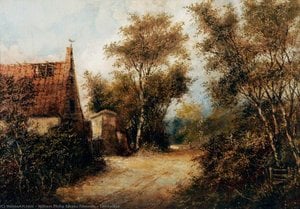
William Philip Barns Freeman (born circa 1860, died 1937) stands as a singular figure in British landscape art of the late Victorian and Edwardian eras. Primarily celebrated for his meticulous depictions of Norfolk’s coastline and rural interiors—particularly Costessey Weir and Cromer—Freeman achieved renown not merely for capturing picturesque vistas but for imbuing them with profound psychological depth and an unwavering commitment to artistic realism. His canvases are imbued with a palpable sense of atmosphere, reflecting the subtle interplay of light and shadow that defines Norfolk’s landscapes and conveying a harmonious balance between architectural grandeur and natural serenity.
Early Life & Education
Freeman's formative years were spent in Norwich, where he received a robust classical education at Norwich Cathedral School. This grounding in humanist scholarship instilled within him a lifelong fascination with mythology and literature—influences that would profoundly shape his artistic sensibilities. Recognizing his aptitude for sculpture, Freeman pursued formal training at the Royal Academy Schools in London, honing his skills in bronze casting and mastering techniques rooted in Academic Impressionism. Notable sculptures include “The Shepherdess,” depicting pastoral tranquility, and “Saint George and the Dragon,” embodying heroic idealism through anatomical precision—demonstrating both sculptural mastery and expressive dynamism.
Sculpture Training & Initial Works
Freeman’s sculptural output during his formative years showcased an impressive command of form and technique—primarily executed in bronze—reflecting the prevailing stylistic trends of the time. Auguste Rodin's influence is discernible in Freeman’s work, particularly “Saint George and the Dragon,” where Rodin’s commitment to conveying psychological complexity through anatomical realism finds a powerful counterpart. The sculptor meticulously studied classical sculpture, absorbing its principles of proportion and idealized beauty—a legacy that would permeate his artistic endeavors throughout his career.
Transition to Landscape Painting
Despite his sculptural accomplishments, Freeman's artistic passion ultimately gravitated toward landscape painting. Around 1890, he embarked on a deliberate exploration of Norfolk’s landscapes—driven by an ambition to translate the emotional resonance of these places onto canvas with unparalleled accuracy. He meticulously studied the effects of light on landscape surfaces—employing a palette knife to build up textured layers that captured the nuances of atmospheric conditions. Furthermore, Freeman drew inspiration from Romantic poets like Wordsworth and Coleridge—fostering a profound appreciation for the sublime—the awe-inspiring grandeur of nature that transcends rational comprehension. This sensibility permeated his landscape paintings, imbuing them with an emotional intensity characteristic of the era.
Norfolk Landscapes: Costessey Weir & Cromer
Freeman’s depictions of Costessey Weir and Cromer exemplify his artistic vision. He skillfully captured the grandeur of the estate alongside the tranquil beauty of the riverbank—conveying a harmonious balance between architectural majesty and natural serenity. The inclusion of figures—often rendered with understated grace—further enriched the narrative dimension of these paintings. Cromer from the Evening is arguably Freeman’s most celebrated landscape masterpiece. Its luminous palette—dominated by hues of amber and rose—mirrors the ethereal glow of twilight over Cromer Pier—creating an immersive experience for the viewer. The composition—characterized by a masterful use of perspective—effectively conveys the drama and beauty of this iconic coastal scene.
Legacy & Historical Significance
William Philip Barns Freeman’s contribution to British landscape art remains profoundly significant. His unwavering dedication to artistic realism—coupled with his ability to evoke powerful emotions—established him as a pioneer of psychological landscape painting. Today, Freeman's canvases continue to captivate audiences worldwide—serving as enduring emblems of Norfolk’s pastoral charm and the transformative power of artistic vision. He cemented his place in art history as a master of capturing not just visual appearances but also the intangible essence of place—a legacy that resonates powerfully with viewers even now.