Edward Lear, 1812 – 1888

Edward Lear Paintings: The 100 Most Famous Works, Ranked

Edward Lear's most famous painting is Cogoleto, Italy. With Crescenza and Blue And Yellow Macaw, it completes the three works everyone recognises. Our catalogue lists 419 works by Edward Lear; the 100 below are the ones the world looks at most, each with its year, the museum that holds it and why it matters.

Rankade efter vår popularitetspoäng, som kombinerar sökningar, besök och beställningar för varje verk. Uppdaterad oktober 2026. Every masterpiece on this page can be ordered as a museum-quality, hand-painted oil reproduction or a fine art print, at the size you choose.

Porträtt av Edward Lear
Edward Lear · 1812 – 1888
Född · död
1812 – 1888, Highgate
Rörelse
Romanticism
Verk i vår katalog
419
Mest kända
Cogoleto, Italy
Flest verk på
Yale Center for British Art

The 10 most famous Edward Lear paintings

Cogoleto, Italy av Edward Lear
1

Cogoleto, Italy

Watercolor

The sun rests upon a sandy shore in Cogoleto, Italy. A mountain rises in the background, its silhouette watching over the water. Along the edge of the sea, small figures move through the light. Some people gather near the tide, while others linger further away, lost in the vastness of the landscape. A single dog wanders toward the right, a small presence against the expanse of the beach. The scene…

The Temple of Apollo at Bassae (1855) av Edward Lear
7

The Temple of Apollo at Bassae

1855 · Oil On Canvas · Fitzwilliam College, Cambridge

The ruins of the Temple of Apollo at Bassae emerge from a rugged landscape, defined by heavy stone columns that support a weathered roof structure. In the foreground, the primary temple dominates the view, its pillars standing as silent witnesses to a lost era. Beyond this central structure, two smaller temples are visible in the distance, partially obscured by the natural terrain. The composition places the viewer amidst a scattering…

Edward Lear, paintings 11 to 100

Philae, Egypt (1863) av Edward Lear
#14

Philae, Egypt

1863 · Yale Center for British Art

Edward Lear's "Philae, Egypt, 1863" isn’t merely a landscape painting; it’s a portal. A meticulously rendered vista of the ancient Egyptian island city of Philae, nestled within the…

Order a reproduction →
Between Olavano and Civitella (1842) av Edward Lear
#16

Between Olavano and Civitella

1842 · Yale Center for British Art

Between Olavano and Civitella by Edward Lear presents a serene and atmospheric landscape. In the right foreground, a large, detailed tree dominates the composition, its heavy branches extending…

Order a reproduction →
Bergarna vid Termopylae (1852) av Edward Lear
#18

Bergarna vid Termopylae

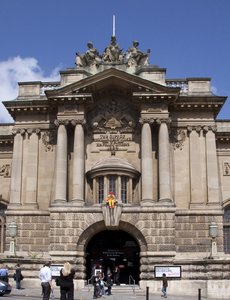
1852 · Bristol Museum - Art Gallery

Edward Lear och Thermopylae – En Övergripande Betraktelse Edward Lear är kanske främst känd för sina absurda rim och fantasifulla illustrationer, men hans konstnärliga geni sträckte sig långt…

Order a reproduction →
Thermopylae (1872) av Edward Lear
#45

Thermopylae

1872 · Ashmoleanmuseet i Oxford

In his 1872 masterpiece, Thermopylae, Edward Lear invites the viewer to step beyond the boundaries of the everyday and into a realm where the majesty of the earth…

Bring it home →

The subjects Edward Lear painted most

The four subjects that return most often among these masterpieces, with the finest example of each.

Where to see Edward Lear's paintings

De 8 museer som innehar flest av målningarna på denna sida.

Museum Stad Verk av Edward Lear Målningar från denna lista
Yale Center for British Art, New HavenYale Center for British Art New Haven 16 Philae, Egypt, Between Olavano and Civitella, A Study of Ferns, Civitella
Government Art Collection, LondonGovernment Art Collection London 5 View of Florence from Villa San Firenze, A View of Adam's Peak, Ceylon
Ashmoleanmuseet i Oxford, OxfordAshmoleanmuseet i Oxford Oxford 3 The Plains of Lombardy from Monte Generoso, Thermopylae
Israel Museum, JerusalemIsrael Museum Jerusalem 2 View of Bethlehem, Jerusalem from the Mount of Olives
Fitzwilliam College, CambridgeFitzwilliam College Cambridge 1 The Temple of Apollo at Bassae
Bristol Museum - Art Gallery, BristolBristol Museum - Art Gallery Bristol 1 Bergarna vid Termopylae
Toledo Museum of Art, ToledoToledo Museum of Art Toledo 1 Venosa
Rhode Island School of Design Museum of Art, ProvidenceRhode Island School of Design Museum of Art Providence 1 Corfu from near the Village of Virós

Edward Lear's most famous painting of each decade

  1. 1830s
  2. 1840s
    Between Olavano and Civitella (1842) av Edward Lear
    #16 of 100

    Between Olavano and Civitella

    Ålder 28 – 37 · Yale Center for British Art

    Between Olavano and Civitella by Edward Lear presents a serene and atmospheric landscape. In the right foreground, a large, detailed tree dominates the composition, its heavy branches extending…

  3. 1850s
  4. 1860s
    Philae, Egypt (1863) av Edward Lear
    #14 of 100

    Philae, Egypt

    Ålder 48 – 57 · Yale Center for British Art

    Edward Lear's "Philae, Egypt, 1863" isn’t merely a landscape painting; it’s a portal. A meticulously rendered vista of the ancient Egyptian island city of Philae, nestled within the…

  5. 1870s
  6. 1880s
    The Plains of Lombardy from Monte Generoso (1880) av Edward Lear
    Rank 15 / 100

    The Plains of Lombardy from Monte Generoso

    Ålder 68 – 76 · Ashmoleanmuseet i Oxford

    In the quiet majesty of The Plains of Lombardy from Monte Generoso, we are invited to stand upon a precipice of history and nature. Created in 1880 by…

Questions about Edward Lear's paintings

What is Edward Lear's most famous painting?Show the answer

Cogoleto, Italy. Next come Crescenza and Blue And Yellow Macaw.

What are the top 10 paintings by Edward Lear?Show the answer

Cogoleto, Italy, Crescenza, Blue And Yellow Macaw, View of Taormina in Sicily with Etna in the distance, View of Bethlehem, The Pyramids of Ghizeh, The Temple of Apollo at Bassae, Plains Of Ashdod, Israel, View Of Eze, Italy och Ithaca, Ionian Islands. The ranking above gives the year and the museum of each.

How many paintings did Edward Lear make?Show the answer

Our catalogue lists 419 works by Edward Lear, dated from 1839 to 1884.

Where are Edward Lear's most famous paintings?Show the answer

Most of them are in Yale Center for British Art (New Haven), Government Art Collection (London) och Ashmoleanmuseet i Oxford (Oxford). The table above lists the museums one by one.

When did Edward Lear paint the most famous works?Show the answer

In 1860s: 14 of the 100 works on this page date from then, among them Philae, Egypt.

What are Edward Lear's earliest and latest famous paintings?Show the answer

The earliest on this page is Civita Castellana (1839), the latest Argos from Mycene (1884).

What did Edward Lear paint most often?Show the answer

Landscape (11), Scenes (11) och Italy (11), among the 100 works on this page.

What medium did Edward Lear use most?Show the answer

Watercolor: 2 of the 100 works on this page.

Which art movement does Edward Lear belong to?Show the answer

Romanticism, as the paintings on this page show.

Which Edward Lear paintings can I see at the Yale Center for British Art?Show the answer

Philae, Egypt, Between Olavano and Civitella och A Study of Ferns, Civitella are among the 14 works on this page held by the Yale Center for British Art, New Haven.

Can I buy a reproduction of a Edward Lear painting?Show the answer

Yes. Every painting on this page can be ordered as a museum-quality, hand-painted oil reproduction or a fine art print, in the size you choose, from the painting's own page.

About Edward Lear

A Life Painted in Nonsense and Light

Edward Lear, ett namn synonymt med bisarr poesi och charmigt udda illustrationer, var mycket mer än bara skaparen av rimtermer och fantastiska varelser som ofta definierar hans arv. Född 1812 i Holloway, norra London, i en familj fylld med tjugo-ett barn, präglades Lears tidiga liv av både ekonomisk instabilitet och en blomstrande konstnärlig talang. Hans far, Jeremiah Lear, mötte svårigheter efter Napoleontiska kriget, vilket tvingade den unga Edward att börja försörja sig genom sina teckningar redan i tonåren. Detta behov, dock, antände en livslång passion som skulle se honom resa över kontinenter och fånga världen i skimrande färger och lekfulla linjer. Skuggan av familjens svårigheter, kombinerat med tidiga hälsoproblem – inklusive epilepsi och perioder av melankoli han kallade "de morbider" – inställde inom Lear en känsla av öm ensamhet och en benägenhet mot fantasifull flykt, kvaliteter som djupt återspeglas i hans konst och skrivande.

Från Ornitologisk Precision till Landskapets Omarmning

Lears konstnärliga resa började med minutiös precision. Initialt anställd av Zoological Society, finslipade han sina färdigheter genom att illustrera fåglar och djur, vilket visade en otrolig öga för detalj och anatomisk noggrannhet. Detta tidiga arbete ledde till hans upptäckt av Edward Stanley, 13:e hertigen av Derby, som beordrade Lear att dokumentera de exotiska varelserna inom sin privata menageri i Knowsley Hall. Dessa år spenderade bland lejon, tigrar och papegojor förfinade inte bara hans skicklighet utan främjade också en djup koppling till den naturliga världen – en koppling som skulle genomsyra hans senare landskap. Dock ledde sämre syn och andningssvårigheter slutligen bort honom från de krävande kraven på ornitologisk illustration. Han vände istället till landskapsmålning, genomförde omfattande resor genom Europa och bortom. Italien blev en särskild fristad, erbjöd inte bara ett utrymme för hans hälsa utan också en rikedom av inspirerande vyer. Hans landskap kännetecknas av en unik blandning av topografisk noggrannhet och atmosfärisk känslighet, ofta målade i delikata akvareller som fångar de subtila nyanserna av ljus och skugga.

Den Poetiska Avgrunden: En Värld Utanför Begränsningar

Medan han firas som en målare är det kanske för sina litterära bidrag som Edward Lear är mest känd. Hans "nonsens" poesi – särskilt hans rimtermer – revolutionerade barnlitteraturen och fängslade publiker i alla åldrar. *A Book of Nonsense*, publicerad 1846 under pseudonymen "Derry down Derry", introducerade en värld bebodd av ugglor och pussys, som seglar i grönblå båtar, med lysande nosar och andra charmigt absurda skapelser. Dessa verser var inte bara löjliga; de var fyllda med en subtil melankoli och en lekfull underkastelse av konventionell logik. Lears rimtermer utforskade ofta teman som ensamhet, längtan och absurditeten i existensen, klädda i ett lager av bisarra vändningar. Han uppfann inte bara nonsensord; han skapade hela världar styrda av sina egna interna regler, inbjudande läsare att förlägga sin tro på fantasin och njuta av den. *The Owl and the Pussy-Cat*, tveklöst hans mest kända dikt, fortsätter att vara en älskad klassiker, vars bestående attraktion ligger i dess melodiösa rytm och suggestiva bilder.

En Arv av Innovation och Bestående Charm

Edward Lears inflytande sträcker sig bortom litteraturens domän. Han banade väg för ett nytt sätt att uttrycka poesi, befriade versen från strikta strukturer och omfamnade lekfull experimentering. Hans landskap, även om ofta skuggade av hans poesi, visar en djup konstnärlig känsla och behärskning av akvarellteknik. Han var verkligen en polymat – konstnär, illustratör, musiker (han skrev musikaliska kompositioner till Tennysons dikter), författare och poet – vars olika talanger förenades för att skapa ett unikt och bestående arv. Han utmanade konventionella gränser, suddade ut linjerna mellan konst, litteratur och musik. Hans verk fortsätter att inspirera konstnärer, författare och drömmare världen över, påminner oss om kraften i fantasin och skönheten i att omfamna det absurda. Hans målningar finns att finna i framstående samlingar som Ashmolean Museum i Oxford, ett bevis på hans skicklighet som landskapsmålare.

Inflytanden och Konstnärlig Utveckling

  • Tidiga Inflytanden: Lears initiala konstnärliga utbildning fokuserade på vetenskaplig illustration, vilket krävde precision och observation. Denna grund lade en grund för hans minutiösa approach till detalj, även när han senare omfamnade mer uttrycksfulla stilar.
  • Resor & Landskapsmålning: Hans omfattande resor genom Italien, Grekland, Egypten och bortom påverkade djupt hans landskapsarbete. Han absorberade ljuset, färgerna och texturerna i dessa olika regioner, utvecklade en distinkt stil präglad av atmosfärisk perspektiv och delikat penseldragning.
  • Litterär Inspiration: Medan han populariserade rimtermen var Lear också inspirerad av tidigare nonsenspoetiska traditioner. Hans unika bidrag låg i hans förmåga att införa denna form med emotionell djup och lyrisk skönhet.
  • Personliga Upplevelser: Lears livslånga strider mot hälsoproblem och melankoli präglade djupt hans konstnärliga vision. Den ensamhet och längtan som genomsyrar mycket av hans verk återspeglar hans egna personliga erfarenheter.

Alla 419 verk av Edward Lear →