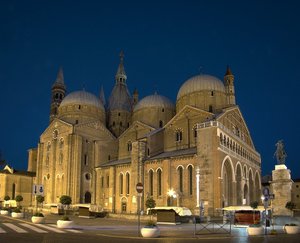
Donatello, 1386 – 1466

De 100 mest kända målningarna av Donatello

Målningen som gjorde Donatello känd är Madonna and Child between St Francis and St Anthony (1448); den hänger på Basilica di Sant'Antonio i Padua. Cantoria (1439) och Entombment (1447) följer efter i samlarnas och museumbesökarnas hjärtan. Av de 148 verk av Donatello i vår katalog är dessa 100 de mest beundrade, var och en presenterad med sitt datum, sitt museum och vad som utmärker dem.

Rankade efter vår popularitetspoäng, som kombinerar sökningar, besök och beställningar för varje verk. Uppdaterad oktober 2026. Varje mästerverk på denna sida kan beställas som en handmålad oljereproduktion av museikvalitet eller som ett konsttryck i den storlek du väljer.

Porträtt av Donatello
Donatello · 1386 – 1466
Född · död
1386 – 1466, Florens
Rörelse
Tidig renässans
Verk i vår katalog
148
Mest kända
Madonna and Child between St Francis and St Anthony (1448)
Flest verk på
Museo dell'Opera del Duomo

Donatello: de tio mästerverken

Madonna and Child between St Francis and St Anthony (1448) av Donatello
1

Madonna and Child between St Francis and St Anthony

1448 · Bronze · Basilica di Sant'Antonio, Padua

In the heart of the Italian Renaissance, where the shadows of antiquity met the burgeoning light of humanism, Donatello breathed life into metal with his masterpiece, Madonna and Child between St Francis and St Anthony. Created around 1448, this profound bronze sculpture serves as a window into a period of unparalleled spiritual and artistic transformation. The composition is a masterclass in symmetrical grace; at its center, the Virgin Mary cradles…

Cantoria (1439) av Donatello
2

Cantoria

1439 · Marble · Museo dell'Opera del Duomo, Florens

To stand before Donatello’s Cantoria is to witness the very moment the Renaissance found its pulse. Completed around 1439 for the Cathedral of Santa Maria del Fiore in Florence, this monumental marble relief is far more than a functional singers' gallery; it is a breathtaking explosion of movement and spiritual ecstasy. While much of the era’s sculpture remained tethered to the static, formal traditions of the Byzantine style, Donatello broke…

Entombment (1447) av Donatello
3

Entombment

1447 · Oil On Canvas · Basilica di Sant'Antonio, Padua

To stand before Donatello's depiction of the Entombment is to be enveloped in an atmosphere so thick with grief, it feels almost palpable. This scene transcends mere narrative illustration; it is a profound meditation on loss, sacrifice, and the solemn weight of human devotion. The composition draws the viewer into the immediate aftermath of unimaginable tragedy. Jesus Christ lies within the tomb, not merely as a subject, but as the…

Miracle of the Repentant Son (1447) av Donatello
4

Miracle of the Repentant Son

1447 · Acrylic · Basilica di Sant'Antonio, Padua

Donatello’s bronze sculpture, "Miracle of the Repentant Son," transcends mere representation; it's a profound meditation on faith, remorse, and divine grace. Created in 1447 during the apex of his artistic maturity, this work embodies the burgeoning humanism and emotional depth that defined the Early Renaissance in Florence. More than just a depiction of a biblical miracle – the restoration of a severed limb by St. Anthony – it’s a study…

Crucifix (1412) av Donatello
5

Crucifix

1412 · Acrylic On Canvas · Santa Croce i Florens, Florens

Donatello's 1412 Crucifix, housed within the Basilica of Santa Croce in Florence, isn’t merely a depiction of Christ on the cross; it’s a visceral experience. This early Renaissance masterpiece transcends simple representation, plunging the viewer into the heart of Christian theology and embodying the profound tension between suffering and redemption. Crafted from richly-toned pearwood, the sculpture immediately commands attention with its remarkably realistic portrayal of the human form – a…

Annunciation (1435) av Donatello
6

Annunciation

1435 · Acrylic On Canvas · Santa Croce i Florens, Florens

Donatello’s 1435 Annunciation, housed within the Basilica di Santa Croce in Florence, isn’t merely a depiction of a biblical moment; it’s a profound meditation on grace, humility, and the transformative power of faith. Commissioned during a pivotal period of artistic innovation – bridging the Gothic and Renaissance eras – this sculpture embodies Donatello's revolutionary approach to humanism and his masterful command of classical forms. The scene unfolds with an arresting…

St George (detail) (1416) av Donatello
7

St George (detail)

1416 · Marble · Museo Nazionale del Bargello, Florens

The marble figure of St. George, sculpted by Donatello around 1416, stands as more than just a depiction of a saint; it's a pivotal moment in the evolution of Renaissance sculpture – a testament to the artist’s innovative spirit and his profound understanding of human form and narrative. Originally gracing the north wall of Orsanmichele, Florence’s imposing guildhall, this statue immediately captivated viewers with its dynamic energy and strikingly realistic…

Herod's Banquet (1427) av Donatello
8

Herod's Banquet

1427 · Bronze · Dopkapellet i Siena, Siena

Donatello's Herod’s Banquet, crafted around 1427 for the baptismal font of Siena’s San Giovanni Baptistery, isn’t merely a depiction of a biblical episode; it’s a profound meditation on power, betrayal, and the chilling consequences of unchecked ambition. Commissioned amidst the competitive fervor of Renaissance Florence and Siena, this bronze relief stands as a testament to Donatello's burgeoning mastery – a pivotal work that showcases his innovative approach to sculpture and…

Bearded Prophet (1418) av Donatello
9

Bearded Prophet

1418 · Bronze · Museo dell'Opera del Duomo, Florens

In the heart of the Florentine Renaissance, where the shadows of antiquity began to dance with the light of new humanism, Donatello breathed life into bronze with his Bearded Prophet. Created around 1418, this monumental figure is far more than a mere sculpture; it is a profound meditation on the weight of divine knowledge and the solemnity of faith. As one gazes upon the weathered surface of the bronze, there…

St. John the Evangelist (1415) av Donatello
10

St. John the Evangelist

1415 · Marble

St. John the Evangelist is a marble sculpture created by the artist Donatello. Dated 1410, this work depicts one of the twelve apostles of Jesus. The subject is rendered as an elderly man, presented with a face etched with lines and a gaze that suggests a state of contemplation and wisdom. This choice of representation presents the figure as a philosopher-like individual.

Fler mästerverk av Donatello, 11 till 100

St Mark (1411) av Donatello
#11

St Mark

1411 · Orsanmichele

Within the echoing halls of Orsanmichele in Florence, stands Donatello's sculpture of St. Mark – more than just a depiction of a biblical figure; it is a profound…

Prophet with Scroll (detail) (1418) av Donatello
#12

Prophet with Scroll (detail)

1418 · Museo dell'Opera del Duomo

To stand before this detail of a prophet is to encounter a moment suspended in time—a profound echo from the heart of the Italian Renaissance. The marble itself,…

St John on Patmos (1428) av Donatello
#13

St John on Patmos

1428

The St John on Patmos painting, created by the renowned artist Donatello in 1428, is a stunning example of Renaissance art. This masterpiece is a testament to Donatello's…

David (detail) (1409) av Donatello
#14

David (detail)

1409 · Museo Nazionale del Bargello

To stand before this detail of Donatello's David is to encounter not merely a sculpture, but a profound meditation on nascent heroism. The marble seems to breathe with…

Pietà (1447) av Donatello
#15

Pietà

1447 · Basilica di Sant'Antonio

In the quiet sanctity of the Basilica di Sant’Antonio in Padua, there exists a moment frozen in bronze, a profound intersection of divine tragedy and human vulnerability. Donatello’s…

Pulpit (on the right) (1465) av Donatello
#16

Pulpit (on the right)

1465 · Basilica di San Lorenzo

In the hallowed, sun-drenched silence of the Basilica of San Lorenzo in Florence, there exists a sculptural marvel that captures the very essence of a soul nearing its…

Prophet Jeremiah (1423) av Donatello
#17

Prophet Jeremiah

1423 · Museo dell'Opera del Duomo

To stand before Donatello’s Prophet Jeremiah is to encounter not merely carved stone, but the very weight of human contemplation. This marble masterpiece transports us into a moment…

Prophet Habakkuk (1427) av Donatello
#18

Prophet Habakkuk

1427 · Museo dell'Opera del Duomo

In the heart of Florence, within the hallowed halls of the Museo dell'Opera del Duomo, stands a figure that seems to breathe with the weight of centuries. Donatello’s…

Pulpit (1438) av Donatello
#19

Pulpit

1438 · Museum of the Cathedral

The Pulpit by Donatello emerged from the stone and the shared vision of a workshop. In 1438, the artist completed this marble structure, working alongside collaborators Michelozzo and…

Miracle of the New-born Child (detail) (1447) av Donatello
#20

Miracle of the New-born Child (detail)

1447 · Basilica di Sant'Antonio

This bronze detail captures an aged figure rendered with profound realism. The sculpture focuses on the upper torso and head, where deep wrinkles and facial contours convey experience…

Miracle of the Ass (1447) av Donatello
#21

Miracle of the Ass

1447 · Basilica di Sant'Antonio

In the heart of the Italian Renaissance, amidst the burgeoning humanism of Florence, Donatello breathed life into metal with his 1447 masterpiece, The Miracle of the Ass. This…

Cantoria (detail) (1439) av Donatello
#22

Cantoria (detail)

1439 · Museo dell'Opera del Duomo

The “Cantoria,” or Singing Gallery, crafted by the towering figure of Donatello between 1439 and 1440, isn't merely a decorative element within Florence’s Duomo; it’s an immersive experience,…

Evangelist Luke (1428) av Donatello
#23

Evangelist Luke

1428

The "Evangelist Luke" is a remarkable painting created by the renowned artist Donatello in 1428. This stunning work of art, crafted from stucco and measuring 215 x 215…

Ta hem den →
Pulpit (detail) (1438) av Donatello
#24

Pulpit (detail)

1438 · Museo dell'Opera del Duomo

To look closely at this detail from the pulpit is to witness a quiet revolution in stone. The marble figures emerge from their setting with a sense of…

Christ before Pilate and Caiaphas (1460) av Donatello
#25

Christ before Pilate and Caiaphas

1460 · Basilica di San Lorenzo

Donatello's 1460 bronze sculpture, “Christ Before Pilate and Caiaphas,” stands as a monumental achievement within the burgeoning artistic landscape of the Italian Renaissance. Housed in the San Lorenzo…

David (1409) av Donatello
#26

David

1409 · Museo Nazionale del Bargello

To stand before Donatello’s David is not merely to observe a sculpture; it is to witness a suspended moment of profound human potential. Carved from luminous marble, this…

St George and the Dragon (1416) av Donatello
#27

St George and the Dragon

1416 · Museo Nazionale del Bargello

Gazing upon this marble bust is to confront a moment frozen in time—a powerful confluence of classical revivalism and raw human emotion. The subject, rendered with breathtaking verisimilitude,…

Saint George (1417) av Donatello
#28

Saint George

1417 · Museo Nazionale del Bargello

In the heart of Florence, where the echoes of the Quattrocento still resonate through the cobblestone streets, stands a figure of unparalleled poise and quiet strength. Donatello’s Saint…

St John the Evangelist (detail) (1410) av Donatello
#29

St John the Evangelist (detail)

1410 · Museo dell'Opera del Duomo

Donatello's “St John the Evangelist (detail),” a remarkably preserved marble sculpture created around 1410-1411, stands as a pivotal work in the transition from the late Gothic to the…

St John the Evangelist (1410) av Donatello
#30

St John the Evangelist

1410 · Museo dell'Opera del Duomo

St John the Evangelist is a marble sculpture created by the artist Donatello. The work is dated 1410. It depicts one of the twelve apostles of Jesus, specifically…

Deposition (detail) (1465) av Donatello
#31

Deposition (detail)

1465 · Basilica di San Lorenzo

Donatello's Deposition, a pivotal work from 1465, isn’t merely a depiction of Christ being lowered from the cross; it’s a profound meditation on grief, loss, and the nascent…

Beställ en handmålad kopia →
North pulpit (1460) av Donatello
#33

North pulpit

1460 · Basilica di San Lorenzo

To stand before the North Pulpit is to witness a profound moment in the evolution of Western art, where the rigid structures of the Middle Ages began to…

David (1430) av Donatello
#35

David

1430 · Museo Nazionale del Bargello

Michelangelo’s “David,” a colossal marble sculpture residing within the Galleria dell’Accademia in Florence, isn't merely a depiction of a biblical hero; it’s an embodiment of human potential, a…

Beställ en handmålad kopia →
Tombstone of Bishop Giovanni Pecci (1426) av Donatello
#36

Tombstone of Bishop Giovanni Pecci

1426 · Duomo

Within the echoing grandeur of Siena Cathedral resides a sculpture that transcends mere funerary art – it is, fundamentally, a meditation on life, death, and the enduring power…

Ta hem den →
Miracle of the Avaricious Man's Heart (1447) av Donatello
#37

Miracle of the Avaricious Man's Heart

1447 · Basilica di Sant'Antonio

Within the hallowed, sun-drenched walls of the Basilica di Sant’Antonio in Padua, there exists a moment frozen in time, a bronze whisper of the divine captured by the…

Allegoric Figure of a Boy (Atys), rear view (1430) av Donatello
#38

Allegoric Figure of a Boy (Atys), rear view

1430 · Museo Nazionale del Bargello

To stand before an image evoking this bronze figure is to feel the very breath of the Renaissance wind against one's skin. This depiction, titled Allegoric Figure of…

St George (detail) (1416) av Donatello
#39

St George (detail)

1416 · Museo Nazionale del Bargello

In the heart of Florence, within the hallowed halls of the Museo Nazionale del Bargello, resides a fragment of eternal courage. Donatello’s St. George, specifically captured in this…

Cantoria (detail) (1439) av Donatello
#40

Cantoria (detail)

1439 · Museo dell'Opera del Duomo

In the heart of Florence, within the hallowed halls of the Museo dell’Opera del Duomo, lies a fragment of divine ecstasy known as the Cantoria. Created by the…

Marzocco (1419) av Donatello
#43

Marzocco

1419 · Museo Nazionale del Bargello

In the heart of the Renaissance, amidst the political tremors and cultural rebirth of 15th-century Florence, Donatello breathed life into stone to create one of the city's most…

Prophet Jeremiah (detail) (1423) av Donatello
#44

Prophet Jeremiah (detail)

1423 · Museo dell'Opera del Duomo

Donatello's “Prophet Jeremiah (detail),” a poignant study carved from pristine white marble around 1423-1427, transcends mere portraiture to become a profound meditation on faith, suffering, and the weight…

Beställ en handmålad kopia →
Cantoria (detail) (1439) av Donatello
#45

Cantoria (detail)

1439 · Museo dell'Opera del Duomo

Donatello's "Cantoria," a breathtaking detail from the larger marble relief adorning the south sacristy doors of the Duomo in Florence, isn’t merely a sculpture; it’s a vibrant snapshot…

Beställ en reproduktion →
Herod's Banquet (detail) (1427) av Donatello
#46

Herod's Banquet (detail)

1427 · Dopkapellet i Siena

In the hallowed, quiet corridors of the Siena Baptistery, there exists a moment frozen in time, captured not in paint, but in the enduring strength of bronze. Donatello’s…

Miracle of the Avaricious Man's Heart (detail) (1447) av Donatello
#47

Miracle of the Avaricious Man's Heart (detail)

1447 · Basilica di Sant'Antonio

The Miracle of the Avaricious Man's Heart is a remarkable bronze relief created by the renowned Italian artist Donatello in 1447. This stunning work of art is located…

Bearded Prophet (detail) (1418) av Donatello
#48

Bearded Prophet (detail)

1418 · Museo dell'Opera del Duomo

Donatello's "Bearded Prophet" – often referred to as “Pensieroso,” meaning “the Thinker” – stands not merely as a sculpture, but as a profound meditation on humanity’s relationship with…

Cantoria (detail) (1439) av Donatello
#49

Cantoria (detail)

1439 · Museo dell'Opera del Duomo

Donatello's Cantoria, a breathtaking marble relief sculpture from the Duomo di Firenze (Florence Cathedral), isn’t merely a decorative element; it’s a vibrant snapshot of Renaissance ambition and artistic…

Beställ en handmålad kopia →
Prophet Jeremiah (1423) av Donatello
#50

Prophet Jeremiah

1423 · Museo dell'Opera del Duomo

Prophet Jeremiah is a marble sculpture created by the artist Donatello. Dated 1423, the work represents a significant religious subject through the depiction of the biblical prophet. The…

South pulpit (1460) av Donatello
#51

South pulpit

1460 · Basilica di San Lorenzo

Donatello’s Passion Pulpit, a monumental bronze ensemble housed within the Basilica of San Lorenzo in Florence, isn’t merely a religious depiction; it’s a visceral embodiment of the artist’s…

Beställ en handmålad kopia →
Deposition (1465) av Donatello
#52

Deposition

1465 · Basilica di San Lorenzo

Donatello's Deposition, completed in 1465, isn’t merely a sculpture; it’s a profound meditation on loss, faith, and the raw vulnerability of humanity. Carved from rich, burnished bronze –…

St George (1416) av Donatello
#53

St George

1416 · Museo Nazionale del Bargello

Donatello’s “St. George,” sculpted in 1416 for the Museo Nazionale del Bargello in Florence, isn’t merely a depiction of a biblical hero; it’s a potent distillation of Renaissance…

Cantoria (1439) av Donatello
#54

Cantoria

1439 · Museo dell'Opera del Duomo

Within the hallowed halls of the Museo dell'Opera del Duomo in Florence resides a sculpture that transcends mere stone and marble – it is an embodiment of Renaissance…

Faith (1427) av Donatello
#55

Faith

1427 · Dopkapellet i Siena

Donatello's "Faith," crafted in bronze around 1427-1429 for the baptismal font within Siena Cathedral, stands as a pivotal work bridging the late Gothic and burgeoning Early Renaissance styles.…

Old Sacristy (1428) av Donatello
#56

Old Sacristy

1428 · Basilica di San Lorenzo

To step into the Old Sacristy within the Basilica of San Lorenzo is to leave the chaotic bustle of Florence behind and enter a realm of profound mathematical…

Annunciation (detail) (1435) av Donatello
#57

Annunciation (detail)

1435 · Santa Croce i Florens

Donatello's "Annunciation," specifically this exquisite detail from the relief adorning the Cavalcanti Chapel in Santa Croce, Florence, stands as a pivotal moment in the burgeoning Renaissance. Crafted around…

Beställ en reproduktion →
Pulpit (on the left) (1465) av Donatello
#58

Pulpit (on the left)

1465 · Basilica di San Lorenzo

Within the serene confines of San Lorenzo church in Florence resides a sculpture that transcends mere marble; it is a profound meditation on faith, humanity, and the very…

Beställ en reproduktion →
Prophet with Scroll (1418) av Donatello
#59

Prophet with Scroll

1418 · Museo dell'Opera del Duomo

Donatello’s “Prophet with Scroll,” crafted between 1415 and 1418, stands as a pivotal work in the burgeoning Early Renaissance of Florence. More than simply a depiction of biblical…

St John the Evangelist (1410) av Donatello
#60

St John the Evangelist

1410 · Museo dell'Opera del Duomo

Donatello’s “St John the Evangelist,” completed between 1410 and 1411, isn't merely a sculpture; it’s an invitation into a realm of contemplative grace. Carved from pristine white marble,…

Beställ en handmålad kopia →
Prophet Habakkuk (1427) av Donatello
#61

Prophet Habakkuk

1427 · Museo dell'Opera del Duomo

In the hallowed, sun-drenched halls of the Museo dell'Opera del Duomo in Florence, there exists a figure that seems to breathe with the heavy weight of centuries. Donatello’s…

Entombment (1465) av Donatello
#62

Entombment

1465 · Basilica di San Lorenzo

Donatello's “Entombment,” completed around 1465 in Florence, stands as a monumental achievement within the Early Renaissance—a sculpture that transcends mere representation to embody profound human emotion and theological…

Cantoria (9) (1439) av Donatello
#63

Cantoria (9)

1439 · Museo dell'Opera del Duomo

Donatello's "Cantoria," completed in 1439 for the Duomo of Florence, isn’t merely a decorative element; it’s a vibrant embodiment of Renaissance ideals – a testament to human ingenuity,…

Ta hem den →
Lamentation over the Dead Christ av Donatello
#64

Lamentation over the Dead Christ

Victoria and Albert Museum

Donatello, one of the most influential artists of the Italian Renaissance, created the Lamentation Over The Dead Christ around 1455-1460. This remarkable bronze relief is currently housed in…

St George (1416) av Donatello
#65

St George

1416 · Museo Nazionale del Bargello

Donatello's *Saint George*, sculpted in 1416 during the nascent Renaissance, is more than just a marble statue; it’s a potent distillation of classical ideals interwoven with burgeoning humanist…

St John the Baptist (1438) av Donatello
#66

St John the Baptist

1438 · Santa Maria Gloriosa dei Frari

Donatello’s “St. John the Baptist,” sculpted around 1438 in Carrara marble and now residing within the serene Chapel of St. John the Baptist at Santa Maria Gloriosa dei…

Beställ en reproduktion →
Chellini Madonna, verso av Donatello
#68

Chellini Madonna, verso

Victoria and Albert Museum

Donatello's "Chellini Madonna," a bronze relief cast in the mid-15th century, stands as a remarkably intimate and profoundly moving work within the artist’s oeuvre. More than simply a…

St Cosmas and St Damian (1428) av Donatello
#69

St Cosmas and St Damian

1428

Two figures emerge from an ornate stone backdrop, their presence defined by a quiet, shared intensity. These men, identified as the twin saints Cosmas and Damian, are positioned…

St Mary Magdalen (1457) av Donatello
#70

St Mary Magdalen

1457 · Museo dell'Opera del Duomo

St Mary Magdalen is a sculptural work created by the Italian Renaissance sculptor Donatello. This figure is slightly larger than life size and was originally made for the…

Bust of Niccolo da Uzzano (1430) av Donatello
#71

Bust of Niccolo da Uzzano

1430 · Museo Nazionale del Bargello

Donatello's 1430s marble bust of Niccolò da Uzzano is more than just a sculpted likeness; it’s a profound meditation on leadership, duty, and the quiet strength required to…

Crucifixion (1465) av Donatello
#72

Crucifixion

1465 · Museo Nazionale del Bargello

A Moment Frozen in Time: Donatello’s Crucifixion The bronze sculpture “Crucifixion” by Donatello stands as an enduring testament to the artistic fervor of the Florentine Renaissance, capturing not…

Prophet Habbakuk (1426) av Donatello
#74

Prophet Habbakuk

1426

To stand before this marble figure is to encounter a man caught in a moment of profound spiritual tension. Created between 1423 and 1426, this sculpture of the…

The Feast of Herod (1427) av Donatello
#75

The Feast of Herod

1427

The air in the room feels heavy, thick with the tension of a moment that refuses to pass. Around a central banquet table, figures are caught in a…

St Stephen and St Lawrence (1428) av Donatello
#76

St Stephen and St Lawrence

1428

The artwork presents two figures positioned within a recessed, arched niche. These figures are rendered in a relief sculpture technique, where the forms emerge from a flat plane…

Evangelist Mark (1428) av Donatello
#77

Evangelist Mark

1428

This high-relief marble sculpture captures a moment of quiet scholarly devotion. Within an oval frame, the figure of the Evangelist is seated at a writing desk, his attention…

Herod's Banquet (1435) av Donatello
#78

Herod's Banquet

1435 · Palais des Beaux-Arts de Lille

This high-relief marble sculpture depicts a crowded, dramatic biblical scene. The composition is densely packed with figures arranged across multiple planes to create a sense of depth and…

Pulpit (1438) av Donatello
#79

Pulpit

1438 · Cathedral

A Masterpiece of Renaissance Sculpture: Donatello's Marble Pulpit Donatello’s marble pulpit, created in 1438 for the Church of San Lorenzo in Florence, stands as a pivotal work within…

Beställ en handmålad kopia →
Agony in the Garden (1465) av Donatello
#80

Agony in the Garden

1465 · Basilica di San Lorenzo

Giovanni Bellini's "Agony in the Garden," housed within the venerable halls of the National Gallery, London, isn’t merely a depiction of a biblical scene; it’s a profound meditation…

Beställ en handmålad kopia →
Funeral Monument to John XXIII (detail) (1435) av Donatello
#81

Funeral Monument to John XXIII (detail)

1435 · Baptisteriet i Florens

The Funeral Monument to John XXIII (detail) is a work by the sculptor Donatello. This specific fragment captures a moment of stillness within a larger funerary structure. It…

Chellini Madonna, recto av Donatello
#82

Chellini Madonna, recto

Victoria and Albert Museum

To gaze upon the Chellini Madonna is to step into the very heart of the Florentine Renaissance, where the divine and the human intersect through the masterful hands…

Hope (1427) av Donatello
#83

Hope

1427 · Dopkapellet i Siena

Within the quiet, hallowed space of the Baptistery of San Giovanni in the Siena Cathedral, a figure emerges from the shadows of a shallow marble niche. This is…

St Mark (1411) av Donatello
#84

St Mark

1411 · Orsanmichele

In the Orsanmichele of Florence, a marble figure of St Mark emerges from its Gothic niche, marking a departure from the rigid traditions of the Middle Ages. Created…

St Rossore (1425) av Donatello
#86

St Rossore

1425 · Museo Nazionale di San Matteo

In the quiet presence of Donatello’s St Rossore, one does not merely observe a sculpture; one encounters a profound dialogue between the earthly and the divine. Created around…

Musician Angels (1447) av Donatello
#90

Musician Angels

1447 · Basilica di Sant'Antonio

In the hallowed stillness of the Basilica of Saint Anthony in Padua, there exists a moment where time seems to suspend itself, captured forever in the shimmering bronze…

Donatellos målningar per period

De motiv Donatello målade mest av

De fyra motiv som förekommer oftast bland dessa mästerverk, med det främsta exemplet på varje.

Var du kan se Donatellos målningar

De 8 museer som innehar flest av målningarna på denna sida.

Museum Stad Verk av Donatello Målningar från denna lista
Museo dell'Opera del Duomo, FlorensMuseo dell'Opera del Duomo Florens 22 Cantoria, Bearded Prophet, Prophet with Scroll (detail)
Museo Nazionale del Bargello, FlorensMuseo Nazionale del Bargello Florens 13 St George (detail), David (detail), David
Basilica di Sant'Antonio, PaduaBasilica di Sant'Antonio Padua 12 Madonna and Child between St Francis and St Anthony, Entombment, Miracle of the Repentant Son
Basilica di San Lorenzo, FlorensBasilica di San Lorenzo Florens 12 Pulpit (on the right), Christ before Pilate and Caiaphas, Deposition (detail)
Piazza del Santo, PaduaPiazza del Santo Padua 6 Equestrian Statue of Gattamelata (8), Donatello’s häststaty av Gattamelata, Equestrian Statue of Gattamelata
Dopkapellet i Siena, SienaDopkapellet i Siena Siena 4 Herod's Banquet, Herod's Banquet (detail), Faith
Baptisteriet i Florens, FlorensBaptisteriet i Florens Florens 4 Funeral Monument to John XXIII (detail), Funeral Monument to John XXIII (detail), Funeral Monument to John XXIII (detail)
Santa Croce i Florens, FlorensSanta Croce i Florens Florens 3 Crucifix, Annunciation, Annunciation (detail)

Donatello, decennium för decennium: det mest betydelsefulla verket från varje period

  1. 1400s
    David (detail) (1409) av Donatello
    Plats 14 av 100

    David (detail)

    Ålder 14 – 23 · Museo Nazionale del Bargello

    To stand before this detail of Donatello's David is to encounter not merely a sculpture, but a profound meditation on nascent heroism. The marble seems to breathe with…

  2. 1410s
    Crucifix (1412) av Donatello
    Nr. 5 av 100

    Crucifix

    Ålder 24 – 33 · Santa Croce i Florens

    Donatello's 1412 Crucifix, housed within the Basilica of Santa Croce in Florence, isn’t merely a depiction of Christ on the cross; it’s a visceral experience. This early Renaissance…

  3. 1420s
    Herod's Banquet (1427) av Donatello
    Plats 8 av 100

    Herod's Banquet

    Ålder 34 – 43 · Dopkapellet i Siena

    Donatello's Herod’s Banquet, crafted around 1427 for the baptismal font of Siena’s San Giovanni Baptistery, isn’t merely a depiction of a biblical episode; it’s a profound meditation on…

  4. 1430s
    Cantoria (1439) av Donatello
    Nr. 2 av 100

    Cantoria

    Ålder 44 – 53 · Museo dell'Opera del Duomo

    To stand before Donatello’s Cantoria is to witness the very moment the Renaissance found its pulse. Completed around 1439 for the Cathedral of Santa Maria del Fiore in…

  5. 1440s
    Madonna and Child between St Francis and St Anthony (1448) av Donatello
    Plats 1 av 100

    Madonna and Child between St Francis and St Anthony

    Ålder 54 – 63 · Basilica di Sant'Antonio

    In the heart of the Italian Renaissance, where the shadows of antiquity met the burgeoning light of humanism, Donatello breathed life into metal with his masterpiece, Madonna and…

  6. 1450s
    St Mary Magdalen (1457) av Donatello
    Plats 70 av 100

    St Mary Magdalen

    Ålder 64 – 73 · Museo dell'Opera del Duomo

    St Mary Magdalen is a sculptural work created by the Italian Renaissance sculptor Donatello. This figure is slightly larger than life size and was originally made for the…

  7. 1460s
    Pulpit (on the right) (1465) av Donatello
    Plats 16 av 100

    Pulpit (on the right)

    Ålder 74 – 80 · Basilica di San Lorenzo

    In the hallowed, sun-drenched silence of the Basilica of San Lorenzo in Florence, there exists a sculptural marvel that captures the very essence of a soul nearing its…

Donatellos mästerverk: frågor och svar

Vilken målning är Donatello mest känd för?Visa svaret

Madonna and Child between St Francis and St Anthony (1448), Basilica di Sant'Antonio, Padua. Därefter följer Cantoria (1439) och Entombment (1447).

Hur gammal var Donatello när Madonna and Child between St Francis and St Anthony målades?Visa svaret

62 år gammal: Madonna and Child between St Francis and St Anthony dateras från 1448 och Donatello föddes 1386.

Vilka är Donatellos tio främsta målningar?Visa svaret

Madonna and Child between St Francis and St Anthony, Cantoria, Entombment, Miracle of the Repentant Son, Crucifix, Annunciation, St George (detail), Herod's Banquet, Bearded Prophet och St. John the Evangelist. Rankingen ovan visar år och museum för varje verk.

Hur många verk målade Donatello?Visa svaret

Vår katalog innehåller 148 verk av Donatello, daterade från 1406 till 1465.

I vilka museer kan jag se Donatellos mästerverk?Visa svaret

De flesta av dem finns i Museo dell'Opera del Duomo (Florens), Museo Nazionale del Bargello (Florens) och Basilica di Sant'Antonio (Padua). Tabellen ovan listar museerna ett efter ett.

När målade Donatello sina mästerverk?Visa svaret

Under 1430s: 22 av de 100 verk som finns på denna sida härstammar från den tiden, däribland Cantoria.

Vilka är de första och sista kända målningarna av Donatello?Visa svaret

Det tidigaste på denna sida är Prophet (left of the Porta della Mandorla) (1406), det senaste Pulpit (on the right) (1465).

Vilka var Donatellos favoritmotiv?Visa svaret

Renaissance (46), Sculpture (35) och Marble (19), av totalt 100 verk på denna sida.

Vilken teknik föredrog Donatello?Visa svaret

Marble: 31 av 100 verk på denna sida.

Vilken konstinriktning tillhör Donatello?Visa svaret

Tidig renässans, som målningarna på denna sida visar.

Vilka mästerverk av Donatello finns utställda på Museo dell'Opera del Duomo?Visa svaret

Cantoria, Bearded Prophet och Prophet with Scroll (detail) är bland de 21 verk på denna sida som innehas av Museo dell'Opera del Duomo, Florens.

Kan jag äga en reproduktion av ett mästerverk av Donatello?Visa svaret

Ja. Varje målning på denna sida kan beställas som en handmålad oljereproduktion av museikvalitet eller som ett konsttryck i den storlek du väljer, direkt från målningens egen sida.

Livet för Donatello

Donatellos liv och identitet

Född som Donato di Niccolò di Betto Bardi, tillbringade mannen som historien känner som Donatello sitt liv inom Florens murar i Italien. Han kom till världen omkring 1386, en tid då staden hade börjat omforma sin egen självbild genom sten och brons. Hans närvaro i det florentinska landskapet var konstant, präglad av en stadig hand och ett fokus på hans motivs fysiska verklighet. Han var en italiensk renässansskulptör som förstod tyngden i de material han hanterade, från marmorns hårdhet till vaxets föränderlighet.

Hans arbete var inte en ensam strävan efter perfektion, utan snarare en serie svar på sin tids behov. Han rörde sig genom Florens gator, arbetade i olika medier och lämnade efter sig ett spår av figurer som fångade en specifik, mänsklig närvaro. Även om han var känd för att vara vänlig och omtyckt av dem omkring honom, kämpade han med de praktiska aspekterna av att driva en verksamhet. Han tog ofta på sig mer arbete än vad hans händer kunde färdigställa i tid, vilket ibland innebar att han överlämnade de sista penseldragen till andra eller levererade verk senare än förväntat. Denna tendens till överengagemang tyder på en man som var mer uppslukad av själva skapelseakten än av ledningen av en verkstad.

Donatello avled i Florens den 13 december 1466. Han lämnade efter sig ett livsverk som förändrade hur skulptörer närmade sig den mänskliga formen, genom att röra sig bort från det förflutnas stela traditioner mot något mer jordnära och uttrycksfullt. Hans liv var oupplösligt knutet till staden, och hans identitet förblir sammanflätad med den florentinska jord där han levde och verkade.

Tidigt liv och konstnärlig skolning

Född i Florens, Italien, växte Donatello upp i en stad som fungerade som det primära epicentret för den framväxande renässansen. Denna miljö tillhandahöll den nödvändiga kulturella energin för hans utveckling. Han tillbringade sina tidiga år helt uppslukad av den lokala atmosfären, där skiftet bort från de rigida medeltida traditionerna redan var på väg att få fäste. Hans koppling till det florentinska landskapet var djup, då stadens föränderliga värderingar formade hans tidiga ansats till form och figur.

Hans skolning innebar en noggrann studie av klassisk skulptur. Detta fokus på antiken hjälpte honom att röra sig mot en ny stil som prioriterade realism och humanism. Innan han fann sin egen röst lärde han sig den internationella gotiska stilen av Lorenzo Ghiberti. Denna lärandeperiod gjorde det möjligt för honom att bemästra sitt hantverks tekniska färdigheter innan han började avvika från dessa etablerade traditioner. Han arbetade med en mängd olika material, däribland sten, brons, trä, lera, stuckatur och vax, och använde ofta glas på uppfinningsrika sätt för att uppnå specifika effekter.

Mäcenarer, verkstad och uppdrag

Donatellos händer var ofta upptagna. Han hade en tendens att ta på sig mer arbete än vad hans schema egentligen tillät, en vana som ibland innebar att projekt färdigställdes sent eller lämnades över till andra för att slutföras. Denna tunga arbetsbörda krävde en ständig närvaro i hans verkstad, där han arbetade sida vid sida med flera assistenter. En grupp om fyra var ett typiskt antal för hans studio, vilket hjälpte honom att hantera de fysiska kraven från sten, brons och lera.

Medici-familjen erbjöd ett stadigt stöd och ett beskydd som gjorde det möjligt för honom att verka genom livets olika faser. Hans inflytande sträckte sig långt bortom Florens gator; han reste för att utföra uppdrag i Rom, Padua och Siena. Denna rörlighet mellan städerna innebar att hans konstnärliga verksamhet aldrig var begränsad till en enda plats, då han bar med sig sina metoder och sina assistenter till olika kulturella centrum.

Innovativa tekniker och konstnärlig stil

Donatellos inställning till skulptur innebar ett radikalt avsteg från den internationella gotikens stela traditioner. Han banade väg för en tidig renässansstil som hyllade en helt ny form av realism, något som ofta uppnåddes genom en djupgående förståelse för den mänskliga anatomin och det subtila samspelet mellan ljus och yta. Hans konstnärliga räckvidd var inte begränsad till ett enda material; istället rörde han sig obehindrat mellan sten, brons, trä, lera, stuckatur och vax. Han visade även en extraordinär uppfinningsrikedom genom att använda glas på innovativa sätt för att tillföra en nästan överjordisk detaljrikedom till sina figurer.

Ett av hans mest särpräglade tekniska bidrag till konsthistorien var utvecklingen av rilievo stiacciato. Detta är en mycket grund basrelief där de uthuggna detaljerna är så subtila att de skapar en illusion av djup genom nästan omärkliga variationer i tjocklek. Genom att bemästra denna metod kunde han antyda perspektiv och avstånd på en i princip plan yta, vilket gav hans verk en ny dimension av rymd. Hans skapelser präglas ofta av en fascinerande spänning mellan materialets fysiska tyngd och motivets expressiva rörelse; han besatt förmågan att få marmor att framstå lika mjuk som mänsklig hud, eller att låta brons bära på en känsla av tung, muskulös energi.

  • David (brons)
  • Equestrian Monument of Gattamelata
  • Saint George (marmor)

Mästerverk inom skulpturkonsten

År 1416 färdigställde han Sankt Göran, en marmorfigur som fångar en känsla av orubbligt mod. Skulpturen avbildar riddaren i rustning, balanserande på främre delen av foten snarare än att stå i en traditionell contrapposto. Det finns en påtaglig förnimmelse av den muskulösa kroppen som arbetar under stenens yta. Detta verk var ett av många som beställdes av skråna i Florens för att pryda de yttre nischerna i kyrkan Orsanmichele.

Hans bronsstaty av David förblir en betydelsefull milstolpe i skulpturhistorien. Det är den första fristående nakna manliga skulpturen som skapats sedan antiken. Gestalten är avbildad med ett gåtfullt leende, stående med ena foten placerad på den avhuggna huvudet av Goliat. Medan marmorversionen av detta motiv var ett tidigt uppdrag, är bronsversionen känd för sin delikata, androgyna fysik och det sätt på vilket den använder ungdomens nakenhet för att skapa en kontrast till det tunga svärdet i handen.

Senare i sin karriär rörde han sig mot andra material och skalor. Ryttarstatyn av Gattamelata, skapad år 1453, är ett massivt bronsverk beläget i Padua. Omkring år 1440 producerade han Den botfärdiga Maria Magdalena, en träskulptur utskuren ur vit poppel. Denna gestalt är mager och utmärglad, vilket bryter mot de typiska avbildningarna av en vacker ung kvinna. Snideriet är kargt och högst detaljerat, vilket visar en annan sida av hans tekniska skicklighet.

  • Sankt Göran, 1416
  • David (brons), ca 1440
  • Den botfärdiga Maria Magdalena, ca 1440
  • Ryttarstatyn av Gattamelata, 1453

Arv och konstnärligt inflytande

Donatellos sätt att närma sig formen mötte inte omedelbart acceptans inom hans samtida kretsar. Hans konstnärskap genomgick distinkta faser, från en inledande period med fokus på klassisk monumentalitet till en växande känsla för det uttrycksfulla. Allteftersom hans karriär fortskred, fick denna stil allt större genomslag och kom slutligen att utgöra den mest populära konstnärliga inriktningen i regionen. Hans inflytande sträckte sig långt bortom Florens gränser, där det spreds till andra italienska hov och satte djupa spår hos konstnärer över hela Europa.

Det sätt på vilket han bemästrade sina material möjliggjorde en enorm emotionell bredd. Han rörde sig från den tunga, solida närvaron i sina tidiga marmorfigurer mot mer karga, nästan brutala verk under sina senare år. Denna förvandling vittnar om en vilja att utforska det mänskliga tillståndet genom varierande texturer – från stenens släta ytor till det fångade, utmärglade träet i hans sena religiösa skulpturer. Hans förmåga att fånga en känsla av rörelse och psykologisk tyngd förändrade i grunden hur skulptörer närmade sig den mänskliga gestalten.

  • David (brons)
  • Equestrian Statue of Gattamelata
  • Saint George
  • Penitent Magdalene

Alla 148 verk av Donatello →