Martin Schongauer: Liv och arv
Tidigt liv och utbildning
Martin Schongauer, född omkring 1450 i Colmar i Elsass (nuvarande Frankrike), var en avgörande gestalt i utvecklingen av grafiken under den nordliga renässansen. Han kom från en familj av hantverkare; hans far, Caspar Schongauers, var en guldsmed som hade flyttat till Colmar från Augsburg i Tyskland omkring 1440. Denna bakgrund kom att prägla Martins tidiga konstnärliga fostran djupt, då guldsmedskonsten gav en solid grund i precision och metallbearbetning – färdigheter som var direkt överförbara till kopparsticket.
Utbildning och konstnärlig utveckling
År 1465 studerade Schongauer kortvarigt vid universitetet i Leipzig, men han övergav snart de akademiska sysslorna för att helt ägna sig åt konsten. Han fick sin första utbildning som målare under Caspar Isenmann, en lokal mästare som var influerad av det tidiga nederländska måleriet, och i synnerhet av Rogier van der Weydens verk. Denna tidiga exponering för den nederländska realismen och omsorgen om detaljer skulle komma att bli kännetecken för Schongauers egen unika stil.
Konstnärlig stil och influenser
Schongauers konstnärliga uttryck präglas av en klar och organiserad gotisk estetik, sammanvävd med de framväxande influenserna från den nordliga renässansen. Han saknade märkbart direkt italiensk påverkan och hämtade istället sin inspiration från tyska och tidigt nederländska traditioner. Hans verk uppvisar en minutiös detaljrikedom, uttrycksfulla figurer och en sofistikerad förståelse för komposition.
- Viktiga egenskaper: Precisionsgravering, realistiska skildringar, dramatiska berättelser, gotisk struktur
- Influenser: Rogier van der Weyden, Caspar Isenmann, tyska gotiska traditioner
Stora prestationer och verk
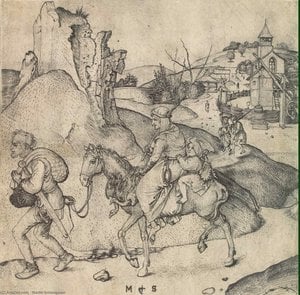
Schongauer är främst känd för sina 116 kopparstick, där varje blad är identifierat med hans monogram. Dessa tryck spreds vidsträckt över hela Europa och fick en betydande inverkan på utvecklingen av grafiska tekniker och konstnärliga stilar. Hans gravyrer skildrade ofta religiösa scener, porträtt och allegoriska motiv.
- Madonna i Rosengården (1473): En betydelsefull målning som visar hans förmåga att avbilda delikata detaljer och emotionellt djup.
- Kopparstick: Inklusive Sankt Antonius frestelse, Hyrdenas tillbedjan och många andra, vilka demonstrerar hans mästerskap inom gravyren.
Historisk betydelse och arv
Martin Schongauers inverkan på konstvärlden var omfattande. Han var en av de första tyska konstnärerna som uppnådde internationellt erkännande som gravör. Hans tryck var högt eftertraktade och kopierades i stor skala, vilket spred hans konstnärliga stil över hela Europa. Det är till och med dokumenterat att Michelangelo själv studerade och kopierade ett av Schongauers kopparstick – Sankt Antonius prövning – vilket vittnar om den höga vördnad som senare mästare kände för Schongauer.
Schongauers arbete överbryggade klyftan mellan gotisk konst och renässansen, och banade väg för konstnärer som Albrecht Dürer. Hans innovativa användning av gravyrtekniker och hans hängivenhet till konstnärlig detalj lämnade ett bestående arv inom den grafiska historien och den nordeuropeiska konsten.
Död
Martin Schongauer avled i Breisach den 2 februari 1491, och efterlämnade ett enastående konstnärskap som än idag hyllas för sin konstnärliga kvalitet och historiska betydelse.
Frågor & svar
I vilken stad och vilket land föddes Martin Schongauer?
Martin Schongauer föddes i Colmar i Frankrike.
Var och när föddes Martin Schongauer?
Martin Schongauer föddes i Colmar år 1450.
Var kommer Martin Schongauer ifrån?
Martin Schongauer föddes i Frankrike.
Var kan jag hitta statistik om Martin Schongauers verk?
En Statistik-sida finns för Martin Schongauer, som presenterar statistik om konstnärens verk på denna webbplats.
Kan jag utforska Martin Schongauers verk efter motiv?
Sidan Ämnesatlas visar Martin Schongauers konstverk kategoriserade efter motiv.
Hur kan jag se alla konstverk skapade av Martin Schongauer?
Varje verk av Martin Schongauer på denna webbplats kan utforskas via artistens Alla konstverk-sida.
Under vilken historisk period verkade Martin Schongauer?
Martin Schongauer verkade under perioden Renässansen. Perioden placerar konstnärens verksamhet i ett historiskt sammanhang.