The Enduring Vision of Karl Lagerfeld
Karl Otto Lagerfeld, a name synonymous with reinvention and enduring style, was more than just a fashion designer; he was a cultural phenomenon. Born in Hamburg, Germany, in 1933, his life story is one of relentless creativity and an unwavering dedication to the art of design. From his early beginnings sketching designs as a young boy, captivated by the world of haute couture, it became clear that Lagerfeld possessed a unique artistic sensibility. His family’s move to Paris in the wake of rising political tensions proved pivotal, immersing him in the heart of the fashion world and setting the stage for an extraordinary career. He wasn't merely observing trends; he was destined to *create* them. The removal of the “t” from his surname – Lagerfeldt becoming Lagerfeld – was an early indication of his desire to shape his own narrative, to craft a brand as precise and impactful as his designs.
Early Life and Artistic Beginnings
Karl Otto Lagerfeld’s formative years instilled in him a profound appreciation for visual arts and meticulous craftsmanship. Born into a wealthy family with roots in Hamburg's wine trade, he experienced an upbringing characterized by intellectual curiosity and artistic encouragement. His father, Christian Lagerfeld, possessed a remarkable intellect and spoke nine languages—a legacy that profoundly influenced Karl’s own worldview. The Lagerfelds’ relocation to Paris amidst the anxieties of World War I marked a significant turning point, exposing young Karl to the vibrant energy of Parisian culture and fostering his burgeoning passion for design. From an early age, he demonstrated an exceptional talent for sketching and illustrating, capturing the beauty of the world around him with remarkable accuracy. These formative experiences would ultimately shape Lagerfeld’s artistic vision throughout his illustrious career.
A Breakthrough in Haute Couture
Lagerfeld's formal education included studies at Jacques de Bascher, where he honed his technical skills and developed a deep understanding of garment construction—a foundation that would serve him exceptionally well during his early professional endeavors. Recognizing his innate talent for design, he swiftly transitioned from sketching to creating couture garments, establishing himself as an apprentice under Pierre Balmain – a master craftsman who instilled in Lagerfeld the importance of precision and artistry. This apprenticeship solidified his commitment to mastering the craft of haute couture, shaping his aesthetic sensibilities and preparing him for collaborations with some of the most influential designers of his time. It was during this period that Lagerfeld began to cultivate his signature style—characterized by sharp tailoring, innovative silhouettes, and an audacious spirit—a style that would become synonymous with his name.
The Rise of Chanel and Reinventing Luxury
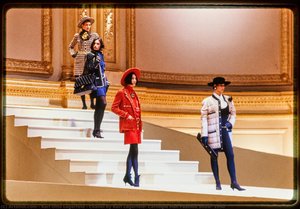
Lagerfeld’s career took a decisive turn in 1983 when he accepted the role of creative director at Chanel – a house facing considerable challenges and struggling to recapture its former glory. Recognizing the need for revitalization, Lagerfeld didn't attempt to replicate Coco Chanel’s legacy verbatim; instead, he *reinterpreted* it—injecting energy and modernity while honoring the core principles of elegance and sophistication. He skillfully reimagined Chanel’s iconic tweed suit, updating its proportions and styling for contemporary women, demonstrating his ability to adapt classic codes to evolving tastes. Lagerfeld's genius lay in his understanding that true innovation wasn’t about abandoning tradition but rather elevating it—a principle he consistently upheld throughout his career. His transformative vision propelled Chanel back to the forefront of the fashion world, securing its position as one of the most desirable and influential brands globally.
A Legacy Beyond Fashion
Beyond his contributions to haute couture, Lagerfeld cultivated a multifaceted artistic persona that extended far beyond the runway. He was a celebrated photographer whose images graced galleries and appeared in published volumes—capturing moments of beauty and conveying emotion with unparalleled sensitivity. He possessed an unwavering fascination for literature and amassed over 300,000 books—reflecting his intellectual curiosity and lifelong pursuit of knowledge. Furthermore, Lagerfeld’s distinctive personal style—marked by the iconic white powdered pigtail, dark sunglasses, fingerless gloves, and high-collared shirts—became instantly recognizable—establishing him as a cultural icon whose influence continues to resonate today. Karl Lagerfeld's enduring legacy transcends fashion; he remains an inspiration for artists, designers, and anyone who dares to embrace creativity and challenge conventions—a testament to the transformative power of artistic vision.