Jean-Baptiste Debret: En nyklassisk målare och pionjär inom brasiliansk konstutbildning
- Född: Paris, Frankrike (18 april 1768)
- Död: Paris, Frankrike (1848)
Tidigt liv och konstnärlig skolning
Jean-Baptiste Debret var en fransk målare och tecknare som hyllades för sin nyklassiska stil. Han föddes i Paris 1768 och fick sin formella konstnärliga utbildning vid den prestigefyllda franska konstakademin. En avgörande influens under hans utveckling var Jacques-Louis David, en berömd nyklassicistisk konstnär som dessutom var släkt med Debret. Under Davids vägledning förfinade Debret sina färdigheter och absorberade nyklassicismens principer – en stil som betonade klassisk återhållsamhet, idealiserade former och ett förstärkt emotionellt uttryck.
Karriärhöjdpunkter: Framgång vid Salongen och resor till Brasilien
Debret gjorde sin debut vid Salon des Beaux-Arts 1798, där han vann en andra pris. Hans tidiga verk speglade den nyklassiska estetiken och avbildade ofta historiska scener som resonerade med tidens moraliska klimat. En betydande vändpunkt i Debrets karaktär inträffade i mars 1816 när han anslöt sig till den franska konstnärliga missionen till Brasilien. Denna resa visade sig vara transformativ, både personligt och professionellt.
- Den franska konstnärliga missionen: Debrets deltagande i denna mission underströk Frankrikes engagemang för kulturellt utbyte och konstutbildning utomlands.
- Den kejserliga konstakademin: I december 1822 etablerade han sin atelier vid den kejserliga konstakademin i Rio de Janeiro, där han snabbt blev en uppskattad lärare.
- Den första brasilianska konstutställningen: Debret ledde arbetet med att organisera Brasiliens allra första konstutställning, där han visade både sina egna verk och sina studenters – en milstolpe för den framväxande brasilianska konstscenen.
Konstnärlig stil och betydelsefulla verk
Debrets målningar kännetecknas av sin noggranna detaljrikedom och trohet mot nyklassiska principer. Hans motivvärld omfattade ofta historiska händelser, porträtt och scener som skildrade det brasilianska livet och kulturen. Hans arbete ger ovärderliga inblickar i 1800-talets Brasilien.
- Nyklassisk influens: Debrets stil är djupt rotad i den nyklassiska traditionen, vilket märks i hans betoning på klarhet, ordning och idealiserade former.
- Historiska scener: Många av hans målningar skildrar betydelsefulla historiska ögonblick, vilket speglar en önskan att utbilda och inspirera genom konsten.
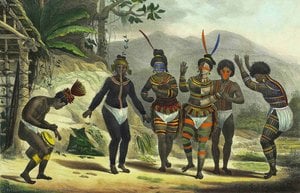
- Brasilianskt motivval: Hans tid i Brasilien ledde till ett allt större fokus på att avbilda brasilianska landskap, ursprungsbefolkningar och det koloniala livet.
Betydelsefulla verk av Jean-Baptiste Debret kan hittas på webbplatsen WahooArt, bland annat:
- Sacred Ceremony of D. Pedro 1 ° Emperor of Brazil in Rio de Janeiro 1 ° December 1822 – En detaljerad litografi som fångar ett avgörande ögonblick i Brasiliens historia.
- Napoléon harangue les troupes bavaroises et wurtembourgeoises à Abensberg, 20 avril 1809 – En kraftfull skildring av Napoleon som talar till sina trupper.
- Indians Crossing A Creek – Ett exempel på hans detaljerade skildringar av ursprungsbefolkningens liv.
- Indigenous Population Of Cantagalo, C.1826 – En akvarell som visar upp brasiliansk kultur och landskap.
Arv och senare år
Debret återvände till Frankrike 1831 och valdes in som medlem i Académie des Beaux-Arts. Han är kanske mest känd för sin monumentala tredelade serie av gravyrer, Voyage pittoresque et historique au Brésil, som publicerades 1834. Detta verk fungerade som ett visuellt register över livet i Brasilien under hans vistelse där och bidrog betydligt till Europas förståelse av landet. Trots att han uppnådde stor erkännande, dog Debret fattig i Paris 1848.
- Voyage Pittoresque: Hans publikation förblir en ovärderlig resurs för både historiker och konstentusiaster.
- Inflytande på brasiliansk konstutbildning: Debrets bidrag till konstutbildningen i Brasilien lämnade ett bestående arv som hjälpte till att lägga grunden för utvecklingen av brasiliansk konstnärlig talang.
För ytterligare information om Jean-Baptiste Debret och hans verk, vänligen besök webbplatsen WahooArt eller konsultera Wikipedias sida om Museu Nacional de Belas Artes.
Frågor & svar
Var och när föddes Jean-Baptiste Debret?
Jean-Baptiste Debret föddes i Paris år 1768.
What other names is Jean-Baptiste Debret known by?
Jean-Baptiste Debret appears under the alternate names Jean Baptiste Debret, Debret.
Under vilken historisk period verkade Jean-Baptiste Debret?
Jean-Baptiste Debret verkade under perioden Tidig modern tid. Perioden placerar konstnärens verksamhet i ett historiskt sammanhang.
Var kan jag se Jean-Baptiste Debrets konstverk i kronologisk ordning?
Jean-Baptiste Debrets konstverk kan ses i kronologisk ordning på artistens Tidslinje för konstverk-sida.
Hur är Jean-Baptiste Debrets karriär uppdelad i olika perioder?
Kronologi för Jean-Baptiste Debret är en rullningsbar tidslinje som presenterar konstnärens verk i kronologisk ordning, uppdelade i kapitel efter olika karriärperioder.
Var kommer Jean-Baptiste Debret ifrån?
Jean-Baptiste Debret föddes i Frankrike.
Var kan jag se färgprofilen i Jean-Baptiste Debrets konstnärskap?
Färgprofilen för Jean-Baptiste Debrets verk visas på artistens Palettens genom-sida.
Hur hittar jag alla verk av Jean-Baptiste Debret inom ett visst medium?
Jean-Baptiste Debrets verk kan bläddras efter medium på Jean-Baptiste Debrets Alla medier-sida.