Frans Vervloet: A Venetian Visionary
Frans Vervloet (b. 1795, Mechelen, d. 1872, Venezia) stands as a prominent figure in Belgian Romantic painting and printmaking, renowned for his meticulous depictions of Venetian landscapes and architectural grandeur. Born into a family steeped in artistic tradition, Vervloet’s formative years were marked by exposure to the burgeoning neoclassical movement, which instilled in him an appreciation for classical ideals of beauty and proportion – influences that would subtly shape his distinctive style. This early influence fostered a deep understanding of form and harmony, guiding his artistic explorations throughout his career.
Early Life & Artistic Training
Vervloet’s artistic journey commenced at Saint John's College in Leuven, where he diligently honed his drawing skills under the watchful eye of Jean-Baptiste Oudry. Oudry recognized Vervloet’s considerable talent and championed independent study alongside formal instruction, encouraging experimentation that would prove crucial to Vervloet’s evolving artistic vision. This formative period instilled a profound respect for observation—a cornerstone of Vervloet's subsequent stylistic choices.
Venetian Landscapes: Capturing Light & Atmosphere
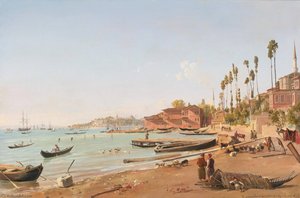
Vervloet’s artistic breakthrough materialized during his extended residency in Venice between 1820 and 1830. The city’s luminous canals, majestic palaces, and vibrant squares captivated Vervloet’s imagination, inspiring him to produce a breathtaking series of paintings that epitomized the Romantic impulse to seize fleeting moments of sublime splendor. His canvases pulsated with life—infused with masterful use of light and color—skillfully conveying the ethereal quality of Venetian air and mirroring the shimmering surfaces of water. He sought to capture not merely what he saw, but also *how* it felt – a testament to his artistic sensitivity.
Notable Works: “A Girl at a Window,” “View of Piazza San Marco, Venice,” “Venice, a view of Saint Mark’s Square Venice, a view of the Palazzo Ducale and the Riva degli Schiavoni”
Technique: Vervloet perfected tonal realism combined with atmospheric perspective—a technique that achieved unparalleled accuracy in portraying Venetian vistas. This meticulous approach demanded painstaking attention to detail, resulting in canvases imbued with remarkable depth and luminosity.
Symbolism & Artistic Legacy
Vervloet’s Venetian landscapes transcended mere visual representation; they embodied Romantic ideals – beauty, melancholy, and contemplation – reflecting a profound engagement with the human condition. His work served as an inspiration for subsequent Belgian artists, establishing him as a pivotal figure in shaping the Romantic aesthetic. Vervloet's unwavering dedication to observation and his masterful technique ensured that his legacy endured—his artworks remain treasured examples of Romantic idealism and artistic excellence, continuing to resonate with audiences today. He is remembered not only for his technical prowess but also for his ability to evoke emotion and convey a sense of wonder.