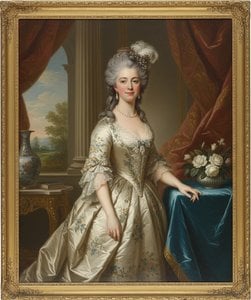
Francis Hayman (1708 – 1776): Pioneer of Rococo Portraiture and Royal Patronage
- Early Life and Artistic Formation
- Theatre Career and Initial Influences
- The Vauxhall Gardens Series: A Landmark Achievement
- Portraiture and Literary Collaborations
- Legacy and Influence on British Art History
Early Life and Artistic Formation
Francis Hayman was born in Exeter, Devon, England, in 1708, into a respectable family. His artistic inclinations began to develop early, nurtured by Robert Brown, a local portrait painter who instilled in him the foundational principles of visual representation. Recognizing his talent, Brown encouraged Hayman’s pursuit of art, shaping his initial understanding of technique and composition. This formative period established a bedrock for Hayman's subsequent explorations into diverse artistic styles.Theatre Career and Initial Influences
Hayman’s career commenced as a scene painter at Drury Lane Theatre in London, where he honed his skills crafting theatrical illusions and capturing the dynamism of performance. Simultaneously, he performed minor roles on stage, gaining invaluable experience within the vibrant world of Elizabethan theatre. Crucially, Hayman absorbed considerable influence from the prevailing Rococo style—a movement originating in France that championed elegance, ornamentation, and pastel hues—which profoundly impacted his artistic sensibilities.The Vauxhall Gardens Series: A Landmark Achievement
Perhaps Hayman’s most celebrated accomplishment was his undertaking of a monumental commission by Jonathan Tyers to decorate the supper boxes at Vauxhall Pleasure Gardens. This ambitious project resulted in a series of large-scale history paintings depicting scenes from contemporary British life, capturing the fashions and social customs of the era with remarkable detail. The engravings produced from these canvases stand as invaluable records of Georgian London—a testament to Hayman’s artistic vision and technical prowess.Portraiture and Literary Collaborations
Beyond his decorative paintings, Hayman excelled as a portraitist, producing evocative depictions of prominent figures – including David Garrick as Richard III – capturing their personalities with sensitivity and nuance. He collaborated extensively with writers like Samuel Richardson, illustrating Pamela and Milton’s Paradise Lost and Paradise Regained, demonstrating his versatility as an artist adept at conveying narrative through visual imagery. His association with Joshua Reynolds fostered a fruitful artistic partnership, cementing Hayman's position as one of the foremost portrait painters of his time.Legacy and Influence on British Art History
Francis Hayman’s contribution to British art history is undeniable. He established the Royal Academy in 1768 alongside Joshua Reynolds, shaping the artistic landscape of London and fostering a new generation of painters committed to realism and elegance. His influence extended beyond his own work; he mentored artists like Thomas Gainsborough, ensuring that his stylistic innovations would endure for decades to come. Hayman’s legacy resides not only in his masterpieces but also in his role as a catalyst for artistic progress—a true pioneer of Rococo portraiture and a champion of British cultural heritage.Frågor & svar
I vilken stad och vilket land föddes Francis Hayman?
Francis Hayman föddes i Exeter i Storbritannien.
Under vilka andra namn är Francis Hayman känd?
Francis Hayman förekommer även under namnen Hayman, Francis.
Kan jag sortera Francis Haymans konstverk efter färg?
Färgindex för Francis Hayman är en sida som organiserar konstnärens verk efter deras färger.