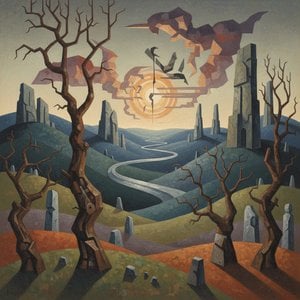
Celia Paul: A Portrait of Intimacy and Timeless Observation
Celia Paul (born 11 November 1959) is an Indian-born British painter, best known for her intense, haunting portraits of her close family and herself. Paul lives and works in London, England. Her art explores the complexities of interior and exterior life, looping back and forth through time to the people and places closest to her—a singular preoccupation that distinguishes her from many other artists of her generation.
Early Life and Education
Paul was born in Trivandrum (formerly Thiruvananthapuram), South India, to missionary parents. Her father, a Baptist minister, instilled in her a deep appreciation for faith and contemplation, while her mother, a teacher, nurtured her intellectual curiosity. Despite the cultural differences between her upbringing and later life in England, Paul’s formative years fostered a sensitivity to observation and an understanding of human psychology—qualities that would prove crucial to her artistic development. She studied at Slade School of Fine Art in London from 1976–81, where she met Lucian Freud who served as visiting tutor. This encounter profoundly impacted her artistic vision, introducing her to Freud’s uncompromising approach to portraiture and establishing a lasting creative partnership that spanned decades. The relationship between Paul and Freud was marked by mutual respect and intellectual stimulation, resulting in several collaborative paintings—most notably “Girl in a Striped Nightshirt” (1983–85), which remains a seminal work of British art history.
The Influence of Lucian Freud and Gwen John
Freud’s influence extended beyond technique; he instilled in Paul a belief that the artist must confront uncomfortable truths about themselves and their subjects—a conviction she consistently pursued throughout her career. Similarly, Gwen John, whose quiet landscapes and portraits captivated Paul's imagination, encouraged her to explore the subtleties of perception and emotion. John’s meticulous attention to detail and her ability to convey inner states resonated deeply with Paul’s artistic sensibilities, shaping her stylistic choices and thematic concerns. These two artists served as guiding lights for Paul, fostering a commitment to honesty and vulnerability in her work.
Style and Technique: Intimate Observation and Material Depth
Paul's paintings are characterized by an extraordinary level of detail—almost obsessive—combined with a remarkable ability to capture the essence of her subjects’ inner lives. She eschews grand gestures or dramatic poses, favoring instead carefully constructed compositions that convey a sense of stillness and contemplation. Her palette is muted and restrained, reflecting her belief that color should serve as a tool for psychological exploration rather than decorative embellishment. Paul employs oil paint with painstaking precision, layering thin glazes to achieve luminous surfaces that subtly shift in hue and tone—a technique honed over years of practice and informed by Freud’s insistence on confronting the complexities of human experience. Her canvases are imbued with an almost palpable sense of atmosphere, capturing not just what is seen but also what is felt.
Major Achievements and Legacy
Paul's work has garnered critical acclaim and commercial success, securing her place among Britain’s most respected artists. She has exhibited extensively in prestigious galleries worldwide—including Victoria Miro Gallery, London; Tate Britain; The Metropolitan Museum of Art, New York; and Fondation Beyeler, Basel—demonstrating a steadfast dedication to artistic excellence. Her portraits are particularly notable for their unflinching honesty and psychological depth, offering profound insights into the human condition. Paul’s exploration of familial relationships—particularly her depictions of her mother and sisters—has been praised for its sensitivity and compassion. Furthermore, her recent focus on landscapes and seascapes reflects a desire to engage with broader themes of time, memory, and the relationship between humanity and nature. Celia Paul's legacy lies in her unwavering commitment to artistic integrity and her ability to transform personal experience into universal truths—a feat that secures her enduring significance as one of Britain’s most distinctive voices in contemporary art.