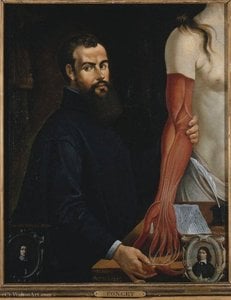
Andreas Vesalius: The Father of Modern Anatomy
Andreas Vesalius (1514 – 1564) stands as a monumental figure in the history of science and art, irrevocably altering our understanding of human anatomy and establishing a new paradigm for medical illustration. Born in Brussels, Belgium, Vesalius’s early life was marked by intellectual curiosity and a fascination with dissection—activities that would ultimately define his groundbreaking career. His father, Gerard Vesalius, was a physician who instilled in him a passion for observation and meticulous anatomical study, shaping the trajectory of Vesalius's scholarly pursuits.- Early Life & Education:
- Academic Pursuits at Padua:
- De Humani Corporis Fabrica: A Revolution in Illustration
- Influence and Legacy
De Humani Corporis Fabrica: A Revolution in Illustration
Vesalius’s magnum opus, *De Humani Corporis Fabrica* ("On the Fabric of Human Body"), published in 1543, represents a watershed moment in anatomical history. This monumental atlas meticulously documented human anatomy through detailed drawings—the first truly accurate representations based on dissection—challenging centuries of inaccurate depictions propagated by Galen and Aristotle. Vesalius’s artistic skill was unparalleled; he painstakingly recreated cadavers with astonishing precision, capturing subtle muscular movements and skeletal structures with unprecedented realism. The illustrations themselves are considered masterpieces of Renaissance art, demonstrating a mastery of perspective, shading, and anatomical detail that surpassed anything seen before.- Detailed Anatomical Drawings:
- Innovative Artistic Techniques:
- Impact on Medical Knowledge:
Influence and Legacy
The impact of Vesalius’s work extended far beyond the immediate scientific community. *De Humani Corporis Fabrica* fundamentally reshaped anatomical education and spurred advancements in surgical techniques. Vesalius's insistence on dissection as a method of study established a precedent that endured for centuries, influencing generations of anatomists and physicians. Furthermore, his artistic legacy continues to inspire artists today—his drawings serve as enduring models of anatomical accuracy and aesthetic beauty. Vesalius’s contribution to both art and science cemented his place as “The Father of Modern Anatomy,” ensuring his name would forever be synonymous with the pursuit of knowledge through observation and artistic excellence.Frågor och svar
Var kan jag se färgprofilen i Andreas Vesaliuss konstnärskap?
Andreas Vesaliuss färgval i de verk som listas på denna webbplats kan studeras på artistens Palettens genom-sida.
Kan jag bläddra i Andreas Vesaliuss verk efter stämning?
Konstnärens Känslomässigt rum-sida visar Andreas Vesaliuss konstverk sorterade efter stämning.
Hur kan jag följa Andreas Vesaliuss verk i kronologisk ordning?
Andreas Vesaliuss konstverk kan ses i kronologisk ordning på artistens Konstverk efter datum-sida.