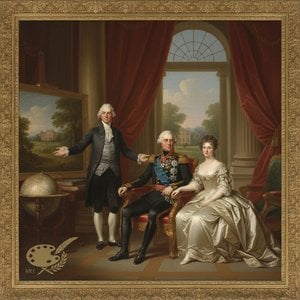
Alison Edith Le Plat: Capturing Rural Dignity and Family Bonds
Alison Edith Le Plat (1903–1967) emerged as a significant British portrait artist during the early 20th century, specializing in depictions of rural life and familial scenes—particularly those centered around the Debenham Estate in Suffolk. Her work reflects a keen observation of the human condition within the context of agricultural landscapes, imbued with a humanist sensibility that distinguishes her from many Impressionist contemporaries. Le Plat’s artistic vision was nurtured by her upbringing in Norfolk and honed through formal training at Slade School of Fine Art in London, where she studied under William Orpen and Frank Auerbach—influences evident in her textured brushstrokes and expressive use of color.
Early Life & Training
Born in Norwich, Alison Edith Le Plat’s artistic inclination began early, fueled by a fascination with the Norfolk countryside and its inhabitants. Her Slade education provided her with foundational skills in drawing and painting, fostering an appreciation for capturing nuanced emotion and detail. The rigorous training at Slade instilled in her a disciplined approach to observation and representation—skills that would prove invaluable throughout her career as an artist.
The Debenham Estate Project
Le Plat’s most celebrated achievement stemmed from her collaborative project with Robert Farr and Alice Debenham—the latter being a prominent landowner and champion of women’s suffrage—to document the daily life on the Debenham Estate during World War I. This ambitious undertaking resulted in a series of portraits capturing the dignity and resilience of individuals involved, offering invaluable insight into the social fabric of rural Britain at that pivotal moment. These paintings weren't merely visual records; they were attempts to convey the spirit of an era—the courage and fortitude displayed by ordinary people facing extraordinary circumstances. The Debenham Estate project solidified Le Plat’s reputation as a storyteller who skillfully blended artistic technique with humanist empathy.
Style & Technique
Le Plat’s artistic style is characterized by thick impasto—a technique where paint is applied thickly onto canvas—creating palpable surfaces that convey texture and depth. She employed a palette dominated by earthy tones, mirroring the landscapes she depicted, yet infused them with vibrant hues to express inner feelings and psychological states. Auerbach's influence particularly shone through in her bold compositional choices and expressive brushwork. This distinctive approach – prioritizing tactile sensation alongside color—allowed Le Plat to communicate not just what she saw but also how she felt about what she observed. Her canvases pulsate with energy, reflecting the emotional resonance of her subjects’ lives.
Notable Works & Legacy
Among Le Plat’s most recognizable pieces are portraits of Lady Debenham and Robert Farr—images that convey not only physical likeness but also a profound understanding of their subjects’ personalities and inner lives. Her depictions of family members within the Debenham Estate resonate with warmth and compassion, reflecting her humanist ethos. These works stand as testament to Le Plat's ability to capture the essence of human experience – a rare accomplishment in portraiture that continues to inspire admiration for its artistic craftsmanship and emotional depth. She remains a significant figure in British art history, remembered for her dedication to documenting rural life during wartime and her unwavering commitment to portraying individuals with sensitivity and honesty.
Sources: Art UK | Discover Artworks; Alison Edith Le Plat (1903–1967) - Art UK