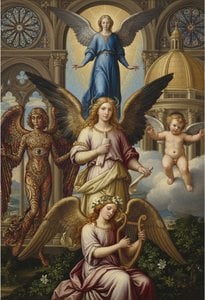
William Blake – En Visionärs Färd
William Blake, född i London den 28 november 1757, var en figur för alltid utanför sin tid, ändå bestämd att bli en av de mest älskade konstnärer och poeter av Romantiken. Hans liv utspelades mot bakgrunden av ett snabbt förändrande England – en värld som kämpade med industrialisering, politisk uppror och skiftande religiösa övertygelser. Från enkla bördor som son till en hosier var hans tidiga år präglat av en intensivt vivid fantasi och en benägenhet för visionära erfarenheter som skulle djupgående påverka hans konstnärliga bana. Även om han i stort sett självlärt sig formella akademiker fick han tidigt instruktion i teckning, vilket snabbt avslöjade ett talent som pekade på den extraordinära vägen framför honom. Hans lärlingskap med graverare James Basire var avgörande och gav honom inte bara teknisk maestri utan också en förståelse för trycktekniker han senare revolutionerade. Dessa tidiga influenser – Westminster Abbey:s gotiska prakt och Michelangelos och Rafaelens klassiska former – tjänade som grundläggande element i hans utvecklande estetik, även om Blake aldrig var någon att hålla sig bunden av konvention.
Teknik och Innovation: Illuminerad Tryckning
Blakes konstnärliga innovation låg inte bara i ämnet utan fundamentalt i *hur* han skapade. Missnöjd med konventionella graveringstekniker utvecklade han en unik metod kallad ”illuminerad tryckning”. Detta innebar att både text och illustration etsades på kopparplattor och sedan färglades plattorna för hand – ett arbetsamt men djupt personligt tillvägagångssätt som möjliggjorde fullständig konstnärlig kontroll. Detta var inte bara illustration följt av poesi utan en integrerad konstform där bild och vers var oskiljaktigt sammanlänkade, var och en förstärkte betydelsen av den andra. Hans reliefets teknik, född från ett påstått visionärt möte efter sin brors död, särskiljde ytterligare hans verk genom att ge det en distinkt textil struktur och möjliggjorde större konstnärlig frihet än traditionella metoder. Utöver tryckning arbetade Blake också med akvarell och tempera målningar ofta föreställande bibliska scener eller fantastiska ämnen fyllda med symbolisk vikt. En nyckelkaraktäristik för hans stil var en avsiktlig avsaknad av linjär perspektiv till förmån för ett mer känslomässigt och symboliskt representation – ett nedstämpande av rum som drog tittaren in i hjärtat av hans visionära värld.
Tema om oskuld och erfarenhet
Hjärtat av Blakes konstnärliga produktion ligger i dess utforskning av djupa teman: oskuldens och erfarenheten dualitet, förnuftets begränsningar kontra fantasin befriande kraft och ett skoningslöst kritik mot samhällsnormer.
- Songs of Innocence and of Experience (1794), kanske hans mest tillgängliga verk presenterar en motsvarande bild av barndom – en idyllisk och utan smuts, erfarenheten präglad av nöd och korruption.
- The Marriage of Heaven & Hell (1793) är ett provocerande prosa dikt som utmanar konventionell moral och hyllar energi, begär och uppror mot begränsande doktriner.
- Hans illustrationer till Dantes *Gudomliga Komedi* visar hans dramatiska vision och förmåga att översätta komplexa berättelser till kraftfull visuell bildspråk.
Blakes symbolik är intensivt personlig men universellt resonansfull. Tigern, i hans berömda dikt, förtrycker både skönhetens häpnadsväckande prakt och skräcken inför skapelsens mäktighet. Jerusalem, ett omfattande episkt poema som han ägnade år åt återspeglar hans religiösa och politiska övertygelser – en vision av Albion (gamla namn för Storbritannien) fri från förtryck. Han var inte bara föreställande berättelser utan konstruerade hela mytologi, bebodd av archetypiska figurer som representerar tillstånd av sinne, krafter i naturen och den eviga kampen mellan gott och ont.
Ett arv återupptäckt: Blakes bestående inflytande
Under sitt liv förblev William Blake förhållandevis marginaliserad och förståddes inte av många av sina samtida. Hans verk kritiserades ofta som excentrisk eller till och med galen. Han kämpade ekonomiskt genom hela sitt liv och förlitade sig på uppdrag och stödet från en liten krets av förmögna personer som Thomas Butts. Trots detta började Blakes rykte växa stadigt efter sin död den 12 augusti 1827. Första generationens Pre-Raphaelites, förtrollade av hans visionära stil och symboliska bildspråk omfamnade honom som en liknande själ. Senare rörelser – Symbolism och Modernism – hittade resonans i hans betoning på fantasi, subjektiv erfarenhet och andlig övertygelse. Blakes arv är inte bara hans konstnärliga prestationer utan också hans okuvliga engagemang för kreativ frihet – ett testament till fantasin bestående kraft i en värld ofta dominerad av förnuft och begränsning. Han var en pionjär inom romantiken och hans verk fortsätter att inspirera poeter, målare och tänjare över discipliner.



 Visa i rummet
 Byt till tryckta exemplar
 Skicka
 Dela
Dela
 Detaljer
 Guide
Guide

 Ladda ner
 Liknande objekt
 Röntgen
 Bildspel
 Besökstatistik
 Läs mer






































 Glasalternativet är endast tillgängligt i storlekar under 110 cm.