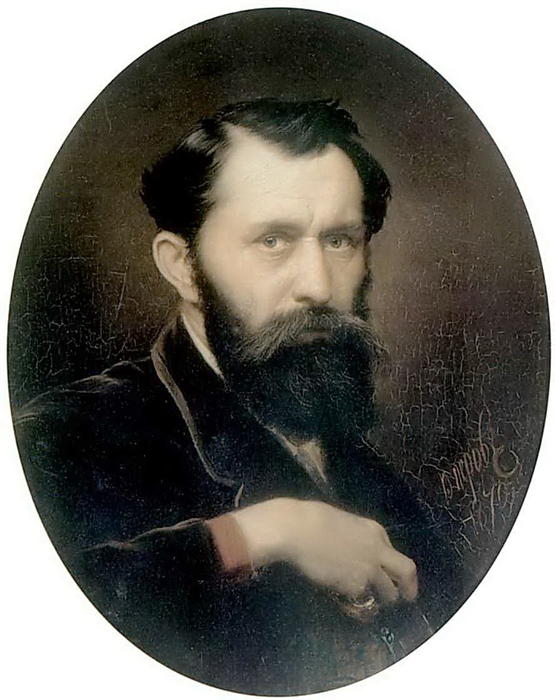
Vasily Grigoryevich Perov: En Röst från Russets Själ
Vasily Grigoryevich Perov, född Vasily Vasiliev den 2 januari 1834 (21 december 1833 enligt det gamla stilen) i den avlägsna sibiriska staden Tobolsk, etablerade sig som en central figur inom rysk konst – en målare vars verk blev synonymt med kritisk realism. Hans livsöde är i sig fyllt av de sociala komplexiteter han senare skulle måla på duken. Född ur äktenskap utanför äktenskapet till Baron Grigory Kridener och Akulina Ivanova, präglades Perovs tidiga år av en ovanlig fostran som väckte inom honom en skarp känslighet för samhällets orättvisor. Namngivningen “Perov”, härledd från det ryska ordet för ‘fjäder’, ett hyllning till hans tidiga talang i kalligrafi, antydde hans engagemang för att noggrant dokumentera den värld han såg – en värld ofta förbisedd eller medvetet döljd. Hans konstnärliga resa började vid Alexander Stupins konstskola i Arzamas, där han finslipade sina grundläggande färdigheter innan han gick vidare till Moskvas skola för måleri, skulptur och arkitektur 1853. Denna period var avgörande för att forma hans tekniska förmågor och exponera honom för en bredare uppsättning konstnärliga influenser. Tidig erkännelse kom i form av silver- och guldmedaljer från den kejserliga konstakademin för verk som “Ryttmästarens undersåt” och, mest framträdande, “Predikan i byn” 1861 – ett målning som skulle lyfta honom till nationell berömmelse och ge honom möjligheten att studera utomlands.
En Målare av Det Vanliga Livet
Perovs konstnärliga vision var djupt rotad i en förpliktelse att porträttera det ryska samhället med skoningslös ärlighet. Han avvek från de idealiserade representationer som många av hans samtida föredrog, och valde istället att fokusera på livet till vardags – bönder, arbetare, marginaliserade och bortglömda. Hans målningar var inte bara representationer av verkligheten; de var kraftfulla sociala kommentarer som avslöjade svårigheterna, orättvisorna och den andliga tomheten som präglade 1800-talets Ryssland. “Predikan i byn” kritiserade subtilt religiös hyckleri genom att skildra en ointresserad församling under en predikning, medan “Arbetare vid vattenhålet” visar upp de dagliga kampen för det vanliga folket. Hans teknik präglades av noggrannhet i detaljerna, dämpade färger och ett mästerligt användande av ljus och skugga för att skapa dramatiska effekter. Han var inte intresserad av att romantisera fattigdom eller lidande; snarare sökte han att presentera det med värdighet och empati, tvinga betraktaren att konfrontera de egna samhällets obehagliga sanningar. Verk som “Sista resan”, som skildrar en landsbygdsbegravning, och “Vattenbärare” är kraftfulla exempel på hans förmåga att väcka djupa känslor genom realistiska porträtt av vardagslivet. Perovs skicklighet sträckte sig bortom oljemålningar; han utmärkte sig också inom grafitering, som visas i den kraftfulla svartvita verket “Naushnitsa. Innan stormen”, vilket visar hans behärksamhet i att skapa komplexa detaljer och djupa skuggor.
En Rörelse Född: Peredvizhniki
Perovs engagemang för realism stämde väl överens med den växande andan av konstnärligt uppror som ledde till bildandet av Peredvizhniki (Vandringsmännen) 1870. Denna grupp ryska realistiska målare bröt med begränsningarna i akademin och etablerade en oberoende förening dedikerad till att visa konst över hela Ryssland – nå ut till publiken bortom de gränserna för St Petersburg och Moskva.
- Peredvizhniki syftade till att bringa konst direkt till folket,
- att adressera samhällsfrågor genom sitt arbete,
- och att främja en unikt rysk konstnärlig identitet.
Perov var inte bara medlem; han var en grundande kraft, som spelade en nyckelroll i att forma gruppens ideal och förespråka dess principer. Hans engagemang för att porträttera det vanliga ryssar resonerade djupt med Peredvizhnikers uppdrag, vilket stärkte hans position som en ledare inom gruppen. Vandringsmännarnas utställningar blev enormt populära och lockade stora publiker och väckte viktiga diskussioner om konst, samhälle och nationell identitet.
Huvudsakliga Verk och Arv
Vasily Perovs plötsliga död av tuberkulos 1882 i ålderdomen markerade en betydande förlust för rysk konst. Trots detta fortsatte hans arv att inspirera generationer av konstnärer som följde efter honom. Hans inflytande kan ses i verk av Ilya Repin och Vasily Surikov, båda mästare inom realistisk målning som vidareutvecklade den tradition han hjälpte till att etablera. Perovs målningar är relevanta idag inte bara för sin konstnärliga kvalitet utan också för sitt bestående sociala kommentarvärde. De fungerar som ett kraftfullt påminnelse om de svårigheter som vanliga människor har mött genom historien och fortsätter att väcka empati och förståelse. Hans verk finns nu hemma i framträdande samlingar, inklusive Tropinin och Contemporary Moscow Artists Museum, vilket säkerställer att hans vision fortsätter att resonera med publiken över hela världen. *Perovs bidrag sträcker sig bortom ren konstnärlig skicklighet; han var en social självkritik inramad i målningar, en röst för de tysta och en pionjär inom rysk realism.* Han lämnade efter sig ett verk som inte bara dokumenterade hans tid utan också utmanade den, förändrade för alltid landskapet för rysk konst.


 Visa i rummet
 Byt till tryckta exemplar
 Skicka
 Dela
Dela
 Detaljer
 Guide
Guide

 Ladda ner
 Liknande objekt
 Röntgen
 Bildspel
 Besökstatistik


 Läs mer






































 Glasalternativet är endast tillgängligt i storlekar under 110 cm.


