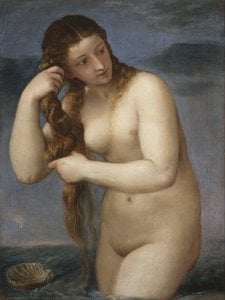
Om konstnären
En Renässansens Eko i Den Nya Världen
Titian Ramsay Peale II intar en fascinerande, ofta förbisedd plats inom 1800-talets amerikanska konstlandskap. Född i Philadelphia 1799 växte han upp i ett konstnärligt arv som yngste son till Charles Willson Peale, en nyckelfigur inom tidig amerikansk porträttkonst och grundaren av nationens första museum. Trots faderns stora inflytande smidde Titian sin egen väg, djupt rotad i de estetiska idealen från Högre Renässansen, särskilt de som strålade från Venedig. Han replikerade inte bara stilar; han kanaliserade en djup konstnärlig känslighet och gav sina dukar en minutiös detaljrikedom och livfull färgpalett som skiljde honom från många av sina samtida. Hans liv utspelades mot bakgrunden av ett framväxande amerikanskt identitetsskapande, men hans hjärta förblev knutet till de klassiska mästarna, vilket skapade en spännande spänning mellan gammalvärldens vördnad och nyvärldens uttryck.
Från Naturforskarens Skissbok Till Målarens Duk
Peales tidiga år präglades av ett dubbelt intresse för konst och naturhistoria – en kombination som främjades av faderns mångfacetterade strävanden. Han följde med på expeditioner, framför allt Stephen Harriman Longs resa till Rocky Mountains 1819-20, där han dokumenterade flora och fauna med ett alltmer förfinat konstnärligt öga. Denna period handlade inte bara om att registrera observationer; det handlade om att *förstå* form, ljus och textur – färdigheter som skulle visa sig ovärderliga när han ägnade sin fulla uppmärksamhet åt måleriet. Hans arbete som naturforskare berikade hans konst, gav en vetenskaplig precision till hans skildringar av naturen, men också ingav dem en emotionell resonans som överträffade ren dokumentation. Han visade oss inte bara hur saker såg ut; han avslöjade deras inneboende skönhet och andliga betydelse. Denna hängivenhet åt båda disciplinerna märks i verk som ”The Tribute Money”, en dramatisk återgivning som visar mästerligt ljus och skugga påminnande om Rubens, och "Nymph and Shepherd", som blandar natur, mytologi och sensuell skönhet.
Venezianska Influenser Och Heliga Visioner
Påverkan av venetiansk kolorism – betoningen på rika, lysande färger och atmosfäriska effekter som förespråkades av konstnärer som Titian (efter vilken han tog sitt förnamn) – är obestridlig i Peales oeuvre. Han kopierade inte bara dessa mästare; han internaliserade deras principer och anpassade dem till sin egen konstnärliga vision. Detta märks särskilt i hans religiösa verk, som ”Altar Shrine with Four Saints” och "Adoration of the Shepherds". Dessa målningar är inte bara skildringar av bibliska scener; de är uppslukande upplevelser som drar betraktaren in i en värld av andlig kontemplation genom noggrant orkestrerade kompositioner och en mästerlig användning av färg för att framkalla känslor. Den minutiösa detaljrikedomen i dessa verk talar inte bara om hans tekniska skicklighet utan också om en djup vördnad för sitt ämne. ”The Beauty”, ett slående porträtt, demonstrerar ytterligare hans förmåga att fånga mänsklig form och karaktär med elegans och raffinement.
Återupptäckt Och Varaktig Betydelse
Under större delen av 1900-talet förblev Titian Ramsay Peale II till stor del dold från konsthistoriska berättelser. Hans verk passade inte snyggt in i rådande trender, och hans hängivenhet åt en klassisk stil kändes anakronistisk i ett snabbt föränderligt konstlandskap. Men de senaste åren har vittnat om en växande omvärdering av hans bidrag. Forskare och samlare erkänner den unika blandningen av amerikanska känsligheter och europeiska traditioner som präglar hans målningar. Återupptäckten av hans verk handlar inte bara om att fylla luckor i konsthistorien; det handlar om att få en djupare förståelse för de komplexa kulturella krafterna som formade 1800-talets Amerika. Peale representerar ett brobygge mellan världar, ett bevis på den bestående kraften i klassiska ideal och en påminnelse om att konstnärlig innovation ofta uppstår ur oväntade kombinationer av influenser. Hans målningar, som nu finns i samlingar som de på WahooArt, Uffizigalleriet och Palazzo Pitti, erbjuder ett övertygande inblick i ett glömt hörn av amerikansk konsthistoria – ett hörn upplyst av Renässansens strålande sken.
En Konstnärs Liv Och Arv
Peales liv var inte utan utmaningar. Efter faderns död kämpade han med att förvalta familjens museum och mötte ekonomiska svårigheter. Han fortsatte dock att måla, resa och samla kunskap inom både konst och naturhistoria. Hans engagemang i vetenskapliga illustrationer var betydande, och han introducerade litografitekniken till Nordamerika. Senare i livet fann han en ny sysselsättning som examinator på Patentkontoret i Washington D.C., där han utvecklade ett intresse för fotografi. Trots dessa skiftningar i karriären behöll han alltid sin kärlek till måleriet och sin förmåga att skapa verk av anmärkningsvärd skönhet och detaljrikedom.
Titian Ramsay Peale IIs arv är en påminnelse om att konstnärlig storhet inte alltid kräver omedelbar erkännande. Hans målningar, som nu återupptäcks och värderas av ett nytt generations samlare och forskare, vittnar om hans unika talang och hans förmåga att förena amerikansk realism med europeisk klassicism. Han var en konstnär som målade inom tältet – både bokstavligt under sina expeditioner och bildligt i skuggan av mer kända samtida – men vars verk nu äntligen lyser klart för alla att se.



 Visa i rummet
 Köp handmålat konstverk
 Skicka
 Dela
Dela
 Detaljer
 Guide
Guide

 Ladda ner
 Liknande objekt
 Röntgen
 Bildspel
 Besökstatistik


 Läs mer






































 Glasalternativet är endast tillgängligt i storlekar under 110 cm.