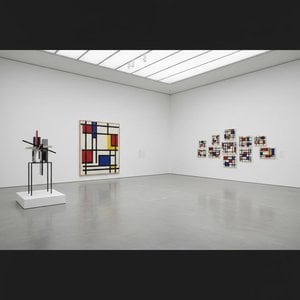
Visa i rummet Se i AR Köp handmålat konstverk Byt till digital bildförsäljning Skicka
Detaljer Studentguide för konstverk Lägg till i favoriter Ladda ner Liknande objekt Röntgen Bildspel Besökstatistik

Simultaneous Counter Composition.

Experience Theo van Doesburg's vibrant 1930 abstract masterpiece, a geometric explosion of color and form; discover this iconic De Stijl vision for your collection.

Theo van Doesburg (1883-1931): En revolutionär konstnär & arkitekt som grundade De Stijl. Hans geometriska abstraktioner och stilbildande idéer fortsätter att inspirera!

Giclée / Konsttryck

Giclée- eller canvasprint av museumskvalitet med snabb produktion och flexibla ytbehandlingsalternativ. ( Köp handmålat konstverk Byt till digital bildförsäljning)

Corner sample of the P118B picture frame: moulded polystyrene, 5 cm wide and 3 cm thick
P118B Skr10
Corner sample of the P118H picture frame: moulded polystyrene, 5 cm wide and 3 cm thick
P118H Skr10
Corner sample of the P118W picture frame: moulded polystyrene, 5 cm wide and 3 cm thick
P118W Skr10
Corner sample of the P438Z picture frame: moulded polystyrene, 5.5 cm wide and 3.5 cm thick
P438Z Skr10
Corner sample of the P508JH picture frame: moulded polystyrene, 7 cm wide and 3.5 cm thick
P508JH Skr12
Corner sample of the P508YH picture frame: moulded polystyrene, 7 cm wide and 3.5 cm thick
P508YH Skr12
Corner sample of the P805H picture frame: moulded polystyrene, 5 cm wide and 3.5 cm thick
P805H Skr10
Corner sample of the P805Z picture frame: moulded polystyrene, 5 cm wide and 3.5 cm thick
P805Z Skr10
Corner sample of the P919BZ picture frame: moulded polystyrene, 7 cm wide and 3.5 cm thick
P919BZ Skr10
Corner sample of the P919G picture frame: moulded polystyrene, 7 cm wide and 3.5 cm thick
P919G Skr10
Corner sample of the P919XJ picture frame: moulded polystyrene, 7 cm wide and 3.5 cm thick
P919XJ Skr10
Corner sample of the P959ZH picture frame: moulded polystyrene, 5 cm wide and 3 cm thick
P959ZH Skr10
Corner sample of the P968JZ picture frame: moulded polystyrene, 6 cm wide and 4 cm thick
P968JZ Skr12
Corner sample of the W106C picture frame: solid wood, 5 cm wide and 3 cm thick
W106C Skr8
Corner sample of the W218G picture frame: solid wood, 5 cm wide and 3 cm thick
W218G Skr10
Corner sample of the W218JH picture frame: solid wood, 5 cm wide and 3 cm thick
W218JH Skr8
Corner sample of the W218Y picture frame: solid wood, 5 cm wide and 3 cm thick
W218Y Skr10
Corner sample of the W307PJ picture frame: solid wood, 6 cm wide and 3 cm thick
W307PJ Skr10
Corner sample of the W316G picture frame: solid wood, 6 cm wide and 3 cm thick
W316G Skr10
Corner sample of the W316PJ picture frame: solid wood, 6 cm wide and 3 cm thick
W316PJ Skr8
Corner sample of the W316Y picture frame: solid wood, 6 cm wide and 3 cm thick
W316Y Skr10
Corner sample of the W398PJ picture frame: solid wood, 5 cm wide and 3 cm thick
W398PJ Skr8
Corner sample of the W4111J picture frame: solid wood, 6.5 cm wide and 3.5 cm thick
W4111J Skr10
Corner sample of the W500HY picture frame: solid wood, 7 cm wide and 5 cm thick
W500HY Skr15
Corner sample of the W500JH picture frame: solid wood, 7 cm wide and 5 cm thick
W500JH Skr15
Corner sample of the W692G picture frame: solid wood, 8 cm wide and 4 cm thick
W692G Skr12
Corner sample of the W849H picture frame: solid wood, 5 cm wide and 3 cm thick
W849H Skr8
Corner sample of the W940BG picture frame: solid wood, 7.5 cm wide and 4.5 cm thick
W940BG Skr15
Corner sample of the W953PJ picture frame: solid wood, 6 cm wide and 3.5 cm thick
W953PJ Skr8

Standardstorlek
anpassad
CM
INCH

Välj bland våra förinställda storlekar som motsvarar konstverkets ursprungliga proportioner.

bredd
höjd

Du kan ange egna mått för att passa en specifik ram eller yta. Om det valda måttet inte överensstämmer med originalbildens proportioner kommer vi antingen att beskära konstverket eller utöka bilden med en speglad eller enfärgad kant. En digital mockup skickas för ditt godkännande innan produktionen påbörjas.
Vänligen notera att förhandsvisningen på skärmen inte återspeglar den faktiska beskärningen eller utökningen. Endast mockuppen visar den slutgiltiga kompositionen korrekt.
Även om anpassade storlekar är möjliga, rekommenderar vi att du väljer ett mått från den fördefinierade listan för att bevara de ursprungliga proportionerna.

Leverans över hela världen () på 2 veckor istället för standard 4/5 veckor. (10 oktober)

Fri expressfrakt över hela världen
Högkvalitativ linnecanvas
Fullständig fraktförsäkring
Garantier för återbetalning av tullavgifter
Garantier för exakt färgåtergivning
100 dagars returrätt vid fabrikationsfel
100% pengarna tillbaka-garanti
Mängdrabatt erbjuds

Totalt pris

Skr 658

Simultaneous Counter Composition.

Giclée / Konsttryck

Reproduktionsstorlek

-

Totalpris

Skr 658

Snabbfakta

  • Subject or theme: Geometric composition
  • Artistic style: Abstract
  • Artist: Theo van Doesburg
  • Title: Simultaneous Counter Composition
  • Year: 1930

Konstquiz

Det finns endast ett korrekt svar på varje fråga.

Fråga 1:
What artistic movement is Theo van Doesburg most associated with?
Fråga 2:
What primary visual characteristic defines the composition of 'Simultaneous Counter Composition'?
Fråga 3:
In what year was 'Simultaneous Counter Composition' created?
Fråga 4:
The painting primarily utilizes which combination of colors, as described?
Fråga 5:
Theo van Doesburg's early artistic influences included styles reminiscent of which artist?

The Geometry of Inner Harmony: Exploring Theo van Doesburg's Abstraction

To stand before Theo van Doesburg’s Simultaneous Counter Composition is not merely to observe paint on canvas; it is to step into a meticulously constructed intellectual space where color and form engage in a vibrant, calculated dialogue. This piece, dating from 1930, stands as a powerful testament to the revolutionary spirit of De Stijl, the movement that sought to purify art down to its most essential geometric truths. Van Doesburg, an architect of abstraction, believed that true reality could be found not in the messy chaos of visible nature, but in the underlying harmony of pure lines and primary colors. The painting immediately envelops the viewer in a field of structured energy, inviting the eye to wander across its carefully balanced quadrants.

A Masterclass in Primary Structure

The composition itself is breathtaking in its deliberate organization. Divided into distinct yet interconnected sections—left, center, and right—the canvas pulses with a controlled chromatic symphony. We see the bold interplay of red, yellow, blue, black, and white, colors that carry immense symbolic weight within modernist thought. These hues are not simply placed side-by-side; they interact, their adjacency creating optical vibrations. The varying sizes and shapes of the squares suggest a dynamic tension, as if opposing forces—structure versus fluidity, chaos versus order—are locked in a perfect, silent negotiation. It is an exercise in visual equilibrium, where every seemingly arbitrary block contributes to the whole.

Historical Echoes: De Stijl's Vision

Understanding this work requires acknowledging its historical cradle: the fervor of Neoplasticism. Van Doesburg was instrumental in guiding art away from mere representation and toward a universal language built on abstraction. This painting embodies that quest for universal harmony, echoing the philosophical underpinnings of the early 20th century desire to rebuild culture after periods of immense upheaval. The rigid geometry is not a limitation, but rather an assertion of underlying cosmic order—a belief that even in the most abstract arrangement, there exists profound, discernible beauty and balance.

Bringing Geometric Vibrancy Home

For the collector or designer seeking to infuse a space with intellectual depth and vibrant energy, Simultaneous Counter Composition offers unparalleled impact. Its bold, graphic nature means it functions as both a striking piece of art and a powerful architectural accent. Reproducing this work allows one to bring the disciplined passion of early modernism into contemporary living. Imagine its clean lines juxtaposed against soft furnishings or rich wood tones; the painting acts as a brilliant focal point, demanding contemplation while simultaneously providing visual rest through its inherent balance.

Emotional Resonance and Technique

The emotional impact of this piece is one of exhilarating clarity. It feels both rigorously intellectual and deeply soulful. The technique, characterized by flat planes of color meeting at sharp, decisive edges, celebrates the purity of the painted surface. When considering a reproduction, note how the vibrancy of these primary colors—the way they seem to vibrate against each other—is crucial. Owning this piece is owning a conversation between structure and spirit, a vibrant reminder that even in apparent complexity, perfect harmony can be found.

Frågor och svar

Under vilket år skapades "Simultaneous Counter Composition." av Theo van Doesburg?

"Simultaneous Counter Composition." av Theo van Doesburg skapades år 1930.

Vilken teknik användes för "Simultaneous Counter Composition." av Theo van Doesburg?

"Simultaneous Counter Composition." är utförd i Painting.

Vilken känsla förknippas "Simultaneous Counter Composition." med?

"Simultaneous Counter Composition." av Theo van Doesburg förmedlar en Energetic emotionell ton.

Hur ljus är "Simultaneous Counter Composition." i sin helhet?

Sammantaget har "Simultaneous Counter Composition." registrerats som balanced. Upplevd ljusstyrka beskriver hur ljust eller mörkt verket framstår.

Vilken konstnär tillskrivs "Simultaneous Counter Composition."?

"Simultaneous Counter Composition." skapades av Theo van Doesburg. Informationen på denna sida beskriver Theo van Doesburgs originalverk.

Hur gammal var Theo van Doesburg när "Simultaneous Counter Composition." skapades år 1930?

När "Simultaneous Counter Composition." skapades år 1930, var Theo van Doesburg – född 1883 – 47 år gammal.

Vilken är den färgmässiga identiteten hos "Simultaneous Counter Composition." av Theo van Doesburg?

"Simultaneous Counter Composition." av Theo van Doesburg använder en Dark-palett, där Prussian Blue (#051e3b) är den dominerande färgen.


Om konstnären

Theo van Doesburg: The Architect of Abstraction

Theo van Doesburg, född Christian Emil Marie Küpper i Utrecht 1883, var en konstnär vars inflytande sträckte sig långt bortom bara målarfärg och penseldrag. Han var en revolutionär kraft som omformade grundvalarna för modern konst, en visionär vars resa började mitt i de kvarvarande eko av Impressionism och Post-Impressionism – initialt återspeglande stilar som påminner om Vincent van Goghs intensitet både i ämnesval och känslomässig djup. Denna tidiga fas fungerade dock som ett avgörande förberedande steg, en nödvändig brygga till den radikala transformation som skulle definiera hans bestående arv. Ett avgörande ögonblick inträffade 1913 med hans möte med Wassily Kandinskys *Rückblicke*. Texten utlöste inom van Doesburg en djupare insikt: konstens sanna uttryck låg inte i att kopiera den yttre världen utan i att kanalisera en inre, andlig verklighet genom ren abstraktion. Detta övertygande föddes Neoplasticism, mer känd som De Stijl – en rörelse han grundade och skoningslöst försvarade, och där han blev dess mest passionerade förespråkare.

Formandet av ett nytt visuellt språk: Principerna för De Stijl

De Stijl var inte bara en konstnärlig stil; det var ett omfattande filosofiskt manifest översatt till visuell form. Van Doesburg trodde att konsten skulle reduceras till sina mest väsentliga element – raka linjer, rätvinklar och de primära färgerna röd, gul och blå, tillsammans med svart, vitt och grått. Denna sparsmakta palett föddes inte ur begränsning utan snarare av en önskan om universellhet – en tro att dessa grundläggande former resonerade med en underliggande kosmisk ordning. Han såg en *total* konstverk som sträckte sig bortom duken och omfattade arkitektur, design och till och med vardagliga föremål. Samarbete var nyckeln; van Doesburg arbetade nära tillsammans med arkitekter som J.J.P. Oud och Gerrit Rietveld, designade fönsterglas, möbler och hela interiörer som uttryckte De Stijs principer. Hans samarbeten sträckte sig även till andra konstnärer såsom Piet Mondrian, med vilka han grundade den inflytelserika tidskriften *De Stijl*, en plattform för att sprida deras idéer och locka likasinnade kreatörer. Trots sina gemensamma rötter uppstod dock spänningar mellan van Doesburg och Mondrian gällande Neoplasticisms rigiditet. Van Doesburg introducerade "Elementarism" 1926, vilket föreslog diagonala linjer och ett mer flytande tillvägagångssätt för komposition – en avvikelse som slutligen ledde till en splittring inom rörelsen, vilket avslöjade hans rastlösa anda och ständiga strävan efter konstnärlig innovation.

Utöver måleriet: En mångfacetterad konstnärlig vision

Medan han hyllades som målare var van Doesburgs konstnärliga ansträngningar otroligt mångsidiga. Han var en produktiv skribent, poet och kritiker, och använde sin penna för att uttrycka de teoretiska underbyggnaderna för De Stijl och utmana konventionella uppfattningar om konst. Hans engagemang i Dadaism i tidig 1920-tal breddade ytterligare hans konstnärliga horisonter, vilket ledde till experimentella verk som införlivade collage och typografi. Denna period såg honom också undervisa på Bauhaus, där han delade sina idéer med en ny generation konstnärer och designers. Han var inte nöjd med att stanna inom traditionella konstformer; van Doesburg sökte aktivt att integrera konst i vardagen, trodde att den hade kraften att transformera samhället. Hans design för interiörer och möbler var inte bara estetiska övningar utan försök att skapa harmoniska utrymmen som återspeglade De Stijs principer. Ett exempel är hans samarbete med Sophie Taeuber-Arp och Georges Vantongerloo vid designen av konstnärliga bostäder, vilket visade en holistisk syn på konstnärligt skapande – ett försök att bygga en värld *i* bilden av hans ideal.

En pionjär i modernismen: Arv och bestående inflytande

Theo van Doesburgs liv avslutades tragiskt 1931 vid 47 års ålder, men hans inflytande på modern konst är fortfarande djuptgående. De Stijl, även om den var relativt kortlivad som en sammanhängande rörelse, har utövat ett enormt inflytande på efterföljande konstutvecklingar, inklusive Bauhaus-design, Minimalism och Konstruktivism. Hans betoning på geometrisk abstraktion, ren färg och funktionell design resonerar fortfarande med konstnärer och designers idag. Hans verk tjänar som en påminnelse om att konst inte bara handlar om representation utan om utforskningen av grundläggande former och idéer. Van Doesburgs vision av en harmonisk värld – uttryckt genom språket för De Stijl – fortsätter att inspirera de som söker att skapa en vackrare och meningsfullare miljö.

Nyckelverk & bestående inflytande

  • Study for Simultaneous Compositions XXII (1922): Ett typiskt exempel på Neoplasticism, som visar rörelsens signatur geometriska former och begränsade färgpalett.
  • Composition with half values (1928): Demonstrerar van Doesburgs utforskning av tonal variationer inom De Stijs estetik.
  • Dancers (1917-1918): Representerar en övergångsfas i hans verk, som blandar figurativa element med framväxande abstrakta tendenser.
  • Samarbete om tidskriften *De Stijl*: En nyckelplattform för att sprida rörelsens idéer och främja dialog mellan konstnärer och intellektuella.
  • Elementarism (1926): Van Doesburgs försök att injicera dynamik i Neoplasticism, genom att introducera diagonala linjer och ett mer flytande tillvägagångssätt för komposition.
Theo van Doesburg

Theo van Doesburg

1883 - 1931 , Nederländerna

Snabbfakta

  • Artistic Movement Or Style: De Stijl, Neo-Plast
  • Artists Or Movements Influenced By This Artist:
    • Bauhaus
    • Minimalism
  • Artists Who Influenced This Artist:
    • Kandinsky
    • Van Gogh
  • Date Of Birth: 30 aug 1883
  • Date Of Death: 7 mar 1931
  • Full Name: Theo van Doesburg
  • Nationality: Nederländsk
  • Notable Artworks:
    • Studie för Samtidiga...
    • Komposition med halvfärger
    • Dansare
  • Place Of Birth: Utrecht, Nederl.
Utforska konstverk sorterade efter tema, stil och egenskaper.