


x


 Köp tryck Köp högupplöst digital bild
 Skicka
 Details
 Lägg till i favoriter
 Ladda ner
 Liknande objekt
 X-Ray
X-Ray
 Bildspel
Handmålad olja på duk i din valda storlek och ram, tillverkad efter beställning av våra konstnärer.
Välj bland våra förinställda storlekar som motsvarar konstverkets ursprungliga proportioner.

Du kan ange egna mått för att passa en specifik ram eller yta. Om den valda storleken inte matchar originalbildens proportioner kommer vi antingen att beskära konstverket eller utöka målningen med ytterligare handmålade element. En digital skiss skickas till dig för godkännande innan produktionen påbörjas.
Observera att förhandsvisningen på skärmen inte återspeglar den faktiska beskärningen eller utökningen. Endast skissen visar den slutgiltiga kompositionen korrekt.
Även om anpassade storlekar är möjliga, rekommenderar vi att du väljer en dimension från den fördefinierade listan för att bevara originalproportionerna.
Leverans över hela världen () på 3–4 veckor istället för standard 5 veckor. (1 juli). Inga kompromisser med kvaliteten.


Bridge at Grez
Storlek på reproduktion
“Bridge at Grez” is a captivating landscape painting by the renowned Irish artist, Sir John Lavery, offering a glimpse into a serene riverside scene. Executed in 1896, this work exemplifies Lavery’s Impressionistic style and his ability to capture fleeting moments of natural beauty with remarkable sensitivity.
The painting depicts a tranquil river setting dominated by a graceful stone bridge receding into the distance. Two boats gently rest on the water in the foreground, adding a touch of human presence to the otherwise untouched landscape. The composition is carefully balanced; the bridge serves as a central focal point, drawing the viewer's eye deeper into the scene. Trees line the riverbank on the left, providing verticality and framing the view. A relatively low horizon emphasizes the expansive sky and water, contributing to the overall sense of spaciousness and calm. The boats are strategically placed – one closer to the viewer and another further away – creating a compelling illusion of depth.
Lavery’s “Bridge at Grez” is firmly rooted in the Impressionist tradition. He employs loose, visible brushstrokes that capture the fleeting effects of light and atmosphere rather than striving for photographic realism. The color palette is dominated by harmonious greens, blues, and browns, reflecting the natural environment. Subtle touches of pink appear in the figures' clothing and as reflections on the water’s surface, adding a delicate vibrancy to the scene. The artist skillfully uses atmospheric perspective – objects in the distance are rendered lighter and less detailed than those in the foreground – further enhancing the sense of depth and space. The textures created by Lavery’s brushwork bring the painting to life; the shimmering water contrasts with the weathered solidity of the stone bridge, while the foliage appears richly textured.
Painted during a period of relative peace and prosperity in Europe, “Bridge at Grez” evokes a sense of nostalgia for a bygone era. The scene captures a moment of leisure and enjoyment of nature, reflecting the values of Edwardian society. Lavery’s choice of location – Grez-sur-Loing, a popular artists' colony – further situates the painting within a vibrant artistic community. Beyond its aesthetic appeal, “Bridge at Grez” conveys feelings of peace, serenity, and tranquility. The bridge itself can be interpreted as a symbol of connection or transition, while the boats suggest recreation and an appreciation for the natural world. This artwork is more than just a landscape; it's an invitation to pause, reflect, and find solace in the beauty of the moment.
Sir John Lavery RA was a highly regarded Irish painter renowned for his captivating portraits and evocative depictions of wartime scenes. Born in Belfast, he demonstrated artistic talent early on, attending Haldane Academy in Glasgow during the 1870s before further honing his skills at the Académie Julian in Paris in the early 1880s. He became a sought-after society painter after receiving a commission to paint Queen Victoria's state visit to the Glasgow International Exhibition in 1888, relocating to London shortly thereafter. Lavery was notably influenced by James McNeill Whistler and his work reflects a keen eye for light and color, characteristic of the Impressionist movement.


1856 - 1941 , Irland

Explore the captivating landscapes of Vasily Polenov, a pivotal figure in Russian art history. Discover his lyrical realism, biblical series & influence on Impressionism. Learn about the 'Knight of Beauty' and his enduring legacy.
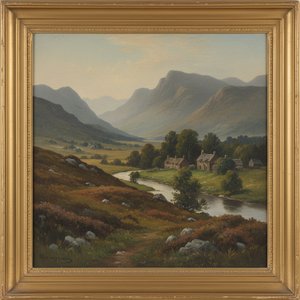
Explore the captivating portraits of Sir John Watson Gordon, a leading Scottish master. Discover his evolution from neoclassical style to atmospheric Tonalism and influence on 19th-century British art. Learn about his iconic sitters & legacy.
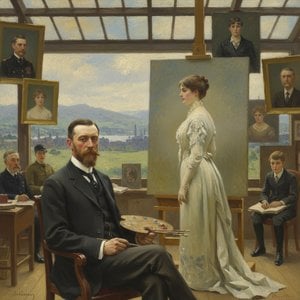
Explore the life & art of Sir John Lavery, a master of Scottish Impressionism and renowned portraitist. Discover his captivating works, Irish heritage, and lasting legacy with WahooArt.

Explore the rich history of rivers in painting! Discover masterpieces from ancient times to Impressionism & beyond. Learn about symbolism, artists like Monet & Daubigny, and find your perfect serene artwork at WahooArt.

Upptäck de 10 mest ikoniska landskapskonstverken! Från Monet till Van Gogh – utforska naturens skönhet, konsthistorien och tekniken bakom mästerverken. Hitta din perfekta tavla för heminredningen på WahooArt.com.


Håll dig uppdaterad med de senaste konstnyheterna, exklusiva erbjudanden och inredningsidéer.
Berätta om ditt projekt så kommer våra konstexperter att ge dig 3 personliga konstförslag.
Vi skapar ett urval av 3 alternativ helt anpassat för dig – gratis!
 Dela
Dela






































 Läs mer
 Glasalternativet är endast tillgängligt i storlekar under 110 cm.


