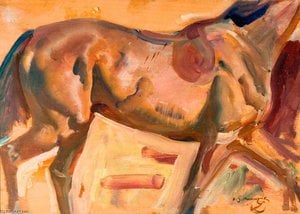
A Life Immersed in Equine Grace
Sir Alfred James Munnings, ett namn oåtskärligt knutet till den livfulla skildringen av hästar och den romantiska locken av det lantliga England, upptar en central position inom 20:e århundradets brittisk konst. Han föddes 1878 mitt i de böljande landskapen i Suffolk, och hans liv präglades djupt av en bestående koppling till den hästliknande världen – ett band som skulle definiera hans konstnärliga vision och driva honom till berömmelse. Munnings registrerade inte bara det han såg; han bevarade en känsla, en atmosfär, en värld stående på randen av omvälvning. Han fångade ett försvinnande sätt att leva, en skarpt observerad porträtt av England djupt rotat i tradition, jakt och jordbrukets rytmer.
From Rural Beginnings to Artistic Development
Munnings konstnärliga resa började inte inom de formella gränserna hos en akademi, utan i den praktiska världen av ett Norwich tryckerihus. Detta lärande förfinade hans färdigheter i design och observation samtidigt som han tillät sig att studera vid Norwich School of Art. Det var en formativ period, som inställde disciplin som skulle tjäna honom väl när han navigerade utmaningarna med att etablera sig som konstnär. Tidiga influenser inkluderade *plein air*-målarna i Newlyn School i Cornwall, där han omfamnade deras engagemang för att fånga ljus och atmosfär direkt från naturen. Denna immersion i impressionistiska tekniker lade grunden för hans signaturstil – löst penslade penslar, en livfull palett och en känsla av rörelse som var verkligt palpabel. Hans tidiga verk skildrade ofta landsbygdslandskap, särskilt de som visade gypsys och hästar som vandrade genom Suffolk-landet, fyllda med en romantisk känsla som visade hans växande behärskning av färg och ljus. Dessa målningar var inte bara representationer; de var uttryck för en djup kärlek till landet och dess invånare.
War, Recognition and a Champion of Tradition
Första världskriget formade både Munnings konstnärliga perspektiv och hans offentliga profil djupt. Även om han initialt ansågs olämplig för stridstjänst, tjänstgjorde han som officiell krigsartist med den kanadensiska kavalleri-brigaden, dokumenterade hästens avgörande roll i konflikten. Denna erfarenhet ledde honom att möta de hårda realiteterna av kriget – lidandet, förlusten och det bestående bandet mellan människor och djur. Hans målningar från denna period är inte glorifieringar av strid, utan sorgsna reflektioner över offer och motståndskraft, fångar en dyster skönhet mitt i förstörelsen. Efterkrigstiden vittnade om en explosion av Munnings popularitet och ekonomisk säkerhet. Prestigious kommissioner flödade in, vilket gjorde att han kunde förvärva Castle House i Dedham, Essex – en egendom som skulle bli både hans hem och studio för resten av sitt liv. Han blev en eftertraktad porträttist, fångade likheten hos framstående personer från den aristokratiska världen och tävlingsvärlden. Hans förmåga att inte bara förmedla fysisk likhet utan också karaktär och anda etablerade honom som en av Storbritanniens ledande konstnärer. Han var dock också en envis försvarare av traditionella konstvärden.
A Controversial Voice and Enduring Legacy
Munnings konstnärliga filosofi var djupt rotad i tradition, och han blev en röst för den ökande modernismen som utmanade konventionella uppfattningar om konst. Hans berömda – och ofta kontroversiella – radioföreläsning 1949 såg honom lansera ett skoningslöst angrepp på Kubism och Surrealism, levererat med karaktäristisk ärlighet (och förmodligen drivet av alkohol). Även om hans uttalanden utlöste ilska bland förespråkare för modern konst, resonerade de också med dem som värnade om representativ målning och den bestående kraften i konstnärlig skicklighet. Han var inte bara motstånd mot förändring av förändringens skull; han trodde på vikten av att bevara konstnärliga standarder och fira skönhet i dess traditionella former. Denna övertygelse kulminerade i hans val till president för Royal Academy 1944, en position han innehavde fram till 1949, vilket befäste hans status inom den brittiska konstvärlden. Han blev riddare 1944 och utnämndes till Knight Commander of the Royal Victorian Order 1947, ytterligare erkännande av hans bidrag till nationens kulturella liv. Sir Alfred James Munnings lämnade efter sig en omfattande och övertygande konstsamling som fortfarande fångar publiken idag. Hans målningar erbjuder ett fönster in i en förfluten tid – en värld av hästar, jakt och lantliga landskap som har försvunnit i stort sett. Munnings Art Museum, grundat av hans fru Violet på Castle House, tjänar som ett testamente till hans bestående arv, bevarar hans konst och ger framtida generationer möjlighet att uppskatta hans unika vision. Utöver den tekniska skickligheten i hans målningar är det Munnings förmåga att väcka känslor som verkligen skiljer honom från andra. Han fångade inte bara den fysiska skönheten hos hästar, utan också deras anda, deras kraft och deras koppling till det mänskliga hjärtat. Hans verk förblir ett kraftfullt påminnelse om den bestående attraktionen av representativ målning och vikten av att bevara konstnärliga traditioner i en ständigt föränderlig värld.
Major Achievements
- Royal Academy President: Elected President of the Royal Academy in 1944, serving until 1949.
- Knighthood: Knighted Bachelor in 1944 and appointed a Knight Commander of the Royal Victorian Order in 1947.
- War Artist Commissions: Recognized for his work documenting the Canadian Cavalry during WWI.
- Sculptural Work: Created sculptures, including an equestrian statue of Edward Horner.



 Visa i rummet
 Köp handmålat konstverk
 Skicka
 Dela
Dela
 Detaljer
 Guide
Guide

 Ladda ner
 Liknande objekt
 Röntgen
 Bildspel
 Besökstatistik


 Läs mer






































 Glasalternativet är endast tillgängligt i storlekar under 110 cm.