A Descent into Vibrant Color and Modern Anxiety
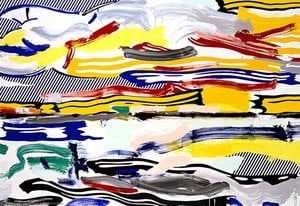
Roy Lichtenstein’s Sinking Sun, painted in 1964, isn't merely a depiction of a sunset; it’s a carefully constructed meditation on the anxieties and visual language of the burgeoning Pop Art movement. Emerging from the shadows of Abstract Expressionism, Lichtenstein sought to dismantle traditional notions of fine art by embracing the imagery of popular culture – advertising, comic books, and everyday objects – transforming them into sophisticated works of art. Sinking Sun embodies this shift perfectly, capturing a fleeting moment of dramatic beauty while simultaneously hinting at an underlying sense of unease.
The painting’s genesis lies in the artist's fascination with the visual techniques employed in commercial printing, particularly the use of Ben-Day dots. This technique, borrowed from the world of mass production, creates a mosaic effect of tiny colored squares that mimics the appearance of halftone patterns found in newspapers and magazines. Lichtenstein masterfully employs this method to render the fiery hues of the sunset – vibrant yellows, deep oranges, and streaks of purple – imbuing the scene with an almost photographic quality while simultaneously distancing it from traditional representational painting. The deliberate flatness of the color fields contributes to the work’s immediate impact, drawing the viewer into its bold and dynamic composition.
Composition and a Symbol of Transition
The composition of Sinking Sun is deceptively simple yet profoundly effective. A dramatic sunset dominates the canvas, with a large, cloud-obscured sun positioned just above the horizon line. The clouds themselves are rendered in soft pinks and blues, creating a sense of depth and atmospheric perspective. A subtle rainbow arcs across the upper portion of the painting, adding a touch of hopeful beauty to the scene – a fleeting promise after the intensity of the sunset. However, it’s not just a picturesque landscape; the receding horizon line suggests a downward trajectory, subtly conveying a feeling of decline or transition.
The choice of subject matter itself is significant. A sinking sun has long been a potent symbol in art and literature, representing endings, mortality, and the passage of time. In Sinking Sun, this symbolism is amplified by Lichtenstein’s stylistic choices. The bright colors and simplified forms contrast sharply with the melancholic connotations of the subject matter, creating a compelling tension between beauty and sadness.
Pop Art's Challenge to Tradition
Lichtenstein’s work, including Sinking Sun, played a pivotal role in challenging established artistic conventions. By appropriating imagery from popular culture – a deliberate move away from the traditional subjects of fine art – he questioned the very definition of what constituted “art.” His use of comic book aesthetics, bold colors, and mass-produced techniques directly confronted the elitism and intellectualism often associated with the art world. Sinking Sun exemplifies this challenge, demonstrating how seemingly mundane imagery could be elevated to a level of artistic significance.
A Timeless Reflection on Modernity
Today, Sinking Sun is recognized as an iconic image of American Pop Art and a testament to Lichtenstein’s innovative approach. Its vibrant colors, meticulous attention to detail, and subtle symbolism continue to resonate with viewers. The painting serves as a poignant reminder of the cultural landscape of its time – a period marked by rapid technological advancements, consumerism, and a growing sense of uncertainty. More than just a beautiful image, Sinking Sun offers a glimpse into the anxieties and aspirations of a generation grappling with the complexities of modernity. It’s a work that invites contemplation and rewards repeated viewing, revealing new layers of meaning with each encounter.
Further Resources: Roy Lichtenstein: Sinking sun, Roy Lichtenstein: Figures with sunset, Roy Lichtenstein: We rose up slowly, Roy Lichtenstein: Crying girl
Artist Information: Roy Fox Lichtenstein (1923-1997) was an American pop artist. He rose to prominence in the 1960s through pieces which were inspired by popular advertising and the comic book style. Much of his work explores the relationship between fine art, advertising, and consumerism.
Additional Research: Roy Lichtenstein, Roy Lichtenstein Foundation
Frågor och svar
Var kan jag köpa en digital bild av "Sinking Sun" av Roy Lichtenstein?
En digital bild av "Sinking Sun" av Roy Lichtenstein kan köpas på denna sida: en högupplöst digital bildnedladdning.
Vilken typ av konstverk är "Sinking Sun" av Roy Lichtenstein?
"Sinking Sun" av Roy Lichtenstein är klassificerat som WallArt. Kategorin beskriver vilken typ av konstverk originalet är.
Vilken teknik och vilket årtal gäller för "Sinking Sun" av Roy Lichtenstein?
"Sinking Sun" skapades år 1964 med tekniken Acrylic On Canvas. Material och datum beskriver hur och när originalet tillverkades.
Vilken färgmättnad har "Sinking Sun" av Roy Lichtenstein?
Färgpaletten i "Sinking Sun" har en mättnad på Clear Color Presence.
Kan jag beställa en oljereproduktion av "Sinking Sun"?
Handmålade kopior av "Sinking Sun" av Roy Lichtenstein säljs på denna webbplats: en handmålad oljereproduktion på linneväv, beställ via denna sida.
Vem är upphovspersonen till "Sinking Sun" och vilket år skapades verket?
"Sinking Sun" skapades av Roy Lichtenstein år 1964.
Var placerar sig "Sinking Sun" i förhållande till Roy Lichtensteins samlade konstnärskap?
"Sinking Sun" delar med Roy Lichtensteins övriga verk sin Pop Art-stil och de återkommande temana: comic book aesthetics, advertising imagery, ben-day dots technique, proto-pop inspiration, early pop art example, transition from abstraction, exploration of mass media, iconic lichtenstein work.
Vilken emotionell ton åtföljer Pop Art-stilen i "Sinking Sun"?
"Sinking Sun" förmedlar en Melancholic emotionell ton inom Pop Art-rörelsen.



 Visa i rummet
 Byt till tryckta exemplar
 Skicka
 Dela
Dela
 Detaljer
 Studentguide för konstverk

 Ladda ner
 Liknande objekt
 Röntgen
 Bildspel
 Besökstatistik

 Läs mer






































 Glasalternativet är endast tillgängligt i storlekar under 110 cm.