Visa i rummet Se i AR Köp handmålat konstverk Byt till digital bildförsäljning Skicka
Detaljer Studentguide för konstverk Lägg till i favoriter Ladda ner Liknande objekt Röntgen Bildspel Besökstatistik

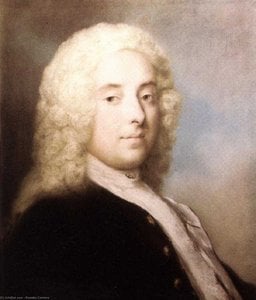
Winter

Experience the delicate grace of Rosalba Carriera's Rococo pastel portrait, Winter (1725), featuring soft pinks and ethereal whites against a dark background; discover this masterpiece today.

Rosalba Carriera (1675-1757): venetiansk rokokomästare inom pastell och miniatyrporträtt, som uppnådde internationellt erkännande som en av historiens mest framgångsrika kvinnliga konstnärer.

Giclée / Konsttryck

Giclée- eller canvasprint av museumskvalitet med snabb produktion och flexibla ytbehandlingsalternativ. ( Köp handmålat konstverk Byt till digital bildförsäljning)

Corner sample of the P118B picture frame: formgjuten polystyren, 5 cm wide and 3 cm thick
P118B Skr10
Corner sample of the P118H picture frame: formgjuten polystyren, 5 cm wide and 3 cm thick
P118H Skr10
Corner sample of the P118W picture frame: formgjuten polystyren, 5 cm wide and 3 cm thick
P118W Skr10
Corner sample of the P438Z picture frame: formgjuten polystyren, 5.5 cm wide and 3.5 cm thick
P438Z Skr10
Corner sample of the P508JH picture frame: formgjuten polystyren, 7 cm wide and 3.5 cm thick
P508JH Skr12
Corner sample of the P508YH picture frame: formgjuten polystyren, 7 cm wide and 3.5 cm thick
P508YH Skr12
Corner sample of the P805H picture frame: formgjuten polystyren, 5 cm wide and 3.5 cm thick
P805H Skr10
Corner sample of the P805Z picture frame: formgjuten polystyren, 5 cm wide and 3.5 cm thick
P805Z Skr10
Corner sample of the P919BZ picture frame: formgjuten polystyren, 7 cm wide and 3.5 cm thick
P919BZ Skr10
Corner sample of the P919G picture frame: formgjuten polystyren, 7 cm wide and 3.5 cm thick
P919G Skr10
Corner sample of the P919XJ picture frame: formgjuten polystyren, 7 cm wide and 3.5 cm thick
P919XJ Skr10
Corner sample of the P959ZH picture frame: formgjuten polystyren, 5 cm wide and 3 cm thick
P959ZH Skr10
Corner sample of the P968JZ picture frame: formgjuten polystyren, 6 cm wide and 4 cm thick
P968JZ Skr12
Corner sample of the W106C picture frame: massivt trä, 5 cm wide and 3 cm thick
W106C Skr8
Corner sample of the W218G picture frame: massivt trä, 5 cm wide and 3 cm thick
W218G Skr10
Corner sample of the W218JH picture frame: massivt trä, 5 cm wide and 3 cm thick
W218JH Skr8
Corner sample of the W218Y picture frame: massivt trä, 5 cm wide and 3 cm thick
W218Y Skr10
Corner sample of the W307PJ picture frame: massivt trä, 6 cm wide and 3 cm thick
W307PJ Skr10
Corner sample of the W316G picture frame: massivt trä, 6 cm wide and 3 cm thick
W316G Skr10
Corner sample of the W316PJ picture frame: massivt trä, 6 cm wide and 3 cm thick
W316PJ Skr8
Corner sample of the W316Y picture frame: massivt trä, 6 cm wide and 3 cm thick
W316Y Skr10
Corner sample of the W398PJ picture frame: massivt trä, 5 cm wide and 3 cm thick
W398PJ Skr8
Corner sample of the W4111J picture frame: massivt trä, 6.5 cm wide and 3.5 cm thick
W4111J Skr10
Corner sample of the W500HY picture frame: massivt trä, 7 cm wide and 5 cm thick
W500HY Skr15
Corner sample of the W500JH picture frame: massivt trä, 7 cm wide and 5 cm thick
W500JH Skr15
Corner sample of the W692G picture frame: massivt trä, 8 cm wide and 4 cm thick
W692G Skr12
Corner sample of the W849H picture frame: massivt trä, 5 cm wide and 3 cm thick
W849H Skr8
Corner sample of the W940BG picture frame: massivt trä, 7.5 cm wide and 4.5 cm thick
W940BG Skr15
Corner sample of the W953PJ picture frame: massivt trä, 6 cm wide and 3.5 cm thick
W953PJ Skr8

Standardstorlek
anpassad
CM
INCH

Välj bland våra förinställda storlekar som motsvarar konstverkets ursprungliga proportioner.

bredd
höjd

Ange den bredd och höjd du behöver, för att passa din ram eller din vägg. Ett tryck kan endast beskäras, aldrig göras större än bilden, vilket innebär att ett format med en annan formform leder till att en del av bilden går förlorad. Vi skickar en digital mockup för godkännande innan vi trycker något. Bilden som visas på denna sida visar inte den faktiska beskärningen — det är endast mockuppen som gör det.

Leverans över hela världen () på 2 veckor istället för standard 4/5 veckor. (25 oktober)

Fri expressfrakt över hela världen
Högkvalitativ linnecanvas
Fullständig fraktförsäkring
Garantier för återbetalning av tullavgifter
Garantier för exakt färgåtergivning
100 dagars returrätt vid fabrikationsfel
100% pengarna tillbaka-garanti
Mängdrabatt erbjuds

Totalt pris

Skr 674

Winter

Giclée / Konsttryck

Reproduktionsstorlek

-

Totalpris

Skr 674

Snabbfakta

  • Movement: Rococo
  • Subject or theme: Female Portrait
  • Dimensions: 24 x 19 cm
  • Title: Winter
  • Artist: Rosalba Carriera
  • Artistic style: Graceful and refined portraiture

Konstquiz

Det finns endast ett korrekt svar på varje fråga.

Fråga 1:
What artistic movement is Rosalba Carriera’s ‘Winter’ primarily associated with?
Fråga 2:
The pastel medium used by Carriera contributes to what characteristic of the artwork?
Fråga 3:
What is the dominant color palette employed in ‘Winter’?
Fråga 4:
The composition of the portrait focuses on which element?
Fråga 5:
What symbolic significance might the pearl necklace depicted in ‘Winter’ hold?

A Symphony of Softness: The Ethereal Grace of Rosalba Carriera’s Winter

In the quietude of 1725, a masterpiece emerged from the hands of the Venetian luminary Rosalba Carriera, capturing not just a season, but a profound state of being. “Winter” is far more than a mere portrait; it is a delicate embrace of the Rococo spirit, where grace and refinement meet the subtle chill of a contemplative moment. As one gazes upon this work, there is an immediate sense of intimacy, as if the viewer has stumbled upon a private thought frozen in time. The subject, a young woman of poised elegance, serves as the heart of the composition, her presence radiating a soft luminosity that seems to defy the muted, wintry atmosphere surrounding her.

Carriera’s mastery of the pastel medium is on full display here, showcasing the very technique that would eventually revolutionize European portraiture. Unlike the heavy, layered oils of the preceding Baroque era, this work breathes through the velvety softness of pigment applied directly to ivory paper. By meticulously blending layers with her fingertips and fine cloths, Carriera achieved a skin texture so supple and luminous it appears almost translucent. This tactile approach creates a surface that invites the eye to linger on the gentle curves of her face and the intricate, flowing lines of her hair, lending the piece an ethereal, dreamlike quality that is quintessential to the Rococo aesthetic.

A Palette of Quiet Elegance and Symbolic Depth

The color story of “Winter” is one of sophisticated restraint. A harmonious blend of beige, soft pink, and muted grey dominates the frame, creating a tonal landscape that mirrors the stillness of a frost-covered morning. These colors are not merely decorative; they carry a profound symbolic weight. The beige tones evoke a sense of serenity and purity, while the subtle highlights of pearl white—seen in the delicate shimmer of her necklace and the light catching her skin—provide much-needed brilliance against the dark, charcoal gray background. This deliberate use of contrast creates a striking depth, pushing the subject forward and ensuring that her features remain the undisputed focal point of the viewer's attention.

For the discerning collector or interior designer, this artwork offers a unique emotional resonance. It possesses a quiet strength that does not demand attention through loudness, but rather commands it through subtle emotion and impeccable balance. The composition, though focused closely on the upper torso, utilizes a slight asymmetry in the subject's pose to inject a sense of life and movement into an otherwise still scene. This tension between stillness and dynamism makes the piece an extraordinary choice for spaces designed for reflection, such as a private study, a sophisticated library, or a serene bedroom suite.

The Venetian Legacy and Timeless Appeal

To understand “Winter” is to understand the golden age of Venice. Carriera, a woman who defied the societal constraints of her era to become one of the most sought-after portraitists in Europe, infused her work with the very essence of Venetian light. Her ability to capture the "powdery" and idealized beauty of the Enlightenment era has allowed her works to remain eternally fashionable. This painting stands as a testament to her innovation—a bridge between the meticulous detail of miniature painting and the expressive freedom of large-scale pastel portraiture.

Owning a high-quality reproduction of this masterpiece allows one to bring a piece of art history into the modern home. It is an invitation to experience the Rococo fascination with beauty and the enduring power of a single, well-placed gaze. Whether used as a focal point in a contemporary minimalist setting or integrated into a classic, ornate interior, Carriera’s “Winter” continues to offer a sense of peace, luxury, and timeless artistic excellence.

Frågor och svar

Var placerar sig "Winter" av Rosalba Carriera i konsthistorien?

"Winter" av Rosalba Carriera tillhör Rococo Portraiture-rörelsen, inom Early Modern-perioden. Tillsammans ger de verket dess plats i konsthistorien.

Vilken stil tillhör "Winter"?

Konststilen som förknippas med "Winter" av Rosalba Carriera är Rococo Portraiture. Denna klassificering placerar verket bland relaterade konstnärer och konstverk.

Hur starka är färgerna i "Winter"?

Färgen i "Winter" har en mättnad på Muted och en intensitet på Monochromatic.


Om konstnären

En venetiansk ljusgestalt: Rosalba Carrieras liv och konst

Rosalba Carriera framträdde ur 1700-talets livfulla konstnärliga miljö i Venedig som en sann innovatör, och trotsade samhällets förväntningsbilder för att bli en av sin tids mest hyllade porträttmålare. Hon föddes 1675 i en familj med anspråkslösa medel – hennes mor var en skicklig spetstillsättare och hennes far jurist – och Carrieras väg till konstnärlig berömmelse var till en början okonventionell. Den venetianska spetsindustrins nedgång tvingade familjen att söka alternativa försörjningsmöjligheter, vilket ledde till att den unga Rosalba använde sin förfinade hand för att måla miniatyrer på lock till snusdoser. Detta tidiga steg in i konsten visade sig vara anmärkningsvärt framgångsrikt och etablerade hennes rykte för minutiös detaljrikedom och en medfödd förståelse för form och färg. Avgörande var att hon var pionjär med att använda elfenben som underlag för dessa miniatyrporträtt, vilket innebar ett avsteg från traditionellt vellum och visade på en experimentlusta som skulle komma att definiera hennes karaktär. Dessa charmiga miniatyrer vann snabbt popularitet bland Venedigs aristokratiska kretsar och de besökande "Grand Tourists", vilket lade grunden för hennes framtida framgångar.

Pastellrevolutionen

Även om Carriera initialt utmärkte sig inom miniatyrmåleriet, var det hennes omfamnande av pastellen som verkligen cementerade hennes eftermäle. Trots att pasteller tidigare hade använts för skisser och studier, var hon bland de första att höja mediet till en status lämplig för formella porträtt. Detta var inte bara ett tekniskt skifte, utan även ett estetiskt sådant. Pastellen gjorde det möjligt för Carriera att fånga de subtila nyanserna i hudtoner, tygernas skimrande texturer och modellernas flyktiga uttryck med en oöverträffad mjukhet och grace – egenskaper som stämde perfekt överens med den framväxande rokokostilen. Hennes porträtt var inte bara avbildningar; de var idealiserade representationer som smickrade och förtrollade. Hon lockade snabbt till sig en prestigefylld klientel, inklusive Maximilian II av Bayern, Fredrik IV av Danmark och kanske mest anmärkningsvärt August den starke, kung av Polen och kurfurste av Sachsen, som samlade på en imponerande kollektion av hennes pastellverk. År 1704 kom erkännandet i form av utnämningen till Accademico di merito av den romerska Accademia di San Luca – en sällsynt ära för en kvinnlig konstnär och ett bevis på hennes växande rykte. Triumf i Paris och internationellt erkännande Vid 1720 hade Rosalba Carrieras berömmelse sträckt sig långt utanför Venedig och lockade henne till Europas konstnärliga hjärta: Paris. Inbjuden av den inflytelserika konstsamlaren Pierre Crozat tillbringade hon nästan två år i den franska huvudstaden, där hon blev en sensation. Hennes porträtt var eftertraktade av medlemmar av det franska hovet, inklusive kung Ludvig XV och den berömda målaren Antoine Watteau själv. Carrieras talang var så universellt beundrad att hon uppnådde en oöverträffad bedrift: valet till medlem i Académie Royale de Peinture et de Sculpture – en ära som sällan tilldelades utländska konstnärer, än mindre kvinnor. Denna triumf bekräftade inte bara hennes konstnärliga skicklighet utan utmanade även rådande samhällsnormer som begränsade möjligheterna för kvinnliga kreatörer. Hennes närvaro i Paris påverkade aristokratins smak avsevärt, genom att flytta konstpatronaget bortom enbart de kungliga kretsarna och främja en bredare uppskattning för rokokons estetik. Hon arbetade inte i isolering; hennes systrar, Giovanna och Angela, hjälpte till med den enorma mängden beställningar hon fick under denna period, vilket demonstrerade ett starkt familjesystem som möjliggjorde hennes framgång.

De senare åren, ett bestående inflytande och historisk betydelse

Efter sin triumf i Paris fortsatte Carriera att resa omfattande genom Europa, med besök i Modena, Parma och Wien. I Wien fann hon ytterligare en hängiven beskyddare i den tysk-romerske kejsaren Karl VI, som förvärvade över 150 av hennes pasteller. Trots dessa utmärkelser präglades hennes senare år av personlig tragedi – förlusten av sin syster Giovanna och en gradvis försämring av synen på grund av grå starr. Men även när hennes fysiska förmågor minskade, fortsatte Carrieras inflytande att växa. Hon blev en inspiration för efterföljande generationer av kvinnliga konstnärer, däribland Adélaïde Labille-Guiard och Elisabeth Vigée Le Brun, som följde i hennes fotspår, bröt barriärer och uppnådde erkännande i en mansdominerad konstvärld. Rosalba Carrieras arv sträcker sig bortom hennes tekniska mästerskap i pastell; hon var en pionjär som utmanade samhällets förväntningar, populariserade ett nytt konstnärligt medium och demonstrerade de extraordinära kreativa förmågorna hos kvinnor under rokokoperioden. Hennes verk förblir ett vittnesbörd om hennes uppfinningsrikedom, skicklighet och bestående inverkan på konsthistorien. Hon minnss inte bara som en målare, utan som en banbrytare.
Rosalba Carriera

Rosalba Carriera

1675 - 1757 , Italien

Snabbfakta

  • Artistic Movement Or Style: Rokoko
  • Artists Or Movements Influenced By This Artist:
    • Adélaïde Labille-Guiard
    • Elisabeth Vigée Le Brun
  • Date Of Birth: 1675
  • Date Of Death: 1757
  • Full Name: Rosalba Carriera
  • Nationality: Italiensk
  • Notable Artworks:
    • Maximilian II av Bayern
    • Fredrik IV av Danmark
    • Konstnären & systern Naneta
    • August den starke
    • Flicka med apa
    • Våren
  • Place Of Birth: Venedig, Italien