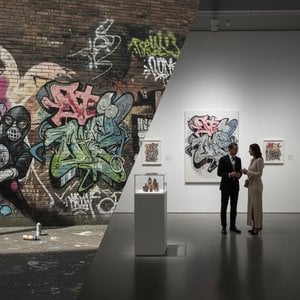
The Unfolding Canvas: Exploring the World of Ron English
Ron English isn’t simply an artist; he's a provocateur, a commentator, and a master manipulator of imagery. Born in Decatur, Illinois, in 1959, his career trajectory defies easy categorization – straddling the lines between street art, commercial design, pop surrealism, and even a surprising foray into football coaching. His work isn’t about pretty pictures; it's a relentless interrogation of consumer culture, advertising saturation, and the very nature of iconography. From colossal billboard takeovers to meticulously crafted studio paintings, English consistently challenges our perceptions, forcing us to confront the often-uncomfortable truths lurking beneath the glossy veneer of modern life.
English’s early artistic explorations were rooted in a punk rock sensibility – a rejection of the established art world and a desire to disrupt convention. He began creating characters in high school, initially using them as a means of expressing his discontent with societal norms. This rebellious spirit carried over into his street art practice, where he quickly gained notoriety for his unauthorized interventions on public billboards. These weren’t simply graffiti; they were elaborate, often humorous, and frequently subversive reinterpretations of corporate logos and advertising slogans. He coined the term “POPaganda” to describe this approach – a deliberate blending of pop culture references, advertising imagery, and art history, creating a visual language that was both instantly recognizable and deeply critical.
The Rise of POPaganda: Characters and Critique
At the heart of English’s work lies a cast of recurring characters—a gallery of meticulously designed figures that have become synonymous with his artistic vision. MC Supersized, a grotesquely obese fast-food mascot, is perhaps his most iconic creation, embodying the excesses and anxieties of American consumerism. Alongside him are temper tots, perpetually enraged children representing the pressures of parenting; camo deer, enigmatic creatures blending woodland imagery with military camouflage; and combrats, anthropomorphic rabbits sporting military uniforms. These aren’t just doodles; they're complex symbols, each imbued with a specific narrative and often serving as vehicles for social commentary.
English doesn’t simply slap these characters onto canvases or billboards; he develops elaborate backstories and visual universes around them. He’s created entire fictional worlds—Delusionville, a sprawling landscape populated by his creations—and has even launched musical projects centered on these characters, most notably “The Rabbbits,” whose songs offer satirical glimpses into the lives of his figures. This layered approach elevates his work beyond mere illustration, transforming it into a fully realized artistic ecosystem.
From Street Art to Studio: A Broadening Palette
While street art remains a crucial component of English’s practice, he has steadily expanded his creative horizons over the years. He's collaborated with major brands like Nickelodeon, Burton, and Puma, translating his POPaganda aesthetic into designer toys, apparel, and limited-edition merchandise. These commercial ventures, while sometimes controversial, have provided him with a wider platform to disseminate his ideas and reach a broader audience.
His work has also been exhibited in prestigious galleries around the world, solidifying his position as a significant contemporary artist. He’s explored fine art painting, creating large-scale canvases that showcase his signature style—a vibrant blend of pop surrealism, meticulous detail, and often unsettling humor. Documentaries like “POPaganda: The Art and Crimes of Ron English” and “Living in Delusionville” have offered insightful glimpses into the creative process behind his work, revealing a deeply thoughtful and intellectually rigorous artist.
Legacy and Influence
Ron English’s impact on contemporary art is undeniable. He's not just an artist; he’s a cultural commentator who has redefined the boundaries of street art and challenged our relationship with advertising and consumerism. His work continues to resonate with audiences around the world, sparking conversations about identity, representation, and the pervasive influence of visual culture. His willingness to push boundaries, embrace experimentation, and consistently subvert expectations ensures that Ron English will remain a vital and provocative voice in the art world for years to come.



 Visa i rummet
 Byt till tryckta exemplar
 Skicka
 Dela
Dela
 Detaljer
 Studentguide för konstverk

 Ladda ner
 Liknande objekt
 Röntgen
 Bildspel
 Besökstatistik


 Läs mer






































 Glasalternativet är endast tillgängligt i storlekar under 110 cm.