Visa i rummet Se i AR Köp handmålat konstverk Byt till digital bildförsäljning Skicka
Detaljer Studentguide för konstverk Lägg till i favoriter Ladda ner Liknande objekt Röntgen Bildspel Besökstatistik

Landscape Mural

Robert Seldon Duncanson’s ‘Landscape Mural’ (1852) captures Ohio Valley beauty with atmospheric perspective & evokes the Hudson River School's romantic style. Explore this iconic American landscape painting.

Robert Seldon Duncanson (1821-1872) var en pionjär inom amerikansk landskapsmålning, känd för sina lugna Ohio Valley-vyer och sitt banbrytande arbete som den första erkända afrikanska-amerikanska konstnären. Hans romantiska stil och historiska betydelse gör honom till en viktig figur i konsternas historia.

Giclée / Konsttryck

Giclée- eller canvasprint av museumskvalitet med snabb produktion och flexibla ytbehandlingsalternativ. ( Köp handmålat konstverk Byt till digital bildförsäljning)

Corner sample of the P118B picture frame: formgjuten polystyren, 5 cm wide and 3 cm thick
P118B Skr10
Corner sample of the P118H picture frame: formgjuten polystyren, 5 cm wide and 3 cm thick
P118H Skr10
Corner sample of the P118W picture frame: formgjuten polystyren, 5 cm wide and 3 cm thick
P118W Skr10
Corner sample of the P438Z picture frame: formgjuten polystyren, 5.5 cm wide and 3.5 cm thick
P438Z Skr10
Corner sample of the P508JH picture frame: formgjuten polystyren, 7 cm wide and 3.5 cm thick
P508JH Skr12
Corner sample of the P508YH picture frame: formgjuten polystyren, 7 cm wide and 3.5 cm thick
P508YH Skr12
Corner sample of the P805H picture frame: formgjuten polystyren, 5 cm wide and 3.5 cm thick
P805H Skr10
Corner sample of the P805Z picture frame: formgjuten polystyren, 5 cm wide and 3.5 cm thick
P805Z Skr10
Corner sample of the P919BZ picture frame: formgjuten polystyren, 7 cm wide and 3.5 cm thick
P919BZ Skr10
Corner sample of the P919G picture frame: formgjuten polystyren, 7 cm wide and 3.5 cm thick
P919G Skr10
Corner sample of the P919XJ picture frame: formgjuten polystyren, 7 cm wide and 3.5 cm thick
P919XJ Skr10
Corner sample of the P959ZH picture frame: formgjuten polystyren, 5 cm wide and 3 cm thick
P959ZH Skr10
Corner sample of the P968JZ picture frame: formgjuten polystyren, 6 cm wide and 4 cm thick
P968JZ Skr12
Corner sample of the W106C picture frame: massivt trä, 5 cm wide and 3 cm thick
W106C Skr8
Corner sample of the W218G picture frame: massivt trä, 5 cm wide and 3 cm thick
W218G Skr10
Corner sample of the W218JH picture frame: massivt trä, 5 cm wide and 3 cm thick
W218JH Skr8
Corner sample of the W218Y picture frame: massivt trä, 5 cm wide and 3 cm thick
W218Y Skr10
Corner sample of the W307PJ picture frame: massivt trä, 6 cm wide and 3 cm thick
W307PJ Skr10
Corner sample of the W316G picture frame: massivt trä, 6 cm wide and 3 cm thick
W316G Skr10
Corner sample of the W316PJ picture frame: massivt trä, 6 cm wide and 3 cm thick
W316PJ Skr8
Corner sample of the W316Y picture frame: massivt trä, 6 cm wide and 3 cm thick
W316Y Skr10
Corner sample of the W398PJ picture frame: massivt trä, 5 cm wide and 3 cm thick
W398PJ Skr8
Corner sample of the W4111J picture frame: massivt trä, 6.5 cm wide and 3.5 cm thick
W4111J Skr10
Corner sample of the W500HY picture frame: massivt trä, 7 cm wide and 5 cm thick
W500HY Skr15
Corner sample of the W500JH picture frame: massivt trä, 7 cm wide and 5 cm thick
W500JH Skr15
Corner sample of the W692G picture frame: massivt trä, 8 cm wide and 4 cm thick
W692G Skr12
Corner sample of the W849H picture frame: massivt trä, 5 cm wide and 3 cm thick
W849H Skr8
Corner sample of the W940BG picture frame: massivt trä, 7.5 cm wide and 4.5 cm thick
W940BG Skr15
Corner sample of the W953PJ picture frame: massivt trä, 6 cm wide and 3.5 cm thick
W953PJ Skr8

Standardstorlek
anpassad
CM
INCH

Välj bland våra förinställda storlekar som motsvarar konstverkets ursprungliga proportioner.

bredd
höjd

Ange den bredd och höjd du behöver, för att passa din ram eller din vägg. Ett tryck kan endast beskäras, aldrig göras större än bilden, vilket innebär att ett format med en annan formform leder till att en del av bilden går förlorad. Vi skickar en digital mockup för godkännande innan vi trycker något. Bilden som visas på denna sida visar inte den faktiska beskärningen — det är endast mockuppen som gör det.

Leverans över hela världen () på 2 veckor istället för standard 4/5 veckor. (22 oktober)

Fri expressfrakt över hela världen
Högkvalitativ linnecanvas
Fullständig fraktförsäkring
Garantier för återbetalning av tullavgifter
Garantier för exakt färgåtergivning
100 dagars returrätt vid fabrikationsfel
100% pengarna tillbaka-garanti
Mängdrabatt erbjuds

Totalt pris

Skr 674

Landscape Mural

Giclée / Konsttryck

Reproduktionsstorlek

-

Totalpris

Skr 674

Snabbfakta

  • Subject or theme: Ohio Valley landscape
  • Location: Taft Museum, Cincinnati
  • Medium: Oil on plaster
  • Artistic style: Landscapes, pastoral scenes
  • Title: Landscape Mural
  • Notable elements: Romantic style, atmospheric perspective

Konstquiz

Det finns endast ett korrekt svar på varje fråga.

Fråga 1:
What artistic movement is Robert Seldon Duncanson’s ‘Landscape Mural’ primarily associated with?
Fråga 2:
Approximately when was ‘Landscape Mural’ created?
Fråga 3:
What is a key characteristic of the ‘Hudson River School’ style, as exemplified by Duncanson's work?
Fråga 4:
Robert Seldon Duncanson was notable for being one of the first African American artists to achieve international acclaim. What contributed to this recognition?
Fråga 5:
The Taft Museum of Art houses ‘Landscape Mural’. What type of painting technique was used to create this mural?

Robert Seldon Duncanson’s “Landscape Mural”: A Window into the Soul of Ohio

Robert Seldon Duncanson's "Landscape Mural," completed in 1852, isn’t merely a depiction of a river valley; it’s an immersive experience, a carefully constructed panorama that speaks volumes about the artist’s vision and the burgeoning artistic landscape of mid-19th century America. Commissioned by Nicholas Longworth, a prominent Cincinnati merchant and art patron, this monumental work—measuring nearly 11 feet by 8 feet—was intended to adorn the entry hall of his grand home, transforming a domestic space into a sanctuary of natural beauty. Duncanson, a pioneering African American artist navigating a world rife with racial prejudice, utilized the mural as a platform to express both his artistic skill and his deeply felt connection to the American wilderness.

The painting’s style firmly places it within the Hudson River School tradition, an influential movement of landscape painters that flourished in the United States during the mid-19th century. Like his contemporaries—Thomas Cole, Frederic Church, and Asher B. Durand—Duncanson sought to capture the sublime grandeur of nature, imbuing his scenes with a sense of awe and spiritual resonance. However, Duncanson’s approach distinguishes him; he moved beyond simple representation, employing atmospheric perspective – a technique borrowed from European masters – to create an illusion of depth and distance that draws the viewer into the heart of the scene. Notice how the colors subtly shift and fade as they recede into the background, mimicking the way light behaves in reality, and creating a powerful sense of spatial realism.

A Symphony of Color and Light: Technique and Materials

Duncanson’s masterful technique is evident in every brushstroke. He employed a fresco secco method – painting directly onto dry plaster—a challenging approach that demanded precision and control. The pigments, carefully mixed with water, were applied to the wall surface, reacting chemically with the lime mortar as they dried. This process created a durable, luminous finish, ensuring the mural’s longevity. The artist's use of color is particularly noteworthy; he favored muted earth tones—ochres, browns, and greens—to evoke the natural palette of the Ohio River Valley. Yet, within this restrained palette, Duncanson skillfully layered shades and hues to create a rich tapestry of textures and moods. The interplay of light and shadow is expertly rendered, casting dramatic highlights on the water’s surface and creating an ethereal glow that permeates the entire scene.

Symbolism and the American Landscape

Beyond its technical brilliance, “Landscape Mural” is laden with symbolic meaning. Duncanson wasn't simply painting a pretty picture; he was engaging in a complex dialogue about America’s identity and its relationship to nature. The river itself—a central element of the composition—represents both life and transition, flowing relentlessly towards an unseen horizon. The trees lining the banks symbolize strength, resilience, and connection to the earth. The boat on the water suggests human interaction with the natural world, but also hints at the potential for disruption. Some scholars have interpreted the mural as a subtle commentary on the challenges faced by African Americans in a nation grappling with issues of slavery and racial inequality – Duncanson’s position as an artist of color within this context adds another layer of significance to his work.

A Legacy of Vision: The Artist and His Time

Robert Seldon Duncanson's “Landscape Mural” stands as a testament to his artistic talent, his unwavering determination, and the transformative power of art. As one of the first African American artists to achieve widespread recognition in America and abroad, Duncanson’s work challenged prevailing notions of race and representation within the art world. His ability to capture the beauty and spirit of the American landscape—while simultaneously engaging with complex social and political issues—solidifies his place as a pivotal figure in the history of American art. Today, this magnificent mural continues to inspire and captivate viewers, offering a glimpse into the soul of Ohio and the visionary mind of its most celebrated artist.

Frågor och svar

Vilken ton lutar "Landscape Mural" åt?

Den dominerande nyansen i "Landscape Mural" av Robert Seldon Duncanson är Green to Violet Spectrum. Nyansen utgör den underliggande tonen i färgpaletten.

Vem skapade "Landscape Mural" och när?

Robert Seldon Duncanson skapade "Landscape Mural" år 1852.

Är färgerna i "Landscape Mural" av Robert Seldon Duncanson klara eller dämpade?

"Landscape Mural" av Robert Seldon Duncanson är återgiven med en Balanced Soft mättnad och en Balanced intensitet.


Om konstnären

Robert Seldon Duncanson: En Pionjär i Amerikansk Landskapsmåleri

Robert Seldon Duncansons namn ekar med både konstnärlig briljans och historisk betydelse, och han etablerade sig som en nyckelperson i 1800-talets amerikanska konst. Född omkring 1821 i Fayetteville, New York, till föräldrar av europeiskt och afroamerikanskt ursprung – hans far, John Dean Duncanson, en fri svart hantverkare som förmedlade värdena av arbetsmoral och lärande – navigerade Duncanson en värld präglad av rasdiskriminering samtidigt som han uppnådde internationellt erkännande som landskapsmålare. Hans resa var en av självbildning, orubblig hängivenhet och en djup förbindelse med den naturliga världen, vilket slutligen etablerade honom som den första afroamerikanska konstnären som fick allmänt erkännande på båda sidor om Atlanten. Familjens flytt till Monroe, Michigan, innebar att den unga Robert blev lärling hos en snickare och målare, vilket avslöjade en tidig talang för konsten som snart skulle definiera hans livs väg.

Från Porträtt till Panoramas

Duncansons konstnärliga utveckling inleddes med porträttmålning, ett praktiskt sätt att etablera sig som professionell konstnär. Men Cincinnati, Ohio – en stad känd som ”Västs Aten” – lockade honom 1840 och erbjöd möjligheter till tillväxt och exponering som inte fanns någon annanstans. I stort sett självutbildad, finslipade Duncanson sina färdigheter genom noggrann studie av tryck och gravyrer, direkt skissning från naturen och minutiös kopiering av mästares verk. Detta rigorösa tillvägagångssätt gjorde det möjligt för honom att utveckla ett skarpt öga för detaljer och en anmärkningsvärd teknisk skicklighet trots brist på formell utbildning. Det var i Cincinnati som han började sin övergång mot landskapsmålning, dragen av de romantiska idealen och den sublima skönheten i det amerikanska vildmarken. Hudson River Schools inflytande blev alltmer uppenbart i hans verk, särskilt de suggestiva kompositionerna hos Thomas Cole, vars dramatiska framställningar av naturen resonerade djupt med Duncansons egen konstnärliga vision. Han kopierade inte bara scener; han tolkade dem genom ett unikt personligt perspektiv, och målade in sina dukar med en känsla för lugn och andlig koppling.

En Europeisk Sjöresa och Internationellt Erkännande

En vändpunkt i Duncansons karriär inträffade 1853-1854 med en lång resa till Europa. Denna resa gav honom ovärderlig exponering för europeiska mästares verk, breddade hans konstnärliga horisonter och raffinerade hans teknik. Han studerade de gamla mästarna, absorberade deras metoder för ljus, färg och komposition, som han sedan integrerade i sin egen distinkta stil. Återvändandet till Amerika ledde till att hans verk visade en nyfunnen sofistikering och mognadhet, vilket lockade uppmärksamhet inte bara i Amerika utan också i England, Skottland och Kanada. Utställningar följde, vilket etablerade honom som en konstnär av betydande talang och vision. Han blev en nyckelperson i att utveckla Ohio River Valley landskaps traditionen, fångade den fridfulla skönheten i regionen med anmärkningsvärd skicklighet. Hans målningar var inte bara representationer av plats; de var uttryck för stämning, atmosfär och naturens sublima kraft.

En Blandning av Tradition och Symbolik

Duncansons konst är ofta fylld med subtila symboliska element som har lett till spekulationer om hans rasiska bakgrund. Han var en del av ett aktivt abolitionistiskt nätverk i Cincinnati, vilket gav honom tillgång till information och kontakter som skulle ha varit otillgängliga för många andra konstnärer på den tiden. Hans målningar innehåller ofta allegoriska element som kan tolkas som kritik av slaveriet, även om han själv betonade att han ville undvika att distrahera betraktaren från naturens skönhet. Det är en fråga om debatt huruvida dessa symboler var medvetna eller omedvetna, men de bidrog till hans konstnärliga arv och hans roll som en röst för förändring i en tid av stora sociala orättvisor.

En Arv och Historisk Betydelse

Robert Seldon Duncansons arv sträcker sig bortom hans konstnärliga prestationer. Han bröt ner barriärer för afroamerikanska konstnärer under en period präglad av utbredd rasdiskriminering, och fungerade som inspiration för framtida generationer. Hans framgång utmanade rådande samhällsnormer och visade på konstens kraft att överskrida fördomar. Trots att artisterxpertar fortsätter att debattera huruvida hans ras påverkade hans konstnärliga uttryck – vissa föreslår subtila symboliska representationer av rassegment i hans landskap – finns det inget tvivel om att Duncansons livshistoria är ett testamente till motståndskraft, talang och den bestående mänskliga andan. Hans lugna vyer fortsätter att fängsla publiken, påminner oss om den varaktiga skönheten i naturen och den otroliga talangen hos en konstnär som vågade drömma bortom de begränsningar som hans tid påtvingade honom.

Viktiga Verk

  • ”Land of the Lotus Eaters”
  • ”The River”
  • ”Autumnal Landscape”
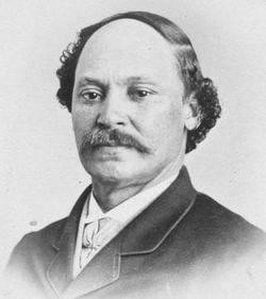
Robert Seldon Duncanson

Robert Seldon Duncanson

1821 - 1872 , USA

Snabbfakta

  • Artistic Movement Or Style: Hudson River School
  • Artists Or Movements Influenced By This Artist: ['Ohio River Valley']
  • Artists Who Influenced This Artist: ['Thomas Cole']
  • Date Of Birth: c. 1821
  • Date Of Death: Dec 21, 1872
  • Full Name: Robert Seldon Duncanson
  • Nationality: Amerikansk
  • Notable Artworks:
    • Landskap med får
    • Rosstilliv
  • Place Of Birth: Fayetteville, USA
Utforska konstverk sorterade efter tema, stil och egenskaper.