Visa i rummet Se i AR Köp handmålat konstverk Byt till digital bildförsäljning Skicka
Detaljer Studentguide för konstverk Lägg till i favoriter Ladda ner Liknande objekt Röntgen Bildspel Besökstatistik

Donna

René Magritte’s "Donna," painted in 1923, captures an intimate and passionate scene of two nude figures embracing with bold reds, oranges, and greens – a classic surrealist depiction reflecting Magritte's fascination with mystery and the unseen. Discover this captivating artwork and bring its enigmatic beauty into your space.

René Magritte (1898-1967): En surrealistisk konstnär vars gåtfulla tavlor utmanar verkligheten och vår syn på världen. Upptäck ikoniska verk som 'De förälskade'!

Konstverket som visas på denna sida skyddas av upphovsrättslagen, vilket innebär att vi inte lagligt kan skapa eller sälja en identisk reproduktion. Detta skydd upprätthålls genom internationella avtal såsom den Bernkonventionen och genom nationella lagar, inklusive de som fastställs av Amerikansk upphovsrättslag – Titel 17. Alla rättigheter förbehållna. Återgivning av konstverk är förbjuden utan skriftligt tillstånd från WahooArt.

Denna metod följer fullt ut upphovsrättsliga regler eftersom den inte innebär kopiering eller duplicering av det skyddade konstverket. Istället är det en kreativ nytolkning – en ny målning som är influerad av originalet men inte identisk med det.

Giclée / Konsttryck

Giclée- eller canvasprint av museumskvalitet med snabb produktion och flexibla ytbehandlingsalternativ. ( Köp handmålat konstverk Byt till digital bildförsäljning)

Corner sample of the P118B picture frame: formgjuten polystyren, 5 cm wide and 3 cm thick
P118B Skr10
Corner sample of the P118H picture frame: formgjuten polystyren, 5 cm wide and 3 cm thick
P118H Skr10
Corner sample of the P118W picture frame: formgjuten polystyren, 5 cm wide and 3 cm thick
P118W Skr10
Corner sample of the P438Z picture frame: formgjuten polystyren, 5.5 cm wide and 3.5 cm thick
P438Z Skr10
Corner sample of the P508JH picture frame: formgjuten polystyren, 7 cm wide and 3.5 cm thick
P508JH Skr12
Corner sample of the P508YH picture frame: formgjuten polystyren, 7 cm wide and 3.5 cm thick
P508YH Skr12
Corner sample of the P805H picture frame: formgjuten polystyren, 5 cm wide and 3.5 cm thick
P805H Skr10
Corner sample of the P805Z picture frame: formgjuten polystyren, 5 cm wide and 3.5 cm thick
P805Z Skr10
Corner sample of the P919BZ picture frame: formgjuten polystyren, 7 cm wide and 3.5 cm thick
P919BZ Skr10
Corner sample of the P919G picture frame: formgjuten polystyren, 7 cm wide and 3.5 cm thick
P919G Skr10
Corner sample of the P919XJ picture frame: formgjuten polystyren, 7 cm wide and 3.5 cm thick
P919XJ Skr10
Corner sample of the P959ZH picture frame: formgjuten polystyren, 5 cm wide and 3 cm thick
P959ZH Skr10
Corner sample of the P968JZ picture frame: formgjuten polystyren, 6 cm wide and 4 cm thick
P968JZ Skr12
Corner sample of the W106C picture frame: massivt trä, 5 cm wide and 3 cm thick
W106C Skr8
Corner sample of the W218G picture frame: massivt trä, 5 cm wide and 3 cm thick
W218G Skr10
Corner sample of the W218JH picture frame: massivt trä, 5 cm wide and 3 cm thick
W218JH Skr8
Corner sample of the W218Y picture frame: massivt trä, 5 cm wide and 3 cm thick
W218Y Skr10
Corner sample of the W307PJ picture frame: massivt trä, 6 cm wide and 3 cm thick
W307PJ Skr10
Corner sample of the W316G picture frame: massivt trä, 6 cm wide and 3 cm thick
W316G Skr10
Corner sample of the W316PJ picture frame: massivt trä, 6 cm wide and 3 cm thick
W316PJ Skr8
Corner sample of the W316Y picture frame: massivt trä, 6 cm wide and 3 cm thick
W316Y Skr10
Corner sample of the W398PJ picture frame: massivt trä, 5 cm wide and 3 cm thick
W398PJ Skr8
Corner sample of the W4111J picture frame: massivt trä, 6.5 cm wide and 3.5 cm thick
W4111J Skr10
Corner sample of the W500HY picture frame: massivt trä, 7 cm wide and 5 cm thick
W500HY Skr15
Corner sample of the W500JH picture frame: massivt trä, 7 cm wide and 5 cm thick
W500JH Skr15
Corner sample of the W692G picture frame: massivt trä, 8 cm wide and 4 cm thick
W692G Skr12
Corner sample of the W849H picture frame: massivt trä, 5 cm wide and 3 cm thick
W849H Skr8
Corner sample of the W940BG picture frame: massivt trä, 7.5 cm wide and 4.5 cm thick
W940BG Skr15
Corner sample of the W953PJ picture frame: massivt trä, 6 cm wide and 3.5 cm thick
W953PJ Skr8

Standardstorlek
anpassad
CM
INCH

Välj bland våra förinställda storlekar som motsvarar konstverkets ursprungliga proportioner.

bredd
höjd

Ange den bredd och höjd du behöver, för att passa din ram eller din vägg. Ett tryck kan endast beskäras, aldrig göras större än bilden, vilket innebär att ett format med en annan formform leder till att en del av bilden går förlorad. Vi skickar en digital mockup för godkännande innan vi trycker något. Bilden som visas på denna sida visar inte den faktiska beskärningen — det är endast mockuppen som gör det.

Leverans över hela världen () på 2 veckor istället för standard 4/5 veckor. (23 oktober)

Fri expressfrakt över hela världen
Högkvalitativ linnecanvas
Fullständig fraktförsäkring
Garantier för återbetalning av tullavgifter
Garantier för exakt färgåtergivning
100 dagars returrätt vid fabrikationsfel
100% pengarna tillbaka-garanti
Mängdrabatt erbjuds

Totalt pris

Skr 674

Donna

Giclée / Konsttryck

Reproduktionsstorlek

-

Totalpris

Skr 674

Snabbfakta

  • Notable elements: Intimate scene, colors
  • Year: 1923
  • Artistic style: Magrittean
  • Medium: Painting
  • Subject or theme: Nudity, passion

A Portrait of Intimacy and Unseen Grief: René Magritte’s “Donna”

René Magritte's 1923 painting, "Donna," is not merely a depiction of two nude figures embracing; it’s a profoundly unsettling meditation on loss, perception, and the enduring power of memory. Executed during a pivotal period in the artist’s development, this work exemplifies the burgeoning surrealist movement’s fascination with challenging conventional representations of reality. Measuring 46 x 38 cm, “Donna” immediately draws the viewer into its intensely private scene, dominated by the passionate yet strangely detached interaction between the two central figures.

  • Subject and Composition: The painting centers on a woman – "Donna," as the title suggests – positioned to the left of the canvas. Her body is turned towards an unseen partner, their embrace conveying a palpable sense of intimacy. The dynamic arrangement, with limbs intertwined and bodies occupying a significant portion of the frame, creates a powerful visual narrative.
  • Color Palette: Magritte masterfully employs a vibrant yet restrained color palette dominated by rich reds, oranges, and greens. These hues aren’t used for mere decorative effect; they contribute to the painting's emotional intensity, evoking feelings of both warmth and unease. The strategic use of color adds depth and complexity to the scene, subtly guiding the viewer's eye.
  • Technique: Magritte’s technique is characterized by meticulous detail and a precise rendering of form. His brushwork is smooth and controlled, creating a polished surface that contrasts with the unsettling subject matter. This technical precision further enhances the painting’s surreal quality, amplifying its impact on the viewer.

The Shadow of Loss: Symbolism and Personal History

To fully appreciate “Donna,” it's crucial to understand the context of René Magritte’s life at the time of its creation. Born in 1898, Magritte experienced a deeply formative event – his mother’s suicide – when he was just thirteen years old. The image of her body recovered from the River Sambre, with her dress obscuring her face, became an enduring motif within his work. This haunting memory is powerfully echoed in “Donna,” where the veiled figure and the ambiguous nature of the embrace suggest a profound sense of grief and unresolved trauma. The painting can be interpreted as a symbolic representation of this personal loss, exploring themes of absence, vulnerability, and the difficulty of confronting painful memories.

  • Veiled Figures: The obscured faces of the figures contribute significantly to the painting’s enigmatic quality. This deliberate obscuring mirrors Magritte's broader interest in challenging viewers’ perceptions of reality and prompting them to question what is truly visible.
  • Intimate Embrace: The act of embracing itself carries a complex symbolic weight, representing both connection and separation. In “Donna,” the embrace feels simultaneously comforting and unsettling, reflecting the artist’s own struggle with loss and his exploration of human relationships.

A Surrealist Vision: Context and Influence

"Donna" was created during a period when Magritte was actively developing his distinctive surrealist style. Emerging from the artistic circles surrounding André Breton, Magritte sought to disrupt conventional notions of representation and tap into the subconscious mind. This painting aligns with the broader surrealist project of challenging rational thought and exploring the irrational aspects of human experience. It’s a key example of how Magritte used seemingly ordinary subjects – in this case, two nude figures – to create profoundly unsettling and evocative images.

  • Surrealism's Core Principles: The painting embodies several core principles of surrealism, including the juxtaposition of incongruous elements, the exploration of dreamlike imagery, and the rejection of traditional artistic conventions.
  • Influence of Early Masters: While Magritte developed his own unique style, he was undoubtedly influenced by earlier masters such as Édouard Manet and Gustave Moreau, whose works explored themes of beauty, mystery, and psychological depth.

Emotional Impact and Artistic Value

"Donna" remains a powerfully evocative work that continues to captivate viewers with its unsettling beauty and profound emotional resonance. Its meticulous technique, symbolic richness, and historical context combine to create an artwork of exceptional artistic value. This hand-painted reproduction offers a unique opportunity to experience the full impact of Magritte’s vision, bringing this enigmatic masterpiece into your home or studio.

Frågor och svar

Var kan jag ladda ner "Donna" av René Magritte?

Bilden av "Donna" av René Magritte kan laddas ner från verkets Ladda ner-sida: en högupplöst digital bildnedladdning.

Vilket rum rekommenderas för "Donna" av René Magritte?

En reproduktion av "Donna" passar bra i ett Living Room.

Vilka motiv förekommer i "Donna" av René Magritte?

Teman som återfinns i "Donna" av René Magritte inkluderar nude figure, embrace, intimacy, magritte, passion, color field, surreal scene. Tillsammans sammanfattar de verkets motiv.


Om konstnären

Early Life and the Seeds of Surrealism

René Magritte, född René François Ghislain Magritte den 21 november 1898 i Lessines, Belgien, steg in i en värld som skulle forma hans gåtfulla konstnärliga syn. Hans tidiga år präglades av ett oroande händelse – hans mors självmord när han bara var tretton år gammal. Bilden av hennes kropp som återfanns i Sambrefloden, med hennes klädnad som dolde hennes ansikte, blev en hemsökande motiv som subtilt skulle genomsyra hans senare verk, manifesterat i dolda figurer och en beständig utforskning av det osynliga. Detta tidiga trauma inställde en fascination för mysterium, förlust och den oroande kraften hos det som finns kvar utanför synen. Även om detaljer kring hans barndom är något otydliga, är det tydligt att denna formativa upplevelse lade grunden för hans livslånga ifrågasättande av perception och representation. Han började lära sig teckna vid tio års ålder, vilket visade en inneboende benägenhet till visuellt uttryck, men utforskade initialt impressionism innan han gick på en väg som skulle leda honom att bli en av de mest betydelsefulla figurerna inom surrealistisk konst.

Artistic Development and Influences

Magrittes konstnärliga resa var inte omedelbar eller enkel. Han studerade vid Académie Royale des Beaux-Arts i Bryssel, men fann dess traditionella metoder kvävande. Hans tidiga verk experimenterade med futurism och kubism, absorberade element av dessa avantgardistiska rörelser men avvek slutligen från deras rent formella frågor. Det var först genom att stöta på Giorgio de Chiricos målning *The Song of Love* 1922 som Magritte upptäckte en resonans som oåterkalleligt skulle förändra hans konstnärliga väg. De Chiricos drömlika landskap och oroande juxtapositioner öppnade för Magritte ett nytt sätt att se – en värld där det bekanta kunde bli främmande, och det vanliga fylldes med djupgående mysterium. Detta möte utlöste hans engagemang för surrealism, även om han ofta upprätthöll ett unikt avstånd från dess mer uppenbart psykologiska eller automatiska tillvägagångssätt. Han föredrog en minutiös, nästan klinisk precision i sin målning, och använde realistiska tekniker för att representera orlogiska scenarier.

The Heart of Surrealism: Challenging Reality

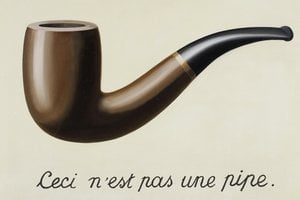
År 1926 hade Magritte fullt omfamnat surrealistiska principer och producerade *Le Jockey Perdu (The Lost Jockey)*, som ofta betraktas som hans första verkligt surrealistiska verk. Men hans sort av surrealism var distinkt. Han var inte intresserad av att utforska det undermedvetna genom fritt association eller drömmar i samma utsträckning som vissa av sina samtida. Istället sökte Magritte att utmana betraktarnas uppfattningar om verklighet genom att presentera vanliga objekt i oväntade sammanhang, vilket tvingade dem att ifrågasätta sina antaganden om den värld de levde i. Ikoniska verk som *The Treachery of Images (This is not a pipe)* (1929) dekonstruerar intelligensfullt förhållandet mellan bild och objekt, påminner oss om att en representation aldrig är saken själv. *Les Amants (The Lovers)* (1927-1928), med sina dolda figurer, återspeglar traumet av hans mors död samtidigt som det utforskar teman för dolt och intimitet. *Time Transfixed* (1938) presenterar en lokomotiv som brister igenom en tegelvägg, stör vår känsla av utrymme och tid. Och *The Human Condition* (1933), ett målning inom en målning, suddar ut gränserna mellan representation och verklighet, vilket får oss att fundera över hur vi uppfattar och tolkar världen.

Later Life, Recognition, and Enduring Legacy

Trots initiala svårigheter att få erkännande, fick Magrittes verk gradvis ökat erkännande, särskilt i USA genom utställningar 1936 och senare retrospektiva visningar på Museum of Modern Art (1965) och Metropolitan Museum of Art (1992). Han förblev politiskt engagerad under hela sitt liv, förespråkade konstens autonomi. Han fortsatte att finjustera sin signaturstil, utforskade teman för upprepning, illusion och språkets kraft i målningar som är både intellektuellt stimulerande och visuellt slående. Magritte dog den 15 augusti 1967 av cancer i bukspottkörteln, lämnade efter sig ett verk som fortsätter att fängsla och utmana publiken världen över. Hans inflytande sträcker sig bortom konstens sfär och påverkar pop art, minimalistisk konst och konceptuell konst, samt till och med reklam och film. Idag bevaras hans målningar i stora museisamlingar runt om i världen, inklusive Musées royaux des beaux-arts de Belgique i Bryssel, som hyser Magritte Museum – dedikerat enbart till hans verk och som har världens största samling av dem.

  • Museisamlingar: Musées royaux des beaux-arts de Belgique, Bryssel; Magritte Museum.

Magrittes bestående arv ligger i hans förmåga att få oss att se det bekanta på nytt, att ifrågasätta våra antaganden om verkligheten och att uppskatta konstens kraft att väcka tankar och inspirera förundran. Han målade inte bara bilder; han skapade visuella paradoxer som fortsätter att resonera hos publiken decennier efter deras skapande, vilket säkerställer sin position som en sann mästare inom surrealism och en nyckelperson i 20:e århundradets konst.

René Magritte

René Magritte

1898 - 1967 , Belgien

Snabbfakta

  • Artistic Movement Or Style: Surrealism
  • Artists Or Movements Influenced By This Artist:
    • Pop art
    • Minimalist art
  • Artists Who Influenced This Artist: ['Giorgio de Chirico']
  • Date Of Birth: 21 november 1898
  • Date Of Death: 15 augusti 1967
  • Full Name: René François Ghislain Magritte
  • Nationality: Belgisk
  • Notable Artworks:
    • Nattens mening
    • Representation
    • Svår Övergång
  • Place Of Birth: Lessines, Belgien
Utforska konstverk sorterade efter tema, stil och egenskaper.