Visa i rummet Se i AR Byt till tryckta exemplar Byt till digital bildförsäljning Skicka
Detaljer Studentguide för konstverk Lägg till i favoriter Ladda ner Liknande objekt Röntgen Bildspel Besökstatistik

Pine tree

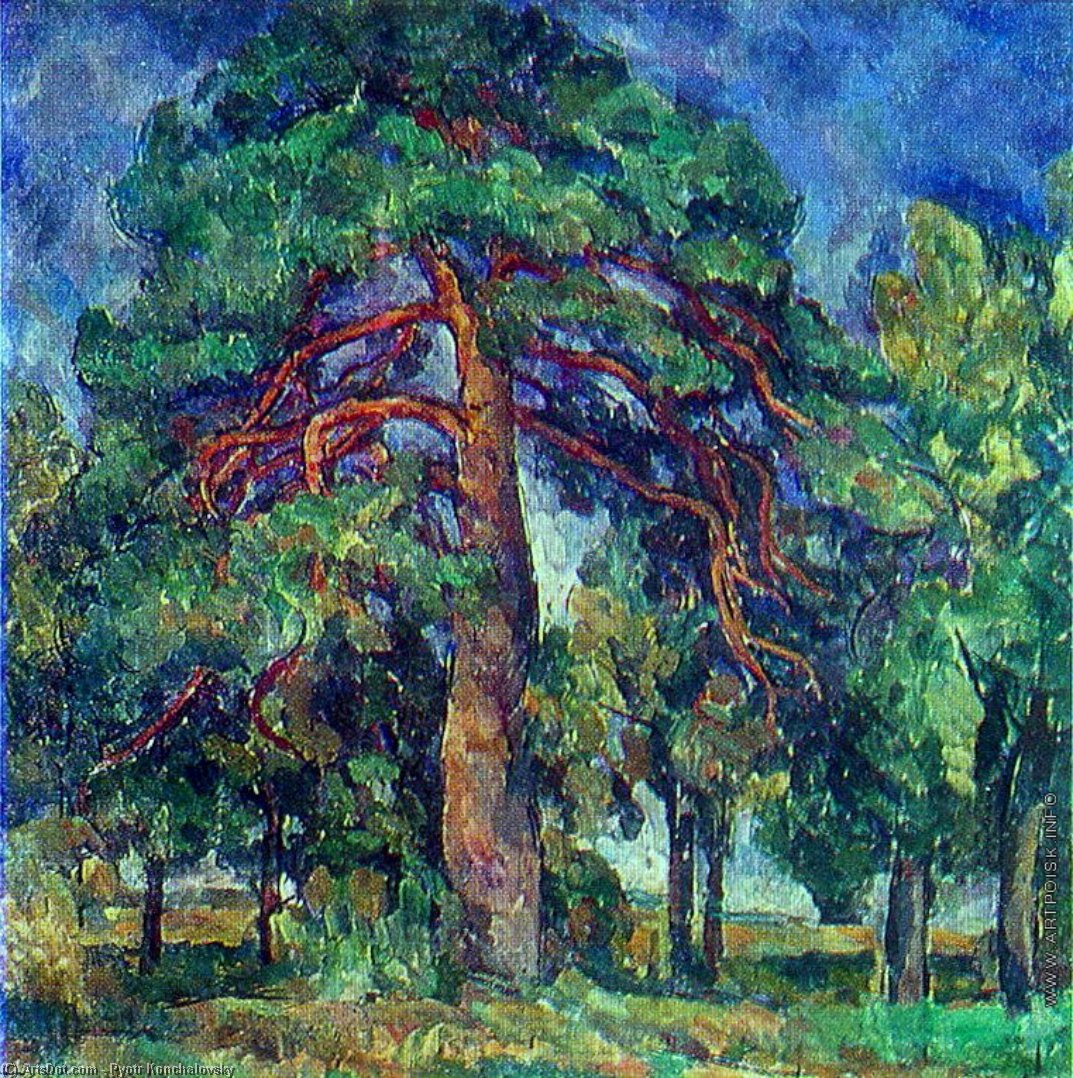
Experience the serene beauty of this 1920 landscape featuring a striking red-barked pine tree by Pyotr Konchalovsky; discover nature's peaceful artistry today.

Pyotr Konchalovsky (1876-1956) var en pionjär inom rysk konst, känd för sin innovativa stil – från fauvisme till socialistisk realism. Upptäck hans landskap & porträtt!

Handgjord oljereproduktion

Handmålad olja på duk i din valda storlek och ram, tillverkad efter beställning av våra konstnärer. ( Byt till tryckta exemplar Byt till digital bildförsäljning)

Corner sample of the P118B picture frame: moulded polystyrene, 5 cm wide and 3 cm thick
P118B Skr10
Corner sample of the P118H picture frame: moulded polystyrene, 5 cm wide and 3 cm thick
P118H Skr10
Corner sample of the P118W picture frame: moulded polystyrene, 5 cm wide and 3 cm thick
P118W Skr10
Corner sample of the P438Z picture frame: moulded polystyrene, 5.5 cm wide and 3.5 cm thick
P438Z Skr10
Corner sample of the P508JH picture frame: moulded polystyrene, 7 cm wide and 3.5 cm thick
P508JH Skr12
Corner sample of the P508YH picture frame: moulded polystyrene, 7 cm wide and 3.5 cm thick
P508YH Skr12
Corner sample of the P805H picture frame: moulded polystyrene, 5 cm wide and 3.5 cm thick
P805H Skr10
Corner sample of the P805Z picture frame: moulded polystyrene, 5 cm wide and 3.5 cm thick
P805Z Skr10
Corner sample of the P919BZ picture frame: moulded polystyrene, 7 cm wide and 3.5 cm thick
P919BZ Skr10
Corner sample of the P919G picture frame: moulded polystyrene, 7 cm wide and 3.5 cm thick
P919G Skr10
Corner sample of the P919XJ picture frame: moulded polystyrene, 7 cm wide and 3.5 cm thick
P919XJ Skr10
Corner sample of the P959ZH picture frame: moulded polystyrene, 5 cm wide and 3 cm thick
P959ZH Skr10
Corner sample of the P968JZ picture frame: moulded polystyrene, 6 cm wide and 4 cm thick
P968JZ Skr12
Corner sample of the W106C picture frame: solid wood, 5 cm wide and 3 cm thick
W106C Skr8
Corner sample of the W218G picture frame: solid wood, 5 cm wide and 3 cm thick
W218G Skr10
Corner sample of the W218JH picture frame: solid wood, 5 cm wide and 3 cm thick
W218JH Skr8
Corner sample of the W218Y picture frame: solid wood, 5 cm wide and 3 cm thick
W218Y Skr10
Corner sample of the W307PJ picture frame: solid wood, 6 cm wide and 3 cm thick
W307PJ Skr10
Corner sample of the W316G picture frame: solid wood, 6 cm wide and 3 cm thick
W316G Skr10
Corner sample of the W316PJ picture frame: solid wood, 6 cm wide and 3 cm thick
W316PJ Skr8
Corner sample of the W316Y picture frame: solid wood, 6 cm wide and 3 cm thick
W316Y Skr10
Corner sample of the W398PJ picture frame: solid wood, 5 cm wide and 3 cm thick
W398PJ Skr8
Corner sample of the W4111J picture frame: solid wood, 6.5 cm wide and 3.5 cm thick
W4111J Skr10
Corner sample of the W500HY picture frame: solid wood, 7 cm wide and 5 cm thick
W500HY Skr15
Corner sample of the W500JH picture frame: solid wood, 7 cm wide and 5 cm thick
W500JH Skr15
Corner sample of the W692G picture frame: solid wood, 8 cm wide and 4 cm thick
W692G Skr12
Corner sample of the W849H picture frame: solid wood, 5 cm wide and 3 cm thick
W849H Skr8
Corner sample of the W940BG picture frame: solid wood, 7.5 cm wide and 4.5 cm thick
W940BG Skr15
Corner sample of the W953PJ picture frame: solid wood, 6 cm wide and 3.5 cm thick
W953PJ Skr8

Standardstorlek
anpassad
CM
INCH

Välj bland våra förinställda storlekar som motsvarar konstverkets ursprungliga proportioner.

bredd
höjd

Du kan ange egna mått för att passa en specifik ram eller yta. Om den valda storleken inte matchar originalbildens proportioner kommer vi antingen att beskära konstverket eller utöka målningen med ytterligare handmålade element. En digital skiss skickas till dig för godkännande innan produktionen påbörjas.
Observera att förhandsvisningen på skärmen inte återspeglar den faktiska beskärningen eller utökningen. Endast skissen visar den slutgiltiga kompositionen korrekt.
Även om anpassade storlekar är möjliga, rekommenderar vi att du väljer en dimension från den fördefinierade listan för att bevara originalproportionerna.

Exempel på vad som kan anpassas: Byt ut ansiktet mot ett foto av kunden; Lägg till ett husdjur (t.ex. byt ut en katt mot en hund); Inkludera ett dolt meddelande i bakgrunden; Ändra bakgrundens landskap eller element.
Efter beställning kommer WahooArt.com team att mejla kunden för instruktioner och tillhandahålla en skissförhandsvisning

Leverans över hela världen () på 3–4 veckor istället för standard 5 veckor. (10 oktober). Inga kompromisser med kvaliteten.

Fri expressfrakt över hela världen
Högkvalitativ linnecanvas
Fullständig fraktförsäkring
Garantier för återbetalning av tullavgifter
Garantier för exakt färgåtergivning
100 dagars returrätt vid fabrikationsfel
100% pengarna tillbaka-garanti
Mängdrabatt erbjuds

Totalt pris

Skr 2631

Pine tree

Tryckteknik

Reproduktionsstorlek

-

Totalpris

Skr 2631

Snabbfakta

  • Artist: Pyotr Konchalovsky
  • Title: Pine tree
  • Subject or theme: Forest scene with people
  • Year: 1920
  • Artistic style: Fauvism

Konstquiz

Det finns endast ett korrekt svar på varje fråga.

Fråga 1:
In what year was the painting 'Pine tree' by Pyotr Konchalovsky created?
Fråga 2:
What artistic style is 'Pine tree' associated with, according to available research?
Fråga 3:
What striking feature makes the main tree in the painting stand out against the green foliage?
Fråga 4:
What is the overall atmosphere or mood captured in the scene depicted in 'Pine tree'?
Fråga 5:
Who is the artist of the painting 'Pine tree'?

A Verdant Meditation in Russian Landscape Painting

To gaze upon Pyotr Konchalovsky's "Pine tree" is to step directly into a moment of profound natural serenity, a scene rendered with the masterful touch of an artist deeply attuned to the spirit of the Russian landscape. This painting, executed in 1920, transcends a mere depiction of trees; it captures an entire atmosphere—one that feels both wild and utterly peaceful. The composition immediately draws the eye into a lush forest setting, where the vibrant greens of the foliage create a rich tapestry against the striking contrast of the central tree's red bark. This focal point is not accidental; it acts as a visual anchor, drawing the viewer into the depth and dimension that Konchalovsky so skillfully built into the canvas.

Mastery of Form and Color in Early 20th Century Art

Konchalovsky’s technique here speaks to his immersion in the vibrant currents of early 20th-century art. While the painting is noted for its connection to Fauvism, one can observe a sophisticated handling of light and shadow that gives the forest an almost palpable texture. The artist employs color not just descriptively, but emotionally. The interplay between the cool greens, the warm red of the bark, and the subtle tones defining the figures suggests a painter who was constantly evolving, absorbing influences while maintaining a deeply personal vision. The inclusion of two observing figures—one to the left, another to the right—serves to ground the monumental natural elements within the human experience, inviting us, the modern viewer, to take their place as quiet witnesses.

Symbolism and the Human Connection to Nature

The pine tree itself has long held potent symbolism across cultures, often representing resilience, longevity, and enduring life. In this context, standing sentinel amidst the surrounding growth, its bold red bark might suggest a vital spark or an unyielding spirit surviving through times of change—a resonance particularly poignant given the tumultuous historical backdrop of 1920 Russia. The presence of the figures suggests contemplation; they are not engaged in dramatic action, but rather in quiet observation. This speaks to a universal human need: the desire to pause amidst life's chaos and simply absorb the enduring beauty of the natural world.

Bringing Serenity Home: Decorating with Art

For those seeking to infuse a space with depth, history, and tranquility, this reproduction offers an unparalleled opportunity. The scale of 108 x 109 cm makes it a commanding presence for a living room, study, or gallery wall, acting as a natural focal point that anchors the room's energy. Whether you are drawn to the bold color contrasts, the historical weight of Russian art, or simply the profound sense of peace emanating from the scene, "Pine tree" promises to elevate your interior design scheme. It is more than decoration; it is an invitation to breathe deeply and reconnect with nature’s enduring grace.

Frågor och svar

Vilken typ av verk är "Pine tree"?

I katalogen är "Pine tree" av Pyotr Konchalovsky registrerad som WallArt. Kategorin hjälper till att hitta liknande verk.

Vad rekommenderas för användning av ett tryck av "Pine tree"?

Det rekommenderade användningsområdet för ett tryck av "Pine tree" är Focal.

Hur balanserar "Pine tree" ljus och mörker?

"Pine tree" av Pyotr Konchalovsky har registrerats med en ljusstyrka på balanced och en luminans på Soft Shadow.

Är "Pine tree" typisk för vad Pyotr Konchalovsky vanligtvis skapade?

Bland Pyotr Konchalovskys dokumenterade teman – russian landscape tradition influence, post-impressionist naturalism focus, depiction of russian life, nature's serenity captured – har "Pine tree" ett eget fokus på forest scene, pine tree, landscape art, people observing, red bark, nature setting.

Hur gammal var Pyotr Konchalovsky när "Pine tree" skapades?

När "Pine tree" skapades år 1920, var Pyotr Konchalovsky – född 1876 – 44 år gammal.

Vilket är skapelseåret för "Pine tree" av Pyotr Konchalovsky?

"Pine tree" dateras till 1920. Datumet placerar verket inom Pyotr Konchalovskys karriär och dess epok.

Vem har skapat "Pine tree"?

"Pine tree" tillskrivs Pyotr Konchalovsky.


Om konstnären

A Life Immersed in the Russian Artistic Spirit

Pyotr Petrovich Konchalovsky, född den 21 februari 1876 i byn Slavianka nära Jarkiv (Kharkiv), var mer än bara en målare; han var en visuell skildrare av ett Ryssland som genomgick en djupgående transformation. Hans konstnärliga resa speglade nationens egna turbulenta övergång genom revolution och ideologiska förändringar, präglad av en obeveklig strävan efter nya uttryckslösningar. Konchalovskys barndom etsade in honom i en atmosfär rik på intellektuella och kreativa strömningar. Hans far, Petr Petrovich Konchalovsky, var en respekterad översättare och konstförläggare vars Moskvas hem blev ett levande centrum som frekventerades av ledande konstnärer från sin tid – Valentin Serov, Mikhail Vrubel, Vasily Surikov alla besökte deras hem efter familjens flytt till huvudstaden 1889. Denna tidiga exponering var inte bara observativ; den inställde inom ung Pyotr en djup uppskattning för konstnärligt uttryck och lade grunden för hans framtida väg. Lördagar spenderade med att absorbera mästerverk i Tretyakovs galleri formade hans estetiska känslor med kraften hos de ryska mästarna.

From Parisian Influences to Avant-Garde Innovation

Konchalovskys formella utbildning började på Moskvas konst-, skulptur- och arkitekturskola, men en avgörande period följde i Paris från 1896 till 1898 vid Académie Julian. Denna immersion i den franska konstvärlden visade sig vara transformativ. Han stötte på de banbrytande arbetena av Paul Cézanne och Vincent van Gogh, konstnärer som utmanade konventionell representation och utforskade nya sätt att uppfatta form och färg. En efterföljande resa till Arles gav honom en djupare förståelse för Van Goghs konstnärliga vision – en pilgrimsfärd in i hjärtat av uttrycksfull intensitet. Återvändande till Ryssland fortsatte han sina studier vid den kejserliga konstakademin i Sankt Petersburg, och tog examen 1907. Men det var först på sin återkomst som Konchalovsky verkligen började forma sin egen distinkta stil. Han blev en central figur i den ryska avantgardekonströrelsen, grundande den inflytelserika ”Jack of Diamonds” (Knave of Diamonds) sällskapet 1910. Denna grupp avvek från akademiska traditioner och förespråkade experiment, sökte inspiration inte bara från västerländskt europeiskt modernism utan också från Rysslands egen folkkonst – ikoner, skylttexter och färgglada populära tryck så kallade *lubok*. Som gruppens första ordförande spelade han en nyckelroll i att forma dess riktning och främja dess radikala idéer.

Navigating Shifting Ideologies: Style and Subject Matter

Konchalovskys konstnärliga stil utvecklades under hela hans karriär, återspeglande både personlig utforskning och den föränderliga politiska klimatet i Ryssland. Initialt influerad av Fauvisme och Cézanne, var hans tidiga verk kännetecknade av djärva färger, förenklade former och en fokus på struktur. Målningar som ”Still Life med kaffekopp” exemplifierar denna period, och visar en livlig palett och en dynamisk komposition. Efter tjänstgöring i den ryska armén under första världskriget började Konchalovskys stil att förflytta sig. Uppkomsten av socialistisk realism under Sovjetunionen krävde konst som tjänade ideologiska syften, firande sociala ideal och porträtterande framstående personer. Även om detta representerade ett avståndstagande från hans tidigare avantgardistiska utforskningar, anpassade Konchalovskys sig, och blev känd för sina ceremonielle porträtt. Trots dessa förändringar behöll han en distinkt konstnärlig röst, och infogade till och med i sina mer politiskt laddade verk en känsla av stabilitet och monumentalitet. Under sin produktiva karriär – uppskattningsvis över 5 000 stycken – utforskade han ständigt stillivor, landskap och porträtt, och visade en anmärkningsvärd mångsidighet och ett engagemang för sitt hantverk. Han var inte bara att följa; han fann sätt att uttrycka sin konstnärliga känslomässiga sida inom ramen för en ny era.

Key Achievements and Historical Significance

Pyotr Konchalovsky’s bidrag till rysk konst är obestridligt. Han broderade samman den tidiga modernismen med socialistisk realism, navigerade komplexa politiska strömningar samtidigt som han var en betydande konstnärlig kraft. Hans första solos utställning på Tretyakovs galleri 1922 säkrade hans rykte som en av Rysslands ledande konstnärer. Utöver sin egen verk, främjade Konchalovsky en familj som var djupt involverad i konsten; hans son, Mikhail Petrovich Konchalovsky, blev en känd filmskapare, och hans dotter, Natalia Konchalovskaya, var en skicklig konstnärinna själv. Hans målningar är inte bara estetiskt tilltalande objekt utan också historiska dokument, som speglar den turbulenta period i vilken de skapades. De ger värdefulla insikter i utvecklingen av rysk konst och utmaningarna som konståtterna mötte inom ett snabbt föränderligt samhälle. Konchalovskys förmåga att anpassa sig samtidigt som han behöll en distinkt stil säkrade hans plats i den ryska konsthistorien, lämnande efter sig ett arv som fortsätter att inspirera och fängsla publiken idag. Hans verk står som ett testamente till konstens uthållighet inför politiska upplopp, och hans inflytande kan fortfarande ses i samtida rysk konst.
Pyotr Konchalovsky

Pyotr Konchalovsky

1876 - 1956 , Ryssland

Snabbfakta

  • Artistic Movement Or Style: Avant-garde, Fauvism
  • Artists Or Movements Influenced By This Artist: ['Jack of Diamonds']
  • Artists Who Influenced This Artist:
    • Paul Cézanne
    • Van Gogh
  • Date Of Birth: 21 feb 1876
  • Date Of Death: 2 feb 1956
  • Full Name: Pyotr Petrovich Konchalovsky
  • Nationality: Rysk
  • Notable Artworks:
    • Still Life
    • Landskap
  • Place Of Birth: Kharkiv, Ryssland
Utforska konstverk sorterade efter tema, stil och egenskaper.