A Life Rooted in Renaissance Transformation
Pieter Bruegel the Elder steg fram under en period av djupgående förändring, en tid då det europeiska konstscenen skiftade från de italienska renässansens ideal – präglade av klassisk harmoni och religiös inspiration – mot den nordliga Europas växande komplexitet och uttryck. Född omkring 1525-1530, troligen i Breda – även om detaljer kring hans tidiga liv förblir något oklara – utvecklades Bruegels formativa år mitt i religiös uppror och en blomstrande handelskultur. Hans konstnärliga resa inleddes omkring 1545 som lärjunge till Pieter Coecke van Aelst, en respekterad antikvarisk målare i Antwerpen, känd både för sin konstnärlighet och sina ritningar för broderier. Detta lärandeskap gav Bruegel en solid grund i de tekniska färdigheterna inom oljemåleri och teckning, men framför allt exponerade det honom för humanistiska strömningar som började genomsyra intellektuella kretsar. Van Aelsts verkstad var inte bara en plats för konstnärligt instruktörskap; den var ett kärl där traditionella tekniker mötte nya idéer, och formade Bruegels framtida syn.
Vandringar och Formandet av en Unik Vision
Efter sitt lärandeskap företog Bruegel omfattande resor som oåterkalleligt präglade hans konstnärliga utveckling. Mellan 1551 och 1553 reste han genom Frankrike, Schweiz och Italien, skissade landskap och fördjupade sig i olika kulturer. Dessa var inte bara turistresor; de var expeditioner av observation och lärande. Under sin tid i Italien stötte Bruegel på verk av renässansmästare, men hans konstnärliga temperament förblev distinkt nordeuropeiskt. Han absorberade inte bara italienska stilar utan filtrerade dem genom sin egen unika känsla. Alperna, med sina dramatiska toppar och dalar, lämnade ett bestående intryck och påverkade kompositionsstrukturen och den atmosfäriska perspektiv som finns i många av hans senare landskap. Återvändande till Antwerpen 1553 antogs han som en fri mästare.
Från Mytologi till Det Vardagliga: En Ny Inriktning för Konst
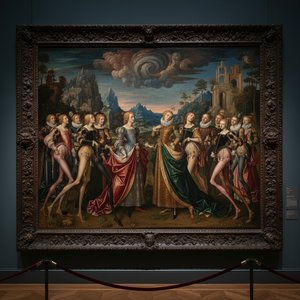
Bruegels verkliga innovation låg i hans ämnesval. Han avvek vårdslöst från de etablerade konventionerna inom renässansmåleri, som ofta fokuserade på religiösa berättelser eller klassisk mytologi. Istället vände han sin uppmärksamhet mot det vardagliga livet för vanliga människor – bönder som arbetade i fälten, bybor som firade festivaler, jägare som färdades genom snöiga landskap. Detta var inte en avvisning av traditionella teman utan snarare en höjning av det triviala till nivån av hög konst. Hans landskap var inte bara bakgrunder; de var aktiva deltagare i berättelsen, ofta fyllda med symbolisk mening och återspeglande en djup förståelse för naturens kraft och skönhet. *Dödens triumf* är en kuslig och apokalyptisk vision av mänsklig dödlighet, fylld av groteska bilder och en känsla av kommande dom. Målningar som *Bönderna bröllop* ger en otroligt detaljerad och nyanserad skildring av landsbygdslivet, utan sentimental idealisering. Han behärskade chiaroscuro – den dramatiska samspel mellan ljus och skugga – för att skapa djup, realism och emotionell resonans i sina kompositioner. Hans scener var inte nödvändigtvis kritiska; de var realistiska observationer som fångade både humor och svårigheter i det mänskliga tillståndet.
Inflytande och Arv
Pieter Bruegel den äldre har haft ett obestridligt inflytande på efterföljande generationers konstnärer. Han lade grunden för de nederländska guldålderns målare, inspirerade konstnärer som Isaac van Ostade och Adriaen Brouwer med sina realistiska skildringar av landsbygdsfolk. Hans innovativa syn på landskapsmåleri banade också vägen för senare utvecklingar inom genren och påverkade konstnärer som sökte fånga naturens skönhet och storhet. Utöver måleriet har Bruegels verk fortsatt att resonera med moderna publiker, framträdande i filmer som Andrei Tarkovskijs *Solaris* (1972) och Lars von Triers *Melancholia* (2011), vilket visar på den bestående kraften i hans bilder. Hans målningar erbjuder en tidlös reflektion över det mänskliga tillståndet – vår relation till naturen, våra strider mot döden och vår kapacitet för både glädje och sorg. Han dog i Bryssel 1569 vid relativt unga 43 år, lämnade efter sig ett verk som fortfarande fångar och inspirerar, vilket säkerställer hans plats som en av de viktigaste figurerna i konsthistorien.
Viktiga Verk och Bestående Teman
- Landskap med flykten till Egypten: En fridfull men subtilt symbolisk skildring av den heliga familjens resa, som visar Bruegels behärskning av atmosfäriskt perspektiv.
- Dödens triumf: En kuslig och apokalyptisk vision av mänsklig dödlighet, fylld med groteska bilder och en känsla av kommande dom.
- Bönderna bröllop: Ett livfullt och detaljerat porträtt av landsbygdslivet, som fångar den livliga energin och de sociala sedvänjorna i en flamsk by.
- Jägare i snön: En del av en serie som skildrar årstiderna, denna ikoniska målning är berömd för sin atmosfäriska skönhet och realistiska skildring av snölandskap.
- Babels torn: Ett monumentalt verk som illustrerar mänsklig ambition och gudomligt dom, som visar Bruegels skicklighet i att skapa komplexa kompositioner med invecklade detaljer.
Bruegels konst var inte bara avsiktad att representera det han såg; det var avsiktat att tolka världen omkring honom genom linsen av humanistisk undersökning och konstnärliga innovation. Han lämnade efter sig inte bara målningar utan bestående vittnesbörder om kraften i observation, skönheten i vardagslivet och den tidlösa komplexiteten i det mänskliga själet.



 Visa i rummet
 Köp handmålat konstverk
 Skicka
 Dela
Dela
 Detaljer
 Studentguide för konstverk

 Ladda ner
 Liknande objekt
 Röntgen
 Bildspel
 Besökstatistik


 Läs mer






































 Glasalternativet är endast tillgängligt i storlekar under 110 cm.