The Enigmatic Studies: A Window into Cézanne’s Soul
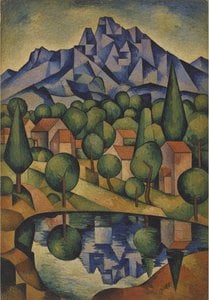
Paul Cézanne's "Studies," though existing primarily as photographic documentation of the original paintings, offers a remarkably intimate glimpse into the artist’s relentless pursuit of capturing not just what he *saw*, but how it *felt*. These works, often depicting scenes of everyday life – figures interacting in interiors or outdoors – are far more than simple portraits; they represent a profound exploration of form, light, and the very essence of perception. The photograph itself, with its subtle monochrome tones, lends an air of timelessness, inviting us to contemplate Cézanne’s process as if witnessing it unfold before our eyes.
Cézanne's journey was one of quiet revolution within the vibrant landscape of late 19th-century art. Emerging from the Impressionist movement – a period characterized by fleeting moments and atmospheric effects – he deliberately pushed beyond mere representation, seeking to impose a more structured order onto his observations. He wasn’t interested in replicating reality as it appeared momentarily; instead, he aimed to distill its fundamental elements—the geometric shapes, the underlying structure of objects, and the way light interacts with them—into a cohesive visual language. This ambition positioned him at the crucial juncture between Impressionism and Cubism, influencing generations of artists who followed.
The Compositional Dance: Form and Space
What immediately strikes the viewer is Cézanne’s masterful manipulation of space and form. He frequently employed a technique he termed “multiple viewpoints,” rendering a single subject from several perspectives simultaneously within a single painting. This isn't simply an illusionistic trick; it reflects his belief that objects possess inherent geometric forms—cubes, cylinders, cones—that are often obscured by the limitations of our visual perception. In "Studies," this is evident in the way figures seem to emerge from and recede into the background, creating a sense of depth and dynamism that defies traditional perspective. Notice how he uses overlapping planes and simplified shapes to build volume and suggest three-dimensionality, even within a relatively flat surface.
The photograph captures a particularly compelling example: a group of individuals engaged in conversation or observation. Cézanne’s focus isn't on individual likenesses but rather on the *relationships* between them—the spatial arrangement, the subtle gestures, and the implied narratives. The placement of hands, for instance, is meticulously considered, conveying intimacy, tension, or simply a moment of quiet contemplation. The use of muted tones allows these details to emerge with remarkable clarity, highlighting Cézanne’s sensitivity to the nuances of human interaction.
Symbolism and Emotional Resonance
While Cézanne avoided overt symbolism in his work, there's an undeniable emotional depth woven into "Studies." The scenes he depicts—domestic interiors, outdoor gatherings—suggest a longing for connection, a quiet contemplation of life’s rhythms. The figures themselves seem to embody a sense of timelessness and serenity, reflecting Cézanne’s own desire to transcend the fleeting nature of modern experience. It's not about telling a specific story but evoking a feeling – a mood of peaceful observation and quiet reflection.
Consider the way he uses light—or rather, the *absence* of strong color—to create atmosphere. The monochrome photograph emphasizes the interplay of shadows and highlights, drawing attention to the textures of clothing, the contours of faces, and the subtle shifts in tone that define the scene. This restraint allows the viewer to project their own emotions and interpretations onto the work, making it a deeply personal experience.
A Legacy of Innovation
Cézanne’s “Studies” are more than just paintings; they are foundational documents in the history of modern art. His radical approach to form, space, and perspective paved the way for Cubism and other avant-garde movements that would reshape the course of 20th-century art. Reproductions of these works offer a unique opportunity to appreciate Cézanne’s genius—to delve into his process, to understand his vision, and to connect with the enduring power of his artistic legacy. WahooArt offers meticulously crafted reproductions that faithfully capture the essence of these seminal paintings, allowing you to bring this remarkable work into your own space.
Frågor och svar
Är "Studies" typisk för vad Paul Cézanne vanligtvis skapade?
Bland Paul Cézannes dokumenterade teman – impressionism, geometry, observation, landscape, modernity, mythology, emotion, relationships – har "Studies" ett eget fokus på woman, figures, interaction, composition, perspective, study, leisure.
Vilken är den dominerande färgen i "Studies" av Paul Cézanne?
Den dominerande färgen i "Studies" av Paul Cézanne är Rosy Brown (#c1b19c).
Under vilka andra namn är Paul Cézanne känd?
Paul Cézanne är även känd som Paul Cezanne.



 Visa i rummet
 Byt till tryckta exemplar
 Skicka
 Dela
Dela
 Detaljer
 Studentguide för konstverk

 Ladda ner
 Liknande objekt
 Röntgen
 Bildspel
 Besökstatistik
 Läs mer






































 Glasalternativet är endast tillgängligt i storlekar under 110 cm.