Om konstnären
Paul Cézannes revolutionerande vision
Paul Cézanne, född 1839 i Aix-en-Provence, är en av de mest betydelsefulla konstnärerna inom europeisk målerihistoria. Han utgör en avgörande brygga mellan impressionismens flyktiga intryck och kubismens fragmenterade former. Cézannes väg mot erkännandet var inte omedelbar; den präglades av perioder av tvekan och kritik, men kulminerade i ett arv som för alltid förändrade modern konst. Född i en välbärgad familj – hans far var till en början hattmakare men blev senare bankman – åtnjöt Cézanne en ekonomisk trygghet som var ovanlig för aspirerande konstnärer, vilket gav honom friheten att ägna sig åt sin passion utan omedelbara kommersiella krav. Även om han inledningsvis styrdes mot en juridisk karriär av faderns ambitioner, visade sig den konstnärliga uttryckslustan vara för stark och han övergav slutligen juriststudierna till förmån för måleriet, ett beslut som skulle definiera hans liv. Tidiga influenser inkluderade romantiken som var populär under hans ungdom och barbizonskolans hängivenhet åt landskapet, men det var genom möten med konstnärer som Paul Gauguin och Georges Seurat, och deras innovativa syn på färg och form, som Cézanne började forma sin egen särpräglade stil.
Från mörker till struktur: En stils utveckling
Cézannes tidiga verk speglade ofta de dramatiska, känsloladdade teman som är karakteristiska för romantisk målning – mörka färgpaletter och uttrycksfull penseldräkt dominerade hans dukar. Denna inledande fas var dock bara ett steg på vägen mot en mycket mer analytisk och banbrytande approach. Missnöjd med att enbart fånga flyktiga ljusintryck, som impressionisterna föredrog, gav sig Cézanne ut i en strävan efter att förstå och representera objekts underliggande struktur. Han sökte inte bara *vad* han såg, utan *hur* han uppfattade de grundläggande formerna som utgjorde verkligheten. Detta ledde honom till att bryta ner naturliga former i deras geometriska motsvarigheter – koner, cylindrar, sfärer – och förutse kubistrevolutionen årtionden innan den materialiserades. Hans teknik kännetecknades av små, repetitiva penseldrag, noggrant lager på lager för att bygga upp komplexa färgfält och texturer, vilket skapade en känsla av soliditet och djup som tidigare var osedd i måleriet. Han var inte intresserad av illusionistiskt rum; istället presenterade han ofta objekt från flera synvinklar samtidigt, utmanade traditionella perspektivbegrepp och tvingade betraktaren att aktivt engagera sig i hans kompositioners konstruerade natur. Denna medvetna förvrängning var inte godtycklig utan snarare ett försök att förmedla en mer fullständig förståelse av formen, representera inte bara ett ögonblick i tiden utan en syntes av perception.
Landskap, stilleben och den mänskliga formen: Viktiga verk och återkommande motiv
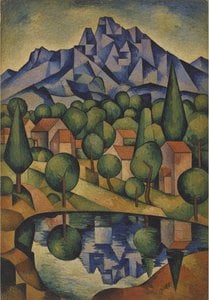
Cézannes oeuvre är anmärkningsvärt mångsidig och omfattar landskap, stilleben, porträtt och skildringar av badare, men alla förenas av hans unika syn på form och färg. Dammen vid Jas de Bouffan, målad 1880, exemplifierar hans landskapsarbete och visar hans förmåga att fånga naturens essens genom en noggrann arrangering av former och toner. Porträtt av Émile Zola, skapat 1866, avslöjar hans utvecklande stil och ger ett övertygande inblick i den intellektuella intensiteten hos sin nära vän och medförfattare. Hans stilleben, som de med äpplen och annan frukt, är inte bara representationer av objekt utan snarare utforskningar av volym, ljus och rumsliga relationer. Mont Sainte-Victoire-serien blev en besatthet för Cézanne, ett återkommande motiv som gav honom möjlighet att obevekligt undersöka form och perspektiv under årtionden. Dessa målningar är inte bara skildringar av ett berg; de är studier i hur vi uppfattar djup, volym och samspelet mellan ljus och skugga. Slutligen representerar hans serie Badare, som visar nakna figurer i idylliska landskap, en djupgående utforskning av den mänskliga formen och dess koppling till naturen, ofta genomsyrad av en känsla av tidlöshet och stilla kontemplation.
Ett arv smitt av innovation: Cézannes inflytande på modern konst
Paul Cézannes inverkan på efterföljande generationer av konstnärer är omätbar. Han betraktas allmänt som ”modern konsts fader” för sina banbrytande bidrag till bildspråket och banade väg för många av de stora konstnärliga rörelserna under 1900-talet. Pablo Picasso och Georges Braque var djupt skuldsatta till Cézannes betoning på geometriska former och multipla perspektiv, vilket blev centrala principer inom kubismen. Hans djärva användning av färg inspirerade också fauviströrelsen, ledd av konstnärer som Henri Matisse, som omfamnade livfulla, icke-naturalistiska nyanser. Även surrealistiska konstnärer fann resonans i Cézannes utforskning av subjektiv perception och psykologiskt djup. Bortom specifika rörelser befriade Cézannes insisterande på konstnärens personliga vision och hans förkastande av traditionella akademiska begränsningar generationer av målare att utforska nya uttrycksformer. Han utmanade själva definitionen av representation, skiftade fokus från att imitera verkligheten till att konstruera en visuell upplevelse baserad på underliggande struktur och subjektiv perception. Hans död 1906 markerade inte ett slut utan en början – gryningen av en ny era inom konsthistorien, en som präglades djupt av hans revolutionerande vision.



 Visa i rummet
 Köp handmålat konstverk
 Skicka
 Dela
Dela
 Detaljer
 Studentguide för konstverk

 Ladda ner
 Liknande objekt
 Röntgen
 Bildspel
 Besökstatistik


 Läs mer






































 Glasalternativet är endast tillgängligt i storlekar under 110 cm.