Visa i rummet Se i AR Köp handmålat konstverk Byt till digital bildförsäljning Skicka
Detaljer Studentguide för konstverk Lägg till i favoriter Ladda ner Liknande objekt Röntgen Bildspel Besökstatistik

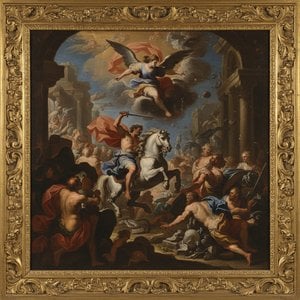
Vinter (Fördröjningen)

Upplev Nicolas Poussin's mästerverk "Vinter (Fördröjningen)"—en dramatisk oljemålning som fångar vinterens tumult och mänsklighetens ödesförhängande kamp mot naturens styrka. Utforska klassicismens djup!

Upptäck Nicolas Poussins mästerverk inom klassisk barockkonst – berömd för lugna landskap och mytologiska berättelser inspirerade av antikens praktikalitet! Fantastiska konstverk hittar du hos WahooArt.

Giclée / Konsttryck

Giclée- eller canvasprint av museumskvalitet med snabb produktion och flexibla ytbehandlingsalternativ. ( Köp handmålat konstverk Byt till digital bildförsäljning)

Corner sample of the P118B picture frame: formgjuten polystyren, 5 cm wide and 3 cm thick
P118B Skr10
Corner sample of the P118H picture frame: formgjuten polystyren, 5 cm wide and 3 cm thick
P118H Skr10
Corner sample of the P118W picture frame: formgjuten polystyren, 5 cm wide and 3 cm thick
P118W Skr10
Corner sample of the P438Z picture frame: formgjuten polystyren, 5.5 cm wide and 3.5 cm thick
P438Z Skr10
Corner sample of the P508JH picture frame: formgjuten polystyren, 7 cm wide and 3.5 cm thick
P508JH Skr12
Corner sample of the P508YH picture frame: formgjuten polystyren, 7 cm wide and 3.5 cm thick
P508YH Skr12
Corner sample of the P805H picture frame: formgjuten polystyren, 5 cm wide and 3.5 cm thick
P805H Skr10
Corner sample of the P805Z picture frame: formgjuten polystyren, 5 cm wide and 3.5 cm thick
P805Z Skr10
Corner sample of the P919BZ picture frame: formgjuten polystyren, 7 cm wide and 3.5 cm thick
P919BZ Skr10
Corner sample of the P919G picture frame: formgjuten polystyren, 7 cm wide and 3.5 cm thick
P919G Skr10
Corner sample of the P919XJ picture frame: formgjuten polystyren, 7 cm wide and 3.5 cm thick
P919XJ Skr10
Corner sample of the P959ZH picture frame: formgjuten polystyren, 5 cm wide and 3 cm thick
P959ZH Skr10
Corner sample of the P968JZ picture frame: formgjuten polystyren, 6 cm wide and 4 cm thick
P968JZ Skr12
Corner sample of the W106C picture frame: massivt trä, 5 cm wide and 3 cm thick
W106C Skr8
Corner sample of the W218G picture frame: massivt trä, 5 cm wide and 3 cm thick
W218G Skr10
Corner sample of the W218JH picture frame: massivt trä, 5 cm wide and 3 cm thick
W218JH Skr8
Corner sample of the W218Y picture frame: massivt trä, 5 cm wide and 3 cm thick
W218Y Skr10
Corner sample of the W307PJ picture frame: massivt trä, 6 cm wide and 3 cm thick
W307PJ Skr10
Corner sample of the W316G picture frame: massivt trä, 6 cm wide and 3 cm thick
W316G Skr10
Corner sample of the W316PJ picture frame: massivt trä, 6 cm wide and 3 cm thick
W316PJ Skr8
Corner sample of the W316Y picture frame: massivt trä, 6 cm wide and 3 cm thick
W316Y Skr10
Corner sample of the W398PJ picture frame: massivt trä, 5 cm wide and 3 cm thick
W398PJ Skr8
Corner sample of the W4111J picture frame: massivt trä, 6.5 cm wide and 3.5 cm thick
W4111J Skr10
Corner sample of the W500HY picture frame: massivt trä, 7 cm wide and 5 cm thick
W500HY Skr15
Corner sample of the W500JH picture frame: massivt trä, 7 cm wide and 5 cm thick
W500JH Skr15
Corner sample of the W692G picture frame: massivt trä, 8 cm wide and 4 cm thick
W692G Skr12
Corner sample of the W849H picture frame: massivt trä, 5 cm wide and 3 cm thick
W849H Skr8
Corner sample of the W940BG picture frame: massivt trä, 7.5 cm wide and 4.5 cm thick
W940BG Skr15
Corner sample of the W953PJ picture frame: massivt trä, 6 cm wide and 3.5 cm thick
W953PJ Skr8

Standardstorlek
anpassad
CM
INCH

Välj bland våra förinställda storlekar som motsvarar konstverkets ursprungliga proportioner.

bredd
höjd

Ange den bredd och höjd du behöver, för att passa din ram eller din vägg. Ett tryck kan endast beskäras, aldrig göras större än bilden, vilket innebär att ett format med en annan formform leder till att en del av bilden går förlorad. Vi skickar en digital mockup för godkännande innan vi trycker något. Bilden som visas på denna sida visar inte den faktiska beskärningen — det är endast mockuppen som gör det.

Leverans över hela världen () på 2 veckor istället för standard 4/5 veckor. (21 oktober)

Fri expressfrakt över hela världen
Högkvalitativ linnecanvas
Fullständig fraktförsäkring
Garantier för återbetalning av tullavgifter
Garantier för exakt färgåtergivning
100 dagars returrätt vid fabrikationsfel
100% pengarna tillbaka-garanti
Mängdrabatt erbjuds

Totalt pris

Skr 669

Vinter (Fördröjningen)

Giclée / Konsttryck

Reproduktionsstorlek

-

Totalpris

Skr 669

Snabbfakta

  • Medium: Oil on canvas
  • Dimensions: 117 x 160 cm
  • Location: Louvre Museum, Paris
  • Subject or theme: Religious allegory; Flood narrative
  • Movement: Classicism
  • Influences: Renaissance

Winter (The Flood): A Tempestuous Vision of Classical Grace

Nicolas Poussin, a name synonymous with classical grace and profound emotional depth in 17th-century art, gifted the world with a series of paintings known collectively as “The Four Seasons.” Among these masterpieces, “Winter (The Flood),” painted between 1660 and 1664, stands as a particularly arresting testament to his artistic prowess. More than simply a depiction of a natural disaster—though undeniably dramatic in its portrayal—it’s a meticulously constructed allegory—a meditation on human vulnerability, the indifference of nature, and the precarious balance between survival and oblivion. Measuring a substantial 117 x 160 cm, this oil-on-canvas work resides within the esteemed collection of the Louvre Museum in Paris, a testament to its enduring significance. The scene immediately commands attention with its masterful chiaroscuro—the stark contrast between light and shadow that Poussin employs. A bruised, storm-wracked sky dominates the upper portion of the canvas, pregnant with impending doom. Lightning flashes illuminate fleeting glimpses of a turbulent river, swollen to dangerous proportions by relentless rain. Below this chaotic expanse unfolds a landscape dominated by imposing mountains, their peaks shrouded in mist and snow – symbols of enduring strength and impassivity against the forces unleashed below. At the heart of the composition lies a small boat, precariously navigating the raging waters, carrying at least twelve souls and a loyal dog—a microcosm of humanity struggling against overwhelming odds.

The Classical Foundation & Poussin’s Technique

Poussin's artistic identity is firmly rooted in the principles of Classicism. This wasn’t merely an aesthetic choice; it represented a conscious rejection of the exuberant, often theatrical style prevalent during the Baroque period. Instead, he sought order, harmony, and balance—qualities deeply admired by Renaissance artists like Raphael. His meticulous attention to detail—evident in the precise rendering of textures – from the rough bark of the trees to the glistening surface of the water – speaks volumes about his rigorous training and unwavering commitment to accuracy. The composition itself adheres to strict geometric principles, creating a sense of stability within the turbulent scene. Notice how the diagonal lines of the boat’s trajectory are counterbalanced by the verticality of the mountains, contributing to a visual equilibrium that belies the chaos depicted. Poussin's technique is characterized by his use of *sfumato*—a subtle blurring of edges and contours—to create an atmospheric depth. He skillfully employs layering techniques, building up color gradually to achieve a luminous quality. The colors are predominantly cool – blues, grays, and whites – reflecting the bleakness of the winter landscape and the despair of the situation. However, flashes of warmer tones—the red of a garment clinging to a struggling figure—add dramatic emphasis and heighten the emotional impact.

A Biblical Echo & Philosophical Undertones

“Winter (The Flood)” is part of “The Four Seasons” series, commissioned by the son of Cardinal Richelieu. Interestingly, Poussin's work transcends a simple depiction of a flood; it carries profound philosophical and potentially biblical undertones. The scene echoes the story of Noah’s Ark, albeit with a distinctly more pessimistic interpretation. While the biblical narrative emphasizes divine judgment and the cleansing of humanity, Poussin presents a far less comforting vision. The figures in the boat are not heroes embarking on a righteous mission; they are simply struggling to survive, their fate uncertain. The inclusion of the serpent adds an element of foreboding, hinting at the destructive forces that lie dormant beneath the surface. Furthermore, Poussin's personal struggles during this period—he suffered from debilitating hand tremors—are believed to have influenced the painting’s slow and painstaking creation. This physical difficulty likely deepened his contemplation on themes of mortality, vulnerability, and the limitations of human control. The painting can be interpreted as a reflection on the fragility of existence in the face of overwhelming natural forces – a poignant reminder that even the most enduring structures are ultimately subject to destruction.

Symbolism & Emotional Resonance

Beyond its narrative elements, “Winter (The Flood)” is rich in symbolism. The boat itself represents humanity—a small, vulnerable vessel tossed about on the vast and indifferent ocean of nature. The figures within it embody a range of emotions – fear, desperation, hope, and resilience. The dog, often interpreted as a symbol of loyalty and fidelity, offers a glimmer of comfort amidst the chaos. The mountains, steadfast and unyielding, represent the enduring power of the natural world—a force that is both beautiful and terrifying. The overall effect is one of profound melancholy and unsettling beauty – a visual poem on the human condition. Consider commissioning a high-quality hand-painted reproduction from WahooArt.com to bring this iconic work into your home or office – a timeless reminder of humanity’s place within the grand scheme of nature.

Frågor och svar

Vilken känsla förmedlar "Vinter (Fördröjningen)" av Nicolas Poussin?

"Vinter (Fördröjningen)" av Nicolas Poussin förmedlar en Melankolisk känsla inom en övergripande Dramatisk stämning.

Vem har skapat "Vinter (Fördröjningen)"?

Konstnären bakom "Vinter (Fördröjningen)" är Nicolas Poussin. Verket är katalogiserat under Nicolas Poussins namn.

Hur kan jag förhandsgranska en reproduktion av "Vinter (Fördröjningen)" av Nicolas Poussin?

För att förhandsgranska en reproduktion av "Vinter (Fördröjningen)" av Nicolas Poussin, öppna konstverkets Förhandsvisning-sida.


Om konstnären

Nicolas Poussin – En Första Blick På Klassisk Renässans

Nicolas Poussin, ett namn som är synonymt med den majestätiska franska barockkonsten, var ändå en själ djupt rotad i italiensk jord under mycket av sin konstnärliga verksamhet. Han föddes i Les Andelys, Normandie, år 1594 och hans tidiga liv förblir något mystiskt, dock låg det utanför allt annat grund för ett yrke som skulle bli avgörande för att forma den klassiska traditionen inom fransk konst. Även om han studerade kort i Paris under de första åren av 1610-talet och absorberade influenser från mindre kända konstnärer vid tiden, var det hans resa till Rom år 1624 som verkligen tänt upp hans konstnärliga öde. Detta var inte bara en geografisk förflyttning; det var en immersion i hjärtat av antikviteten, en pilgrimsfärd till själva källan till inspiration som skulle definiera hans estetiska vision. Poussin’s första försök till målning präglades av en sinnlig kvalitet som påminner om venetianska mästare som Titian, ändå även här började ett något utvecklat öga för ordning och intellektuell rigor att växa fram—en förutsägelse av stilen han skulle så skickligt förfina.

Rom Åren: Förvandling Av Klassisk Idéal

Rom visade sig vara mer än bara en verkstad för Poussin; det blev hans intellektuella krucifix. Han befann sig mitt i en blomstrande cirkel av lärda män, arkeologer och andra konstnärer, bland annat Cassiano dal Pozzo, vars djupa förståelse för klassisk antikvitet djupt påverkade konstnärens metod. Dal Pozzo’s engagemang för noggrant dokumentation av antika rester inställde i Poussin en djup respekt för historisk korrekthet och ett önske om att förmedla känslan av tidlöshet till sina verk. Detta följde med att Poussin steg tillbaka från den flamboyant extravagans som några av hans samtida praktiserade, utan istället att omfamna en stil präglad av klarhet, balans och ett målmedvetet fokus på linjär komposition. Han studerade noggrant Rafael’s arbeten och absorberade deras harmoniska arrangemang och graciosa former, samtidigt som han hämtade inspiration från antika statyer och litterära källor som Ovid’s *Metamorphoses*. Hans målningar började fylla sig med figurer hämtade från klassisk historia och mytologi, målade inte bara som dekorativa element utan som förebilder av moraliska värden och filosofiska idéer. Detta arbete skulle komma att definiera hans konstnärliga stil och skapa ett arv som fortsätter att inspirera konstnärer än idag. Han var särskilt imponerad av Rafael’s förmåga att skapa komplexa kompositioner samtidigt som han behöll en känsla för balans och harmoni.

Influenser Och Inspirationskällor

Poussin’s konstnärliga utveckling påverkades starkt av flera faktorer, främst av hans möte med italienska klassiska ideal och konstnärliga praktiker. Hans tidiga verk visar tydligt influens från venetianska mästare som Titian och Giorgione, där ljusets användning och färger spelar en viktig roll för att skapa atmosfär och känsla. Detta kommer också till uttryck i hans senare målningar där han använder tekniker som sfumato och chiaroscuro för att skapa djup och realism. Rafael var utan tvekan den största konstnärliga influensen på Poussin, vars verk inspirerade honom att utveckla en stil präglad av elegans och harmonisk komposition. Han studerade Rafael’s arbeten intensivt och försökte efterlikna hans tekniker och kompositionsprinciper. Dessutom hämtade han inspiration från klassiska statyer och arkitektur samt från antik litteratur och filosofi, särskilt Platons och Aristoteles idéer om etik och politik. Dessa influenser bidrog till att skapa en konstnärlig världsbild som präglades av rationalitet och idealism—en världsbild som skulle komma att vara central för klassisk fransk konst.

Klassisk Konst Och Dess Arv

Nicolas Poussin är utan tvekan en av de mest betydelsefulla konstnärerna inom den klassiska barockkonsten och hans verk fortsätter att fascinera oss än idag. Hans målningar är kända för sin serenitet, sina komplexa kompositioner och sina djupa känslor samt för sitt användande av ljus och färg för att skapa atmosfär och känsla. Han var en pionjär inom klassisk konstnärlig teknik och utvecklade nya metoder för att skapa realistiska bilder samtidigt som han behöll en känsla för balans och harmoni. Hans konstverk är ett testament till hans förmåga att kombinera klassiska idéer med humanistisk kreativitet och hans verk har haft ett bestående inflytande på senare konstnärliga utvecklingar inom Frankrike och Europa. Han är särskilt erkänt för sina religiösa målningar där han använder klassiska kompositionstekniker för att förmedla budskap om tro och moral samt för sitt arbete med landskap där han hämtar inspiration från antik litteratur och filosofi för att skapa bilder som väcker känslor av harmoni och majestät. Hans konstverk är ett exempel på hur klassisk konst kan vara både estetiskt tilltalande och intellektuellt stimulerande—ett arv som fortsätter att inspirera konstnärer och forskare än idag.
  • Kända Verk: *The Death of Germanicus*, *The Seven Sacraments Series*, *A Roman Road*, *Orion Blinded Searching for the Sun*, *The Seasons*.
  • Nyckelkaraktärer: Klassisk Komposition, Linjäritet, Historiska Och Mytologiska Teman, Seren Landskap.
Nicolas Poussin

Nicolas Poussin

1594 - 1665 , Frankrike

Snabbfakta

  • Artistic Movement Or Style: Barock, Klassicism
  • Artists Who Influenced This Artist:
    • Raphael
    • Titian
  • Date Of Birth: 1594
  • Date Of Death: 1665
  • Full Name: Nicolas Antoine Taunay
  • Nationality: Fransk
  • Notable Artworks:
    • The Death of Germanicus
    • Seven Sacraments Series
    • A Roman Road
    • Orion Blinded Searching for the Sun
    • The Seasons
  • Place Of Birth: Les Andelys, Frankrike
Utforska konstverk sorterade efter tema, stil och egenskaper.