x
Handmålad olja på duk i din valda storlek och ram, tillverkad efter beställning av våra konstnärer.
Välj bland våra förinställda storlekar som motsvarar konstverkets ursprungliga proportioner.
Du kan ange egna mått för att passa en specifik ram eller yta. Om den valda storleken inte matchar originalbildens proportioner kommer vi antingen att beskära konstverket eller utöka målningen med ytterligare handmålade element. En digital skiss skickas till dig för godkännande innan produktionen påbörjas.
Observera att förhandsvisningen på skärmen inte återspeglar den faktiska beskärningen eller utökningen. Endast skissen visar den slutgiltiga kompositionen korrekt.
Även om anpassade storlekar är möjliga, rekommenderar vi att du väljer en dimension från den fördefinierade listan för att bevara originalproportionerna.
Leverans över hela världen () på 3–4 veckor istället för standard 5 veckor. (3 juli). Inga kompromisser med kvaliteten.
Newspaper:
Storlek på reproduktion
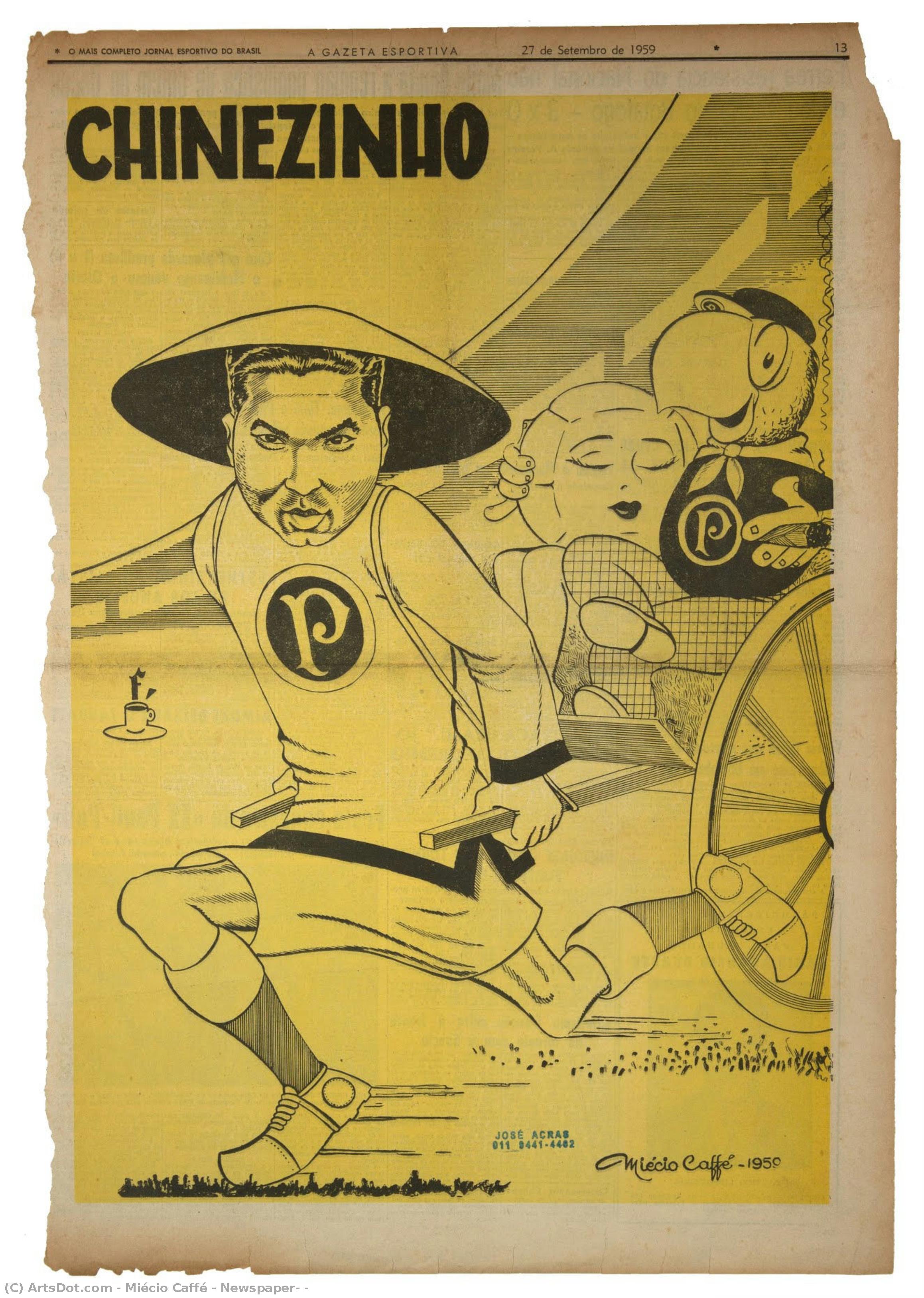
In the vibrant tapestry of mid-century Brazilian visual culture, few voices resonate with as much playful charm and satirical bite as that of Miécio Caffé. His work, specifically this captivating newspaper clipping from 1959, serves as a window into a bygone era of graphic humor that once animated the daily lives of Brazilians. The piece presents a lively comic strip composition, where characters move through a choreographed scene of everyday motion. At its heart, we find a trio of figures: one hurrying with hands tucked behind him, another observing the unfolding drama with a relaxed gaze, and a third poised with an umbrella, adding a touch of whimsical preparation to the narrative. This rhythmic arrangement of bodies, set against the backdrop of a bustling street life complete with bicycles and passing pedestrians, captures the kinetic energy of urban Brazil during a period of profound social transition.
The technique employed by Caffé is a masterclass in the art of the caricature, utilizing bold, decisive lines that command attention even within the small format of a newsprint publication. His style is characterized by an economy of line—where a single stroke can convey a character's entire temperament or the frantic pace of a runner. This graphic simplicity does not diminish the complexity of the emotion; rather, it amplifies it. The interplay between the heavy ink work and the negative space creates a sense of depth and movement that draws the eye across the frame, making the static image feel as though it is caught in a moment of mid-motion. For the collector of vintage graphic arts, this piece offers a profound appreciation for the precision required to translate human character into minimalist, high-impact illustration.
To understand this work is to understand the cultural landscape of 20th-century Brazil. Miécio Caffé was not merely an illustrator; he was a chronicler of his time, deeply embedded in the musical and social fabric of his nation. His ability to blend humor with sharp social observation allowed him to bridge the gap between high art and popular media. This specific piece, emerging from the late 1950s, reflects a period when the newspaper was the primary vessel for shared cultural experience. The inclusion of such caricatures in daily publications helped shape the national identity, providing a mirror in which the public could see their own joys, struggles, and eccentricities reflected through a lens of satire.
Beyond its immediate visual appeal, the artwork carries a deep emotional resonance, evoking a sense of nostalgia for the golden age of print media. For interior designers and art enthusiasts looking to curate a space with character, a reproduction of this work offers more than just decoration; it provides a conversation piece that speaks to the history of Brazilian graphic humor. It brings an element of storytelling into a room, inviting viewers to linger on the details of the characters' expressions and the nostalgic charm of the composition. Whether placed in a modern gallery setting or a classic study, Caffé’s work remains a timeless testament to the power of wit and the enduring allure of the hand-drawn line.
1920 - 2003 , Brazil
Berätta om ditt projekt så kommer våra konstexperter att ge dig 3 personliga konstförslag.
Vi skapar ett urval av 3 alternativ helt anpassat för dig – gratis!