Förhandsvisa Förhandsgranska i AR Beställ handmålad reproduktion Byt till digital bild Skicka
Visa detaljer Guide Lägg till i favoriter Ladda ner Liknande objekt Röntgen Bildspel Statistik

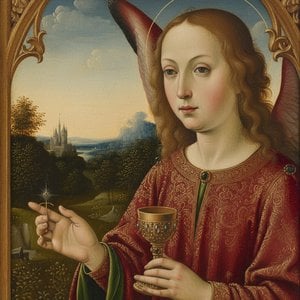
The Annunciation

Hans Memling’s ‘The Annunciation,’ a masterpiece of Early Netherlandish painting from 1465, showcases breathtaking detail and luminosity through masterful glazing. Admire this iconic scene featuring Rogier van der Weyden's influence and discover the beauty to own.

Upptäck Hans Memlings fantastiska tidig-nederländska målningar från Brugge! Utforska religiösa scener och porträtt vid Memling Museum – ett mästerverk av en flamländsk primitiv. Känd för detaljrikedom, ljusa färger och realistisk skildring.

Konstverket som visas på denna sida skyddas av upphovsrättslagen, vilket innebär att vi inte lagligt kan skapa eller sälja en identisk reproduktion. Detta skydd upprätthålls genom internationella avtal såsom den Bernkonventionen och genom nationella lagar, inklusive de som fastställs av Amerikansk upphovsrättslag – Titel 17. Alla rättigheter förbehållna. Återgivning av konstverk är förbjuden utan skriftligt tillstånd från WahooArt.

Denna metod följer fullt ut upphovsrättsliga regler eftersom den inte innebär kopiering eller duplicering av det skyddade konstverket. Istället är det en kreativ nytolkning – en ny målning som är influerad av originalet men inte identisk med det.

Giclée / Konsttryck

Giclée- eller canvasprint av museumskvalitet med snabb produktion och flexibla ytbehandlingsalternativ. ( Beställ handmålad reproduktion Byt till digital bild)

Corner sample of the P118B picture frame: formgjuten polystyren, 5 cm wide and 3 cm thick
P118B Skr10
Corner sample of the P118H picture frame: formgjuten polystyren, 5 cm wide and 3 cm thick
P118H Skr10
Corner sample of the P118W picture frame: formgjuten polystyren, 5 cm wide and 3 cm thick
P118W Skr10
Corner sample of the P438Z picture frame: formgjuten polystyren, 5.5 cm wide and 3.5 cm thick
P438Z Skr10
Corner sample of the P508JH picture frame: formgjuten polystyren, 7 cm wide and 3.5 cm thick
P508JH Skr12
Corner sample of the P508YH picture frame: formgjuten polystyren, 7 cm wide and 3.5 cm thick
P508YH Skr12
Corner sample of the P805H picture frame: formgjuten polystyren, 5 cm wide and 3.5 cm thick
P805H Skr10
Corner sample of the P805Z picture frame: formgjuten polystyren, 5 cm wide and 3.5 cm thick
P805Z Skr10
Corner sample of the P919BZ picture frame: formgjuten polystyren, 7 cm wide and 3.5 cm thick
P919BZ Skr10
Corner sample of the P919G picture frame: formgjuten polystyren, 7 cm wide and 3.5 cm thick
P919G Skr10
Corner sample of the P919XJ picture frame: formgjuten polystyren, 7 cm wide and 3.5 cm thick
P919XJ Skr10
Corner sample of the P959ZH picture frame: formgjuten polystyren, 5 cm wide and 3 cm thick
P959ZH Skr10
Corner sample of the P968JZ picture frame: formgjuten polystyren, 6 cm wide and 4 cm thick
P968JZ Skr12
Corner sample of the W106C picture frame: massivt trä, 5 cm wide and 3 cm thick
W106C Skr8
Corner sample of the W218G picture frame: massivt trä, 5 cm wide and 3 cm thick
W218G Skr10
Corner sample of the W218JH picture frame: massivt trä, 5 cm wide and 3 cm thick
W218JH Skr8
Corner sample of the W218Y picture frame: massivt trä, 5 cm wide and 3 cm thick
W218Y Skr10
Corner sample of the W307PJ picture frame: massivt trä, 6 cm wide and 3 cm thick
W307PJ Skr10
Corner sample of the W316G picture frame: massivt trä, 6 cm wide and 3 cm thick
W316G Skr10
Corner sample of the W316PJ picture frame: massivt trä, 6 cm wide and 3 cm thick
W316PJ Skr8
Corner sample of the W316Y picture frame: massivt trä, 6 cm wide and 3 cm thick
W316Y Skr10
Corner sample of the W398PJ picture frame: massivt trä, 5 cm wide and 3 cm thick
W398PJ Skr8
Corner sample of the W4111J picture frame: massivt trä, 6.5 cm wide and 3.5 cm thick
W4111J Skr10
Corner sample of the W500HY picture frame: massivt trä, 7 cm wide and 5 cm thick
W500HY Skr15
Corner sample of the W500JH picture frame: massivt trä, 7 cm wide and 5 cm thick
W500JH Skr15
Corner sample of the W692G picture frame: massivt trä, 8 cm wide and 4 cm thick
W692G Skr12
Corner sample of the W849H picture frame: massivt trä, 5 cm wide and 3 cm thick
W849H Skr8
Corner sample of the W940BG picture frame: massivt trä, 7.5 cm wide and 4.5 cm thick
W940BG Skr15
Corner sample of the W953PJ picture frame: massivt trä, 6 cm wide and 3.5 cm thick
W953PJ Skr8

Standardstorlek
skräddarsydd
CM
INCH

Välj bland våra förinställda storlekar som motsvarar konstverkets ursprungliga proportioner.

bredd
höjd

Ange den bredd och höjd du behöver för att passa din ram eller vägg. Ett tryck kan endast beskäras, aldrig göras större än originalbilden, vilket innebär att ett format med en annan proportion leder till att en del av bilden går förlorad. Vi skickar en digital mockup för godkännande innan vi påbörjar tryckningen. Bilden som visas på denna sida visar inte den faktiska beskärningen — det är endast mockuppen som gör det.

Leverans över hela världen () på 2 veckor istället för standard 4/5 veckor. (26 oktober)

Fri expressfrakt över hela världen
Högkvalitativ linnecanvas
Fullständig fraktförsäkring
Garantier för återbetalning av tullavgifter
Garantier för exakt färgåtergivning
100 dagars returrätt (endast vid fel)
100% pengarna tillbaka-garanti
Mängdrabatt erbjuds

Totalt pris

Skr 675

The Annunciation

Giclée / Konsttryck

Storlek på reproduktion

-

Slutgiltigt pris

Skr 675

Kortfakta

  • Subject or theme: Religious Narrative
  • Location: Saint Lazare Cathedral, Autun
  • Notable elements or techniques: Detailed realism; Rogier van der Weyden design
  • Medium: Oil paint on panel
  • Dimensions: 186 x 115 cm
  • Artistic style: Medieval Art

Konstquiz

Det finns endast ett korrekt svar på varje fråga.

Fråga 1:
What is the primary subject matter of Hans Memling’s ‘The Annunciation’?
Fråga 2:
Who is credited with designing the original composition for ‘The Annunciation’?
Fråga 3:
In what city was Hans Memling primarily active as an artist?
Fråga 4:
What architectural element is prominently featured in the painting’s background, symbolizing Mary's honor?
Fråga 5:
What is Memling’s artistic connection to Rogier van der Weyden?

A Divine Encounter Captured in Oil

In the quiet, luminous atmosphere of Hans Memling’s The Annunciation, time seems to suspend itself, inviting the viewer into a sacred moment of profound spiritual significance. This masterpiece, dating from approximately 1465, captures the pivotal instant when the Archangel Gabriel delivers the divine message to the Virgin Mary. The scene is not merely a depiction of a biblical event but a breathtaking window into the soul of the Early Netherlandish movement. Through his masterful command of light and shadow, Memling transforms a religious narrative into an intimate, palpable encounter that resonates with both reverence and human tenderness.

The composition draws the eye through a meticulously rendered landscape where the earthly and the divine converge. As the angel approaches, the viewer is struck by the incredible depth achieved through Memling’s signature technique of glazing. By layering thin, translucent coats of oil paint, the artist creates a sense of inner radiance, making the fabrics of the robes appear heavy with texture and the skin of the figures glow with a lifelike vitality. This luminosity serves a higher purpose, symbolizing the divine light descending upon the world, turning a simple architectural setting into a vessel for the miraculous.

The Legacy of Mastery and Detail

To understand the brilliance of this work, one must look to Memling’s formative years in the workshop of Rogier van der Weyden. As an apprentice to one of the greatest titans of Flemish painting, Memling inherited a devotion to sculptural modeling and an almost scientific precision in observing the natural world. In The Annunciation, this lineage is evident in every minute detail—from the delicate feathers of a bird perched in the periphery to the intricate patterns of the architectural elements. Every brushstroke serves to ground the supernatural event in a reality so vivid that it feels within reach.

For the discerning collector or interior designer, this painting offers more than just aesthetic beauty; it provides a focal point of profound intellectual and emotional depth. The interplay between the vibrant reds of the doorway and the serene, naturalistic background creates a balanced palette that can anchor a sophisticated space, whether in a classical gallery setting or a contemporary study. It is a piece that demands contemplation, offering a sense of peace and historical grandeur that transcends the centuries.

Symbolism and Emotional Resonance

Beyond its technical perfection, the painting is a tapestry of symbolic meaning. The architectural threshold acts as a metaphor for the boundary between the celestial realm and our mortal existence. As Mary kneels in humble acceptance, her posture reflects the profound piety that defined the era, while the surrounding figures and subtle environmental details whisper stories of faith and devotion. Memling’s ability to blend these complex theological themes with such accessible, breathtaking realism ensures that the artwork remains as emotionally stirring today as it was in the fifteenth century.

Owning a reproduction of such a monumental work allows one to bring the quiet majesty of the Bruges masters into the modern home. It is an invitation to experience the meticulous craftsmanship of the Northern Renaissance—a testament to a time when art was the ultimate bridge between the human spirit and the divine.

Frågor och svar

Vad föreställer "The Annunciation"?

Teman som återfinns i "The Annunciation" av Hans Memling inkluderar religious iconography, virgin mary, gabriel angel, annunciation scene, flemish painting, byzantine influence, detail art, medieval art. Tillsammans sammanfattar de verkets motiv.

Varifrån kommer besökarna till "The Annunciation" av Hans Memling?

Sidan Besöksstatistik för "The Annunciation" av Hans Memling presenterar statistik över publika besök: månatliga besök för detta konstverk, en jämförelse med konstnärens mest sedda verk samt varifrån besökarna kommer.

Var kan man se "The Annunciation" av Hans Memling utställd idag?

"The Annunciation" av Hans Memling visas på Metropolitan Museum of Art, New York, United States of America. Museilistan avser originalverket, inte reproduktioner.


Konstnärsbiografi

Hans Memling: Mästerhantverkaren från Brugge och detaljens skönhet

Hans Memling (ca 1430 – 11 augusti 1494), född i Seligenstadt, Tyskland, är en central gestalt inom den tidiga nederländska målarkonsten – en rörelse präglad av utsökt realism, noggrann naturiakttagelse och djup andlig kontemplation. Även om hans formativa år tillbringades främst i Rhenlandets konstnärliga miljö, ledde Memlings bana honom slutligen till Brugge i Belgien, där han etablerade sig som en av sin tids främsta konstnärer och kultiverade en produktiv verkstad som spred hans särpräglade stil över Europa. Hans liv är höljt i mystik, men hans verk talar ett tydligt språk om precision, fromhet och en djup förståelse för det mänskliga tillståndet.

Från lärlingsår till Brugge: Formandet av en mästare

Detaljer kring Memlings födelse är sparsamma, men forskningen pekar mot Mainz omkring 1430 som hans ursprung. Hans konstnärliga utbildning inleddes under Rogier van der Weydens ledning, en titan inom flamländsk målarkonst vars behärskning av oljefärg och skulptural modellering djupt formade Memlings teknik. Denna lärdom instillde i honom en orubblig hängivenhet åt detaljen – ett kännetecken som skulle definiera hans oeuvre. Van der Weydens inflytande märks tydligt i de tidiga verken, men Memling utvecklade snart sin egen unika stil, präglad av en ljusare färgpalett och en större betoning på yta och textur. År 1465 blev han medborgare i Brugge, ett blomstrande handelscentrum och konstnärligt nav. Här grundade han en verkstad bemannad med många assistenter, vilket skapade en miljö för innovation och stilistisk konsistens. Verkstaden blev känd för att producera fantastiska reproduktioner av mästerverk – ett bevis på Memlings skicklighet som både konstnär och pedagog.

En stil definierad av precision och fromhet

Memlings konstnärliga stil är omedelbart igenkännlig: kännetecknad av ljusa färgpaletter, delikat återgivna draperifolder och en häpnadsväckande nivå av anatomisk noggrannhet. Han studerade mänsklig anatomi minutiöst – inspirerad av klassisk skulptur – för att uppnå oöverträffad realism i sina porträtt och religiösa scener. Till skillnad från många samtida som föredrog expressiva penseldrag, prioriterade Memling noggrann observation och mödosam utförande, vilket resulterade i bilder genomsyrade av seren ro och djup andlig mening. Han var en mästare på att återge material – silke, sammet, guld – med en sådan realism att man nästan kan känna texturen under fingrarna. Hans porträtt är inte bara fysiska likheter utan också psykologiska studier, där han fångar modellernas karaktär genom subtila gester och ansiktsuttryck.

Religiösa beställningar och porträttkonst: En konstnär i efterfrågan

Memlings rykte steg tack vare lukrativa uppdrag från förmögna beskyddare – främst präster och aristokratiska familjer – som sökte avbildningar av helgon och bibliska berättelser som resonerade med fromhet och prestige. Ett framstående exempel är *Domedagen* vid Sankt Johannes sjukhus i Brugge, ett monumentalt freskomålning som visar Memlings mästerliga kompositionella färdigheter och dramatiska användning av färg. Han skildrade inte bara religiösa figurer utan också vardagslivet med en sällsynt realism, vilket gjorde hans verk tillgängliga och relaterbara för en bredare publik. Hans porträttkonst var särskilt efterfrågad; han excellerade i att fånga framstående personers likheter med anmärkningsvärd känslighet och psykologisk insikt. Porträtt som *Man med pil* demonstrerar hans förmåga att förmedla karaktär genom subtila gester och ansiktsuttryck – en skicklighet som cementerade hans plats bland tidens största konstnärer.

Inflytande och arv: En bestående inspiration

Memlings konstnärliga arv sträcker sig långt bortom hans egen livstid. Hans verkstad producerade ett stort antal målningar – många med stilistiska likheter med hans originalverk – som spred Memlings särpräglade estetik över Flandern och vidare. Dessutom tjänade Memlings minutiösa teknik som inspiration för efterföljande generationer av konstnärer, särskilt Quentin Massys, som etablerade Antwerpen-skolan, vilket befäste Memlings position som en hörnsten inom flamländsk renässanskonst. Under 1800-talet återupptäcktes hans verk och hyllades för deras genialitet. Idag fortsätter Memlings arbeten – särskilt *Domedagen* – att fängsla publik över hela världen, som bestående symboler för konstnärlig excellens och andlig kontemplation. Hans noggranna uppmärksamhet på detaljer och djupa förståelse för det mänskliga psykologiska tillståndet är anmärkningsvärt relevant i vår samtida uppskattning av konsthistorien. Hans konst är en tidlös hyllning till skönheten, fromheten och den mänskliga andens komplexitet.
Hans Memling

Hans Memling

Tyskland

Kortfakta

  • Artistic Movement Or Style: Tidig nederländsk målning
  • Artists Who Influenced This Artist: ['Rogier van der Weyden']
  • Date Of Birth: ca 1430
  • Date Of Death: 11 augusti 1494
  • Full Name: Hans Memling
  • Nationality: Tysk-flamländsk
  • Notable Artworks:
    • Sankt Johannes sjukhuset
    • Yttersta domen
    • Passionens scener
  • Place Of Birth: Seligenstadt, Tyskland
Utforska konstverk sorterade efter tema, stil och egenskaper.