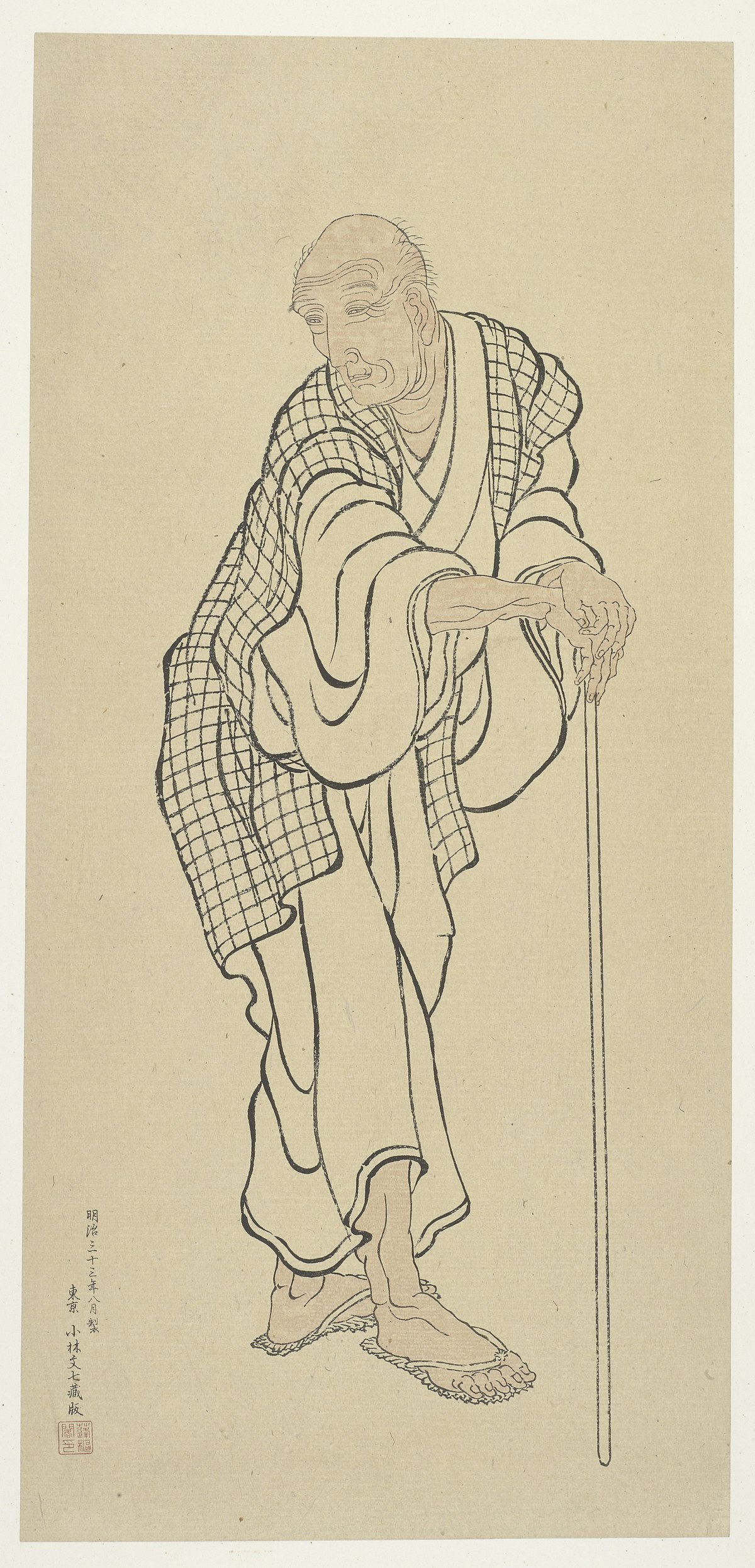
Katsushika Hokusai: En Konstnärs Liv I Bläck och Trä
Katsushika Hokusai, ett namn som idag är synonymt med japansk konst och framför allt den ikoniska bilden *Vågen off Kanagawa*, var mycket mer än bara en träsnittskapare. Född i Edo (modern Tokyo) omkring 1760 levde han ett liv präglat av en ständig strävan efter konstnärlig mognad, en ständigt föränderlig utveckling markerad av namnförändringar och en outsläcklig nyfikenhet. Från enkla rötter som son till en spegelmakare var Hokusais tidiga benägenhet mot konst inte omedelbart uppmuntrad; ändå strävade han ihärdigt efter att utveckla sina färdigheter, och det sägs att han började teckna redan i sexårsåldern. Denna dedikation skulle definiera en karriär som spänner över nästan nio årtionden, lämnande ett arv som fortsätter att resonera hos publiken världen över. Hans far, Nakajima Ise, erkände och kanske främjade denna tidiga talang, vilket lade grunden för en resa som skulle transformera den japanska visuella kulturen. Hokusais tidiga liv var inte präglat av privilegier, utan snarare en stadig klättring drivet av ambition och en djup rotad passion att fånga världens essens.
Från Lärlingskap till Innovation: En Stils Blomstring
Hokusais formella konstnärliga utbildning inleddes vid tolv års ålder när han gick med i studion hos Katsukawa Shunshō, en ledande mästare av *ukiyo-e* – ”bilder ur den flytande världen”. Denna genre, som var populär under Edo-perioden, skildrade scener från vardagslivet: aktörer, kurtisaner, landskap och glimtar in i den livliga stadsbilden. Under Shunshōs vägledning behärskade Hokusai tekniken för träsnideri, en krävande process som krävde precision och konstnärlighet. Men han var inte nöjd med att bara kopiera sin lärares stil. Även i sina tidiga verk fanns det en rastlös anda, ett önske om att utmana gränserna och utforska nya sätt att uttrycka sig. Han experimenterade med olika ämnen, från bokillustrationer till fristående tryck, ständigt förfinade sina färdigheter och utvecklade ett unikt visuellt språk. Denna period såg också de första av många namnförändringar – en vanlig praxis bland *ukiyo-e*-konstnärer som signalerade nya perioder i konstnärlig utveckling eller tillhörighet till olika skolor. I början fokuserade han på att illustrera böcker, vilket gav honom ett stabilt arbete och möjliggjorde honom att utveckla sina kompositionella färdigheter. Men det var hans övergång till fristående tryck som verkligen släppte loss hans kreativa potential.
Fuji och den Flytande Världen: Ikoniska Verk
Hokusais konstnärliga produktion var anmärkningsvärt rik – tusentals träsnitt, målningar och illustrerade böcker bär hans signatur. Medan han utforskade en mängd olika ämnen, var det hans serie *Trettiosex Vyer av Fuji* (cirka 1831) som säkrade hans rykte. Denna samling, inklusive den nu-ikoniska *Vågen off Kanagawa*, var inte bara en representation av ett landskap; det var en mästarlösning av perspektiv, komposition och naturens kraft. Vågen själv, en massiv kraft på väg att slå mot små båtar, symboliserar både skönhet och terror i havet. Utöver *Fuji* visade verk som *Eldvårdarna vid Ryōgoku Bridge* (1790) hans förmåga att fånga dynamiska scener från vardagslivet med otrolig energi och detalj. Hans *Hokusai Manga* – en samling skisser och studier om människor, djur, landskap och fantastiska varelser – var banbrytande i sitt omfång och inflytande, vilket förutspådde utvecklingen av den moderna mangan som ett konstform. Dessa verk var inte isolerade prestationer; de var milstolpar i en kontinuerlig konstnärlig resa, där varje steg byggde vidare på det föregående för att skapa ett arv som är djupt rotat i japansk tradition och ändå märkbart innovativt.
Inflytanden och Inspiration
Hokusais konst var starkt influerad av den traditionella *ukiyo-e*-konsten, särskilt de stilistiska konventionerna hos Kano-skolan och Rinpa-skolan. Han studerade också europeiska stilar genom franska och holländska koppartryck som han kunde skaffa sig. Dessa influenser finns i hans konstverk, men det är hans förmåga att integrera olika stilar som markerar hans egen personliga, helt unika stil. Hans fascination för berget Fuji var också en central del av hans konstnärliga uttryck och han fann många sätt att representera berget, vilket skapade en känsla av sammanhållning mellan de olika scenerna i japansk vardag som han porträtterade.
En Arv Som Överträffar Gränserna: Hokusais Bestående Inverkan
Hokusais inflytande sträckte sig långt bortom Japan. Under den sena 1800-talet, när Japan öppnade sina dörrar för västerlandet, flödade *ukiyo-e*-tryck till europeiska marknader och utlöste ett fenomen känt som *Japonisme*. Konstnärer som Claude Monet, Edgar Degas och Vincent van Gogh blev förtjusta i Hokusais djärva kompositioner, livfulla färger och ovanliga perspektiv. Van Gogh, särskilt, lät sig starkt påverkas av *Vågen off Kanagawa*, och målade till och med den i sina egna verk. Hokusais inflytande var inte begränsat till Impressionismen; det genomsyrade olika moderna konströrelser och formade hur konstnärer angrep komposition, färg och ämnen. Hans förmåga att fånga flyktiga ögonblick, hans dynamiska användning av linjer och hans förmåga att finna skönhet i vardagen resonerade med en generation av konstnärer som sökte nya uttryck. Även idag fortsätter Hokusais verk att inspirera och utmana konstnärer över hela världen, vilket säkrar hans plats som en av de viktigaste figurerna i konsthistorien. Han fortsatte att måla fram till sin död 1849 vid ålder 89, lämnande ett enormt verk som är ett testamente till hans okuvliga dedikation och konstnärliga geni.
- Stora influenser: Ukiyo-e traditioner, kinesisk landskapsmålning, vardagslivet i Edo.
- Nyckelaspekter: Djupsnögglade linjer, livfulla färger, dynamiska kompositioner, skarp observation av naturen.



 Visa i rummet
 Byt till tryckta exemplar
 Skicka
 Dela
Dela
 Detaljer
 Guide
Guide

 Ladda ner
 Liknande objekt
 Röntgen
 Bildspel
 Besökstatistik

 Läs mer