Visa i rummet Se i AR Köp handmålat konstverk Byt till digital bildförsäljning Skicka
Detaljer Studentguide för konstverk Lägg till i favoriter Ladda ner Liknande objekt Röntgen Bildspel Besökstatistik

Actresses

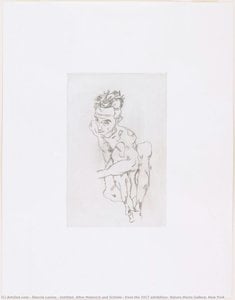
Explore Joseph Beuys' 'Actresses,' a poignant graphite drawing capturing two figures in movement. This preparatory sketch reveals his expressive style and explores themes of performance & humanity.

Joseph Beuys (1921-1986): Tysk konstnär som revolutionerade konsten genom social skulptur och symboliska material – felt, fett & samhällsförändring. Utforska hans unika konstnärliga vision!

Konstverket som visas på denna sida skyddas av upphovsrättslagen, vilket innebär att vi inte lagligt kan skapa eller sälja en identisk reproduktion. Detta skydd upprätthålls genom internationella avtal såsom den Bernkonventionen och genom nationella lagar, inklusive de som fastställs av Amerikansk upphovsrättslag – Titel 17. Alla rättigheter förbehållna. Återgivning av konstverk är förbjuden utan skriftligt tillstånd från WahooArt.

Denna metod följer fullt ut upphovsrättsliga regler eftersom den inte innebär kopiering eller duplicering av det skyddade konstverket. Istället är det en kreativ nytolkning – en ny målning som är influerad av originalet men inte identisk med det.

Giclée / Konsttryck

Giclée- eller canvasprint av museumskvalitet med snabb produktion och flexibla ytbehandlingsalternativ. ( Köp handmålat konstverk Byt till digital bildförsäljning)

Corner sample of the P118B picture frame: moulded polystyrene, 5 cm wide and 3 cm thick
P118B Skr10
Corner sample of the P118H picture frame: moulded polystyrene, 5 cm wide and 3 cm thick
P118H Skr10
Corner sample of the P118W picture frame: moulded polystyrene, 5 cm wide and 3 cm thick
P118W Skr10
Corner sample of the P438Z picture frame: moulded polystyrene, 5.5 cm wide and 3.5 cm thick
P438Z Skr10
Corner sample of the P508JH picture frame: moulded polystyrene, 7 cm wide and 3.5 cm thick
P508JH Skr12
Corner sample of the P508YH picture frame: moulded polystyrene, 7 cm wide and 3.5 cm thick
P508YH Skr12
Corner sample of the P805H picture frame: moulded polystyrene, 5 cm wide and 3.5 cm thick
P805H Skr10
Corner sample of the P805Z picture frame: moulded polystyrene, 5 cm wide and 3.5 cm thick
P805Z Skr10
Corner sample of the P919BZ picture frame: moulded polystyrene, 7 cm wide and 3.5 cm thick
P919BZ Skr10
Corner sample of the P919G picture frame: moulded polystyrene, 7 cm wide and 3.5 cm thick
P919G Skr10
Corner sample of the P919XJ picture frame: moulded polystyrene, 7 cm wide and 3.5 cm thick
P919XJ Skr10
Corner sample of the P959ZH picture frame: moulded polystyrene, 5 cm wide and 3 cm thick
P959ZH Skr10
Corner sample of the P968JZ picture frame: moulded polystyrene, 6 cm wide and 4 cm thick
P968JZ Skr12
Corner sample of the W106C picture frame: solid wood, 5 cm wide and 3 cm thick
W106C Skr8
Corner sample of the W218G picture frame: solid wood, 5 cm wide and 3 cm thick
W218G Skr10
Corner sample of the W218JH picture frame: solid wood, 5 cm wide and 3 cm thick
W218JH Skr8
Corner sample of the W218Y picture frame: solid wood, 5 cm wide and 3 cm thick
W218Y Skr10
Corner sample of the W307PJ picture frame: solid wood, 6 cm wide and 3 cm thick
W307PJ Skr10
Corner sample of the W316G picture frame: solid wood, 6 cm wide and 3 cm thick
W316G Skr10
Corner sample of the W316PJ picture frame: solid wood, 6 cm wide and 3 cm thick
W316PJ Skr8
Corner sample of the W316Y picture frame: solid wood, 6 cm wide and 3 cm thick
W316Y Skr10
Corner sample of the W398PJ picture frame: solid wood, 5 cm wide and 3 cm thick
W398PJ Skr8
Corner sample of the W4111J picture frame: solid wood, 6.5 cm wide and 3.5 cm thick
W4111J Skr10
Corner sample of the W500HY picture frame: solid wood, 7 cm wide and 5 cm thick
W500HY Skr15
Corner sample of the W500JH picture frame: solid wood, 7 cm wide and 5 cm thick
W500JH Skr15
Corner sample of the W692G picture frame: solid wood, 8 cm wide and 4 cm thick
W692G Skr12
Corner sample of the W849H picture frame: solid wood, 5 cm wide and 3 cm thick
W849H Skr8
Corner sample of the W940BG picture frame: solid wood, 7.5 cm wide and 4.5 cm thick
W940BG Skr15
Corner sample of the W953PJ picture frame: solid wood, 6 cm wide and 3.5 cm thick
W953PJ Skr8

Standardstorlek
anpassad
CM
INCH

Välj bland våra förinställda storlekar som motsvarar konstverkets ursprungliga proportioner.

bredd
höjd

Du kan ange egna mått för att passa en specifik ram eller yta. Om det valda måttet inte överensstämmer med originalbildens proportioner kommer vi antingen att beskära konstverket eller utöka bilden med en speglad eller enfärgad kant. En digital mockup skickas för ditt godkännande innan produktionen påbörjas.
Vänligen notera att förhandsvisningen på skärmen inte återspeglar den faktiska beskärningen eller utökningen. Endast mockuppen visar den slutgiltiga kompositionen korrekt.
Även om anpassade storlekar är möjliga, rekommenderar vi att du väljer ett mått från den fördefinierade listan för att bevara de ursprungliga proportionerna.

Leverans över hela världen () på 2 veckor istället för standard 4/5 veckor. (10 oktober)

Fri expressfrakt över hela världen
Högkvalitativ linnecanvas
Fullständig fraktförsäkring
Garantier för återbetalning av tullavgifter
Garantier för exakt färgåtergivning
100 dagars returrätt vid fabrikationsfel
100% pengarna tillbaka-garanti
Mängdrabatt erbjuds

Totalt pris

Skr 659

Actresses

Giclée / Konsttryck

Reproduktionsstorlek

-

Totalpris

Skr 659

Snabbfakta

  • Artist: Joseph Beuys
  • Year: 1958
  • Dimensions: 21 x 29 cm
  • Movement: Neo-Dada
  • Medium: Graphite/Charcoal
  • Notable elements: Loose lines, gestural
  • Title: Actresses

Konstquiz

Det finns endast ett korrekt svar på varje fråga.

Fråga 1:
What artistic movement is most closely associated with Joseph Beuys’s work ‘Actresses’?
Fråga 2:
The drawing utilizes loose, sketchy lines. What does this technique primarily convey about the artwork?
Fråga 3:
What is the predominant color palette used in ‘Actresses’?
Fråga 4:
According to the description, what is a notable feature of the background in ‘Actresses’?
Fråga 5:
In what year was ‘Actresses’ created by Joseph Beuys?

The Weight of Performance: Joseph Beuys’s “Actresses”

Joseph Beuys's "Actresses," rendered in 1958 on a deceptively simple pale beige background, isn’t merely a sketch; it’s a distilled essence of performance, vulnerability, and the potent symbolism inherent within the human form. This preparatory drawing, a glimpse into the mind of one of the 20th century's most radical artists, immediately draws the viewer in with its loose, gestural lines – a deliberate rejection of rigid representation in favor of capturing a fleeting moment of embodied expression. The two figures, presented in profile and seemingly caught mid-movement, possess an immediate theatricality, hinting at dancers, performers, or perhaps even the silent drama of everyday life. Beuys wasn’t interested in replicating reality; he sought to translate feeling onto paper, imbuing his subjects with a palpable sense of energy and contained emotion.

Composition and Technique: A Study in Movement

The composition is strikingly asymmetrical, defying traditional notions of balance. The figures aren’t centered within the frame, instead occupying distinct points that create a dynamic imbalance—a visual representation of movement itself. Vertical lines, subtly introduced from the top edge, provide an anchor and structure to this otherwise fluid arrangement, preventing the drawing from dissolving into pure abstraction. Beuys's technique is characterized by a masterful use of hatching and cross-hatching, skillfully employed to build volume and shadow without resorting to precise shading. The loose, sketchy lines, rendered with charcoal or graphite, contribute significantly to the overall sense of spontaneity and immediacy—as if the artist were capturing a fleeting impression rather than meticulously crafting a finished image. Notice how he uses varying line weights to emphasize certain areas, drawing attention to the contours of the figures’ limbs and torsos.

Color Palette and Symbolism: Earthy Echoes

The muted color palette—dominated by earthy browns, ochres, and subtle touches of purple—reinforces the drawing's emotional depth. The beige background acts as a neutral canvas, allowing the figures to command attention without distraction. The small area of mauve on one figure introduces an element of mystery or perhaps even melancholy, hinting at hidden emotions beneath the surface. Beyond mere color choices, Beuys’s use of earth tones speaks to a deep connection with nature and the primal roots of human experience. Considering his later work focused heavily on social sculpture and the integration of art into everyday life, this grounding in natural materials and forms is profoundly significant. The elongated figures themselves can be interpreted as symbols of theatricality—a deliberate exaggeration that highlights the performative aspect of existence.

Historical Context and Artistic Influence

“Actresses” was created during a period of immense social and political upheaval in post-war Germany, a time when artists were grappling with questions of identity, purpose, and the role of art in society. Beuys’s work reflects this broader context, aligning with the burgeoning Expressionist movement and foreshadowing the rise of Fluxus and other avant-garde artistic practices. The drawing's emphasis on gesture and emotion anticipates the performance art that would become increasingly prominent in the latter half of the 20th century. Furthermore, it shares affinities with Surrealism, particularly in its exploration of the subconscious and its use of symbolic imagery. It’s worth noting that Beuys himself was deeply influenced by Carl Linnaeus's *Systema Naturae*, a book he rescued from a Nazi book burning—an event that profoundly shaped his artistic philosophy and his belief in art as a tool for social transformation. The drawing, therefore, can be seen as a meditation on the fragility of existence and the enduring power of human connection.

This preparatory sketch offers a rare glimpse into the creative process of one of the 20th century’s most visionary artists. “Actresses” is more than just a drawing; it's a testament to Beuys’s profound understanding of the human condition and his unwavering commitment to exploring the transformative potential of art.

Frågor och svar

Hur gammal var Beuys när "Actresses" skapades år 1958?

När "Actresses" skapades år 1958, var Beuys – född 1921 – 37 år gammal.

I vilken rörelse och i vilken epok kan "Actresses" av Beuys placeras?

"Actresses" tillhör den Neo-Dada rörelsen, och dess skapare verkade under Modernismen-eran.

Vilket är skapelseåret för "Actresses" av Beuys?

"Actresses" dateras till 1958. Datumet placerar verket inom Beuyss karriär och dess epok.

Hur kan jag se "Actresses" av Beuys som ett bildspel?

Diaporama för "Actresses" kan ses på konstverkets Bildspel-sida.

Hur harmoniska är färgerna i "Actresses" av Beuys?

Färgharmonin i "Actresses" beskrivs som Unified Palette.

Vem har skapat "Actresses"?

"Actresses" skapades av Beuys. Informationen på denna sida beskriver Beuyss originalverk.

Är färgerna i "Actresses" av Beuys klara eller dämpade?

"Actresses" av Beuys är återgiven med en Balanced Soft mättnad och en Vivid intensitet.


Om konstnären

A Life Sculpted in Society

Joseph Beuys, en namn synonymt med expansionen av konstens gränser, var mer än bara en konstnär; han var en visionär som trodde att kreativitet bar nyckeln till samhällsförvandling. Född i Krefeld, Tyskland, 1921, utspelade hans liv sig mot en bakgrund av enorm politisk och social uppror, vilket djupt formade hans konstnärliga filosofi. Från en barndom präglad av omflyttningar och tidig exponering för både naturvetenskap och den gryende mörkret av nazismen – ett evenemang som kulminerade i att rädda Carl Linnaeus’ *Systema Naturae* från en bokbränning – utvecklade Beuys en känslighet för existensens bräcklighet och kraften i symbolisk handling. Hans formativa år var djupt rotade i en intellektuell nyfikenhet som spred sig över musik, mytologi och historia, vilket lade grunden för hans senare tvärvetenskapliga approach. Trots kortvarig inblandning i Hitlerjugend som tonåring – en vanlig erfarenhet för tyska ungdomar vid den tiden – skulle Beuys’s bana slutligen leda honom till att utmana etablerade normer och förespråka radikal samhällsförändring genom konst.

The Crucible of War and the Birth of an Iconography

Andra världskriget visade sig vara en avgörande, nästan mytisk, vändpunkt i Beuys’s liv. Genom att frivilligt gå med i Luftwaffe 1941 upplevde han ett nära dödsfall i krymmen 1944. Berättelsen som uppstod från detta evenemang – hans räddning av tatare som lindrade hans brutna kropp med ull och fett för att bevara värmen och underlätta läkningen – blev central för hans konstnärliga identitet. Även om historiska källor ifrågasätter detaljerna i denna berättelse, omfamnade Beuys den som en grundläggande myt, införing av dessa material med djup symbolisk vikt. Ull, som representerar skydd, isolering och anslutning till naturen; och fett, som symboliserar energi, helande och transformation – dessa blev återkommande motiv i hans verk, agerande som kraftfulla metaforer för den mänskliga konditionen och potentialen för förnyelse. Efter kriget studerade Beuys formellt skulptur vid Düsseldorf konstakademin, men hans engagemang med anthroposofi, Rudolf Steiners andliga filosofi, tände verkligen hans konstnärliga vision.

Social Sculpture: Art as a Revolutionary Force

Beuys’s mest betydelsefulla bidrag till konsthistorien är sannolikt hans koncept ”Social Sculpture” (*Soziale Plastik*). Detta var inte bara att skapa fysiska objekt; det var en holistisk syn där kreativitet spelade en nyckelroll i att forma samhället och politiken. Han trodde att varje individ besatt kreativ potential, och att denna potential kunde låsas upp genom deltagande – suddar ut gränserna mellan konstnär, konstverk och publik. Social Sculpture var inte begränsad till gallerier eller museer; den sträckte sig ut över vardagen, omfattade politisk aktivism, utbildningsinitiativ och offentliga prestationer. Han föreställde sig ett ”Gesamtkunstwerk” – ett totalt konstverk – där alla aspekter av mänsklig existens kunde engageras kreativt för att främja positiv social förändring. Denna filosofi underbyggde hans många handlingar, installationer och pedagogiska ansträngningar, utmanade den traditionella rollen för konstnären som en ensam skapare och placerade dem istället som en katalysator för kollektiv transformation.

Performance, Materials, and Political Engagement

Beuys’s konstnärliga praktik var otroligt mångsidig, omfattande performance art, installationer, teckningar, skulpturer och politisk aktivism. Hans prestationer var ofta ritualistiska, involverade direkt engagemang med allmänheten och ovana material. Ikoniska verk som hans ulldräkter, som han bar under många handlingar, symboliserade värme, skydd och en primitiv anslutning till naturen. Fettinstallationer utforskade teman om energi, helande och transformation, medan prestationer som ”I Like to Learn” (1965), där han satt i ett galleri fönster med stenar och honung och inbjöd till dialog, betonade vikten av kunskapsdelning och öppen kommunikation. Skulpturer som ”Lightning with Stag in Its Glare” representerade primitiva krafter och mänsklig medvetenhet. Utöver hans konstnärliga skapelser deltog Beuys aktivt i politiska debatter, grundade den tyska Gröna Partiet och blev en röst för den tyska miljöparken.

A Lasting Legacy

Joseph Beuys dog 1986, lämnande efter sig ett arv som fortsätter att inspirera konstnärer, aktivister och tänkare idag. Han utmanade radikalt konventionella uppfattningar om kreativitet och författerskap, betonade deltagande och social engagemang. Hans verk utvidgade definitionen av konst bortom estetiska frågor till att omfatta politiska, miljömässiga och andliga dimensioner. Hans koncept Social Sculpture är fortfarande djupt relevant, uppmanar oss att erkänna den kreativa potentialen inom oss själva och att aktivt delta i att forma ett mer rättvist och hållbart framtid. Beuys var inte bara en konstnär; han var en profet av möjligheter, påminner oss om att konsten har kraften inte bara att återspegla samhället utan också att transformera det.
Beuys

Beuys

1921 - 1986 , Tyskland

Snabbfakta

  • Artistic Movement Or Style: Fluxus, Performance Art
  • Artists Or Movements Influenced By This Artist:
    • Performance Art
    • Social Skulptur
  • Artists Who Influenced This Artist:
    • Rudolf Steiner
    • Achilles Moortgat
  • Date Of Birth: 1921-05-12
  • Date Of Death: 1986-01-23
  • Full Name: Joseph Heinrich Beuys
  • Nationality: Tysk
  • Notable Artworks:
    • Seminar med Beuys
    • En sann berättelse om...
    • Jag gillar att lära
    • blixt med hjort i dess sken
    • Feltdräkter
    • Fettinstallationer
  • Place Of Birth: Krefeld, Tyskland