KOSTNADSFRI KONSTRÅDGIVNING

x
Köp tryck Köp tryckBeställ målning Beställ målning SkickaSkicka
DetaljerDetaljer Lägg till i favoriter Lägg till i favoriter Ladda nerLadda ner Liknande objektLiknande objekt RöntgenRöntgen BildspelBildspel

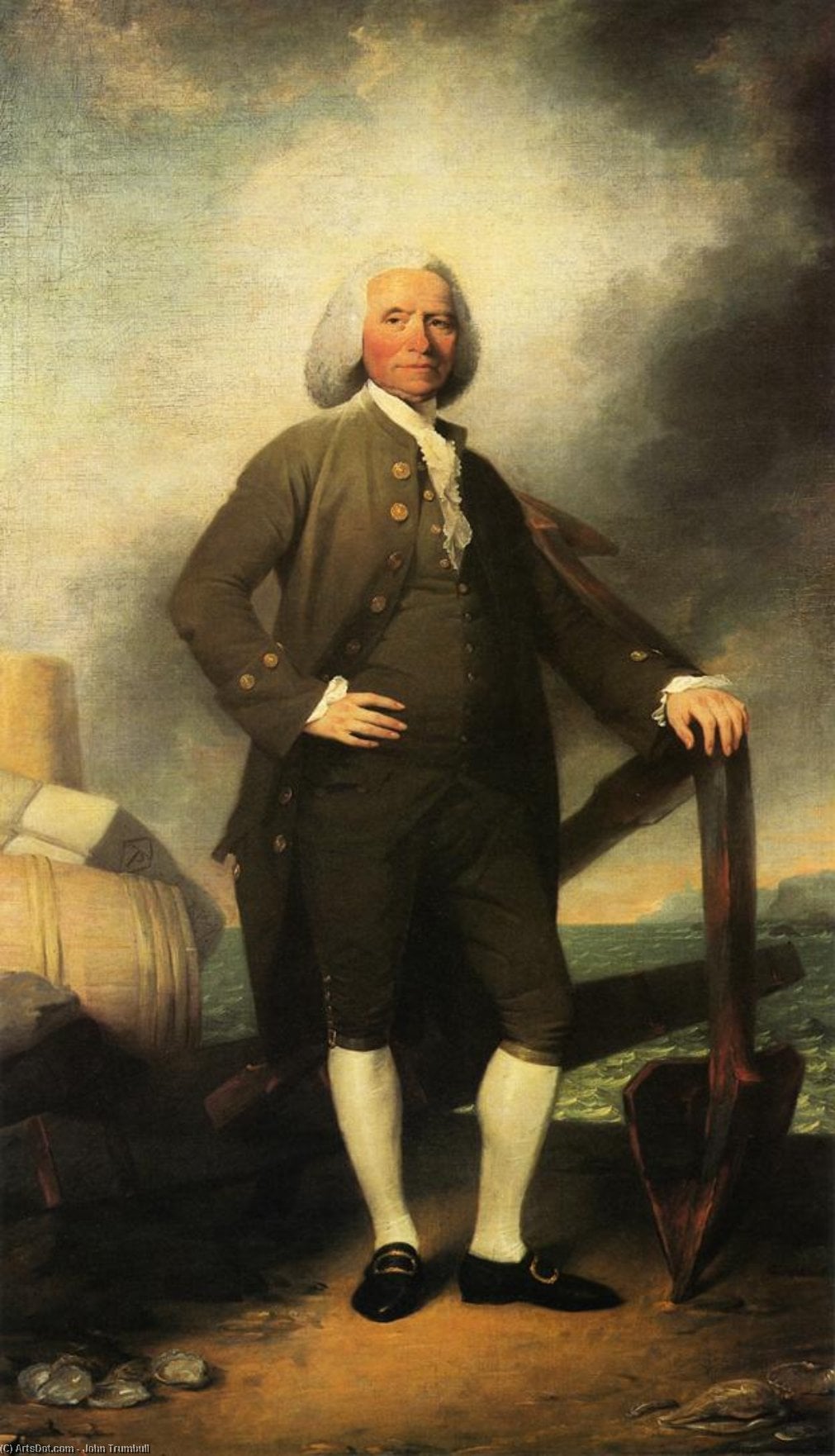
Patrick Tracy

Experience John Trumbull's Grand Manner neoclassicism in Patrick Tracy, a 1784 portrait capturing revolutionary American spirit; discover this historical masterpiece today.

John Trumbull (1756-1843), ’Målaren av Revolutionen’, fångade Amerikas kamp för självständighet genom ikoniska historiemålningar som Förklaringen om självständigheten och bidrog till att skapa en visuell minne av republikens födsel. Utforska hans arv!

Köp en högupplöst, förbättrad digital bild som är vida överlägsen förhandsvisningen online.

Varje fil är noggrant förberedd av våra interna specialister med hjälp av avancerade verktyg och professionell manuell retuschering. Vi säkerställer att varje bild har exceptionell skärpa, exakt färgåtergivning och fina detaljer.

Den slutgiltiga filen levereras via e-post inom 72 timmar, optimerad för omedelbar användning i professionella sammanhang, redaktionellt bruk och tryckmiljöer. Detta är samma kvalitet som används med förtroende av ledande designstudior, förlag och gallerier.

Digital bild

Ladda ner en högupplöst fil för personlig visning, utskrift och kreativa projekt.

Totalpris

$9.99

Ingår i varje beställning av digital bild

Professionell digital leverans, garanterad

När du väljer WahooArt.com får du inte bara en bild – du får ett professionellt förädlat digitalt konstverk, skapat med precision och med en garanterad tillfredsställelse. Här är allt som ingår i din beställning, automatiskt:

shipping_icon
Snabb leverans via e-post

Din högupplösta digitala bildfil skickas till dig via e-post inom 72 timmar efter beställning – redo för omedelbar användning.

canvas_icon
AI-förbättrad digital bild

Ditt konstverk optimeras professionellt med hjälp av avancerade AI-verktyg och manuell redigering, vilket garanterar maximal detaljrikedom, skärpa och färgnoggrannhet.

insurance_icon
Gratis livstidsåterutskick

Har du råkat radera eller tappa bort din fil? Ingen oro – vi skickar den kostnadsfritt till dig när som helst.

tax_icon
Inga importavgifter – någonsin

Njut av ditt konstverk omedelbart utan tull, importavgifter eller leveranskostnader – digitala nedladdningar är alltid skattefria.

color_icon
Garanterad färgåtergivning

Vi säkerställer att din digitala bild återger de ursprungliga färgerna så exakt som möjligt med hjälp av professionella verktyg och färghantering.

return_icon
60 dagars nöjdhetsgaranti

Om du inte är nöjd med din digitala bild kommer vi att revidera den eller återbetala 100% inom 60 dagar – utan frågor.

guarantee_icon
100% pengarna-tillbaka-garanti

Inte nöjd? Få full återbetalning inom 60 dagar efter att du har tagit emot din digitala fil – inga frågor åsett.

discount_icon
Rabatt vid storköp

Köp 3 bilder, spara 10% - Köp 5, spara 15% - Köp 10+, spara 20%. Perfekt för kreativa projekt, gallerier och byråer.

Kortfakta

  • Medium: Oil on canvas
  • Location: National Gallery of Art, Washington, D.C.
  • Notable elements or techniques: Detailed portraiture; Grand Manner style
  • Subject or theme: Portrait
  • Year: 1784
  • Influences: Benjamin West
  • Artist: John Trumbull

Konstquiz

Det finns endast ett korrekt svar på varje fråga.

Fråga 1:
What is the primary subject matter of Patrick Tracy?
Fråga 2:
According to the description, what artistic style characterizes Trumbull's painting?
Fråga 3:
What is depicted in the background of the painting?
Fråga 4:
Who painted Patrick Tracy?
Fråga 5:
What historical period does the painting represent?

Beskrivning av samlarobjektet

A Portrait Steeped in Revolution: John Trumbull’s “Patrick Tracy”

John Trumbull's "Patrick Tracy," completed in 1784, transcends mere portraiture; it embodies the spirit of America’s formative years. Executed during a pivotal moment in history—the burgeoning independence movement—the painting captures not just an individual likeness but also the broader socio-political landscape of colonial Massachusetts. This remarkable artwork resides within the National Gallery of Art's collection and offers a fascinating glimpse into both artistic innovation and historical significance.
  • Subject Matter: The portrait depicts Patrick Tracy Jackson, a prominent warehouse owner and one of the founders of the Boston Manufacturing Company—a cornerstone in the industrial revolution’s genesis. Trumbull skillfully portrays Tracy with meticulous detail, emphasizing his dignified bearing and conveying an aura of quiet confidence.
  • Style & Technique: Trumbull adheres to the precepts of Grand Manner neoclassicism, championed by Benjamin West. The composition is balanced and harmonious, reflecting a desire for order and rationality—values central to Enlightenment thought. Employing oil paint on canvas, Trumbull achieves remarkable tonal gradation and textural richness, capturing the subtle nuances of Tracy’s skin tone and clothing fabric.
  • Historical Context: Painted against a backdrop of swirling clouds and an expansive sky, “Patrick Tracy” speaks directly to the anxieties and aspirations of its time. The depiction of Tracy standing on a beach—a symbol of maritime trade and exploration—underscores Massachusetts's economic importance during the Revolution. Furthermore, Trumbull’s inclusion of paddles subtly references Tracy’s involvement in seafaring activities, reinforcing the painting’s connection to America’s burgeoning commercial prowess.
  • Symbolism: The anchor held by Tracy serves as a potent emblem of stability and resilience—a visual representation of the unwavering determination required to forge a new nation amidst turbulent political upheaval. Trumbull's careful attention to detail extends beyond mere likeness; he imbues the portrait with symbolic significance, elevating it from a simple depiction of an individual to a meditation on virtue and fortitude.
  • Emotional Impact: “Patrick Tracy” evokes a palpable sense of nostalgia for a bygone era—a reminder of America’s early idealism and its commitment to republican values. The painting's serene atmosphere contrasts sharply with the tumultuous events unfolding around it, prompting contemplation about legacy and remembrance. Its enduring appeal lies in Trumbull’s ability to convey not only Tracy’s physical appearance but also his inner character—a testament to the power of art as a vehicle for communicating profound ideas.
Provenance: The painting descends from Patrick Tracy Jackson Sr., who bequeathed it to his daughter Hannah Tracy Jackson (Mrs. Jonathan Jackson), and subsequently passed through the hands of her son, Patrick Tracy Jackson Jr., and grandson, James Baldwin Jackson III. Its current location is within the National Gallery of Art’s permanent collection, ensuring its preservation for future generations. Associated Names: John Singleton Copley (attributed); Hannah Tracy Jackson; Jonathan Jackson; James Baldwin Jackson III.

Konstnärsbiografi

A Life Etched in Revolution: The World of John Trumbull

John Trumbull, a name synonymous with the visual narrative of America’s birth, was more than just a painter; he was a witness, a soldier, and a chronicler of a nation forging its identity. Born in Lebanon, Connecticut, in 1756, into a family steeped in patriotic fervor – his father, Jonathan Trumbull, served as governor throughout the Revolutionary War – young John’s destiny seemed intertwined with the unfolding drama of independence. A childhood accident tragically cost him the use of one eye, yet this perceived limitation may have paradoxically sharpened his observational skills, contributing to the meticulous detail that would become a hallmark of his artistic style. His early education at Harvard College further cultivated a mind primed for both intellectual rigor and creative expression. Even before fully embracing his calling as an artist, Trumbull’s life was already imbued with a sense of duty and service, sketching fortifications during the Siege of Boston – a foreshadowing of his future role in immortalizing the Revolution on canvas.

From Battlefield to Brushstroke: Artistic Formation and Influences

The path to becoming “the Painter of the Revolution” wasn’t immediate. Financial constraints initially led Trumbull down various avenues, but the pull towards art proved irresistible. In 1780, he embarked on a journey to London, seeking tutelage under the esteemed Benjamin West, an American expatriate who had achieved prominence as a history painter. West recognized Trumbull’s potential and encouraged him to focus on scenes from the War of Independence, suggesting smaller-scale works and miniature portraits – a practical approach that allowed Trumbull to hone his skills while establishing a clientele. Over the course of his career, he produced approximately 250 miniatures, demonstrating remarkable versatility and precision. However, West’s influence extended beyond technique; he instilled in Trumbull an appreciation for classical history painting, inspiring him to imbue his work with dramatic composition and allegorical depth. This fusion of historical accuracy and artistic grandeur would define Trumbull's mature style. The experience wasn’t without hardship; a brief but alarming arrest on suspicion of espionage – retaliation for the execution of Major André – forced a temporary retreat from British society, yet ultimately solidified his commitment to portraying the American cause.

Immortalizing Independence: Masterpieces and Historical Significance

Trumbull's most enduring legacy lies in his monumental historical paintings, particularly those that now grace the Capitol Rotunda. The Declaration of Independence, perhaps his most iconic work, is a carefully constructed tableau depicting the momentous occasion with remarkable fidelity. It’s not merely a record of who was present but an attempt to capture the gravity and solemnity of the event. Famously, this painting found its way onto the reverse of the two-dollar bill, cementing its place in American iconography. Other significant works include The Surrender of Cornwallis at Yorktown, The Surrender of General Burgoyne, and George Washington before the Battle of Trenton. These paintings weren’t simply artistic endeavors; they were acts of national commemoration, designed to inspire patriotism and solidify a shared historical narrative. Trumbull meticulously researched each scene, consulting with veterans and studying contemporary accounts to ensure accuracy. His preparatory sketches, like the Study for Surrender of Cornwallis at Yorktown, reveal his painstaking planning process and dedication to detail. In an era devoid of photographic documentation, Trumbull’s paintings served as invaluable visual records, shaping public understanding of the Revolution and its key figures.

A Lasting Legacy: Collections and Enduring Influence

John Trumbull's contributions extend beyond his celebrated canvases. He was a staunch advocate for the arts in America, serving as president of the American Academy of Fine Arts from 1816 to 1835, tirelessly working to foster a vibrant artistic community within the young nation. His paintings are now held in prestigious institutions across the country, including Yale University Art Gallery, the Smithsonian American Art Museum, and the Virginia Museum of Fine Arts, ensuring their accessibility for generations to come. The prominent display of his works within the United States Capitol serves as a lasting tribute to his dedication to both art and history.
  • His paintings continue to inspire artists and historians alike.
  • They offer invaluable insights into the aesthetics and ideals of the early American republic.
  • Trumbull’s commitment to historical accuracy set a precedent for future generations of American historical painters.
John Trumbull passed away in 1843, leaving behind a body of work that continues to resonate with power and significance. He remains, unequivocally, “the Painter of the Revolution,” an artist who not only captured history but helped create it – shaping the visual memory of a nation’s birth and securing his place as a pivotal figure in American art.
John Trumbull

John Trumbull

1756 - 1843 , USA

Kortfattad information

  • Artistic Movement Or Style: Historisk målning
  • Artists Who Influenced This Artist: ['Benjamin West']
  • Date Of Birth: 6 juni 1756
  • Date Of Death: 1843
  • Full Name: John Trumbull
  • Nationality: Amerikaner
  • Notable Artworks:
    • Deklarationen om självständighet
    • Cornwalis kapitulation
    • George Washington vid Trenton
  • Place Of Birth: Lebanon, USA