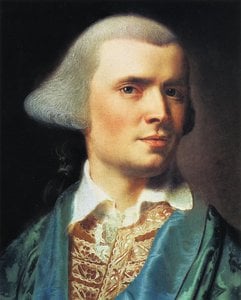
A Pioneer Bridging Worlds: The Life and Art of John Singleton Copley
John Singleton Copley, född i Boston omkring 1738, står som en unik och central figur i amerikansk konsthistoria. Han var mer än bara en målare; han var en kulturell brobyggare, som skapade ett distinkt anglo-amerikanskt estetiskt uttryck under en period av enorma politiska och sociala omvälvningar. Hans livshistoria är en berättelse om självförvaltad briljans, obeveklig ambition och en ovanlig förmåga att fånga inte bara likheter, utan också själva essensen hos sina motiv i deras kontext. Copleys tidiga liv var djupt rotat i den pulserande hamnverksamheten i koloniala Boston, en stad fylld av köpmän, skeppsbyggare och växande välstånd. Hans far, Richard Copley, frånvarande kort efter Johns födelse, var tobiksimportör, medan hans mor, Mary Singleton Copley, drev en butik på Long Wharf. Denna miljö gav John en skarp medvetenhet om den materiella världen – texturer av tyger, glans av silver, de subtila nyanserna i social ställning – alla element som senare skulle definiera hans konstnärliga stil. Hans vårboskapspappa, Peter Pelham, en graver och limner (en konstnär som skapade porträtt på vellum eller pergament), gav initial vägledning, men Copleys talang var i stort sett självförvaltad genom noggrann studie och övning. Han slukade alla tillgängliga tryck, kopierade dem minutiöst för att bemästra tekniken, och överträffade snabbt sin vårboskapspappas förmågor.
The Rise of a Colonial Portraitist
Under 1760-talet hade Copley etablerat sig som Bostons främsta porträttmålare, och betjänade stadens överklass. Hans framgång var inte bara baserad på teknisk skicklighet; det var hans förmåga att infusa sina porträtt med en psykologisk djuphet sällan sedd i kolonial amerikansk konst. Han gick bortom enkel representation, strävandes efter att fånga karaktären och den sociala ställningen hos sina motiv. Detta innebar noggrann uppmärksamhet på detaljer – exakt återgivning av tyger, smycken och möbler – men också en skarp förståelse för hållning, uttryck och gester. Copleys porträtt var inte bara bilder; de var uttömnande budskap om rikedom, makt och social status. Han använde sig skickligt av symboliska föremål i sina kompositioner, subtilt antydde hans motiv yrken eller intressen. En köpmand kunde porträtteras med importerade varor i bakgrunden, en jurist med juridiska texter, eller en sjömilitär officer med nautiska instrument. Denna uppmärksamhet på detaljer och symbolik höjde hans verk bortom enkel porträttkonst, förvandlade det till en form av social kommentar. Hans porträtt av framstående personer som *Mrs. Ezekiel Gondthwait (Elizabeth Lewis)* exemplifierar detta tillvägagångssätt – den eleganta hållningen, de lyxiga tygerna och de subtila detaljerna förmedlar alla en känsla av raffinement och status.
Ambition and the Call of Europe
Trots sin framgång i Boston hade Copley ambitioner som sträckte sig bortom den koloniala konstvärlden. Han längtade efter erkännande från de etablerade konstcirklar i London och Rom, och sökte testa sina färdigheter mot Europas mästare. År 1766 skickade han sitt *Boy with a Flying Squirrel* till Society of Artists i London, där det mottog betydande beröm från Joshua Reynolds och Benjamin West – två ledande figurer i den brittiska konstscenen. Detta uppmuntran drev Copleys önskan om ytterligare utbildning och exponering. Men familjeåtaganden och en blomstrande praktik höll honom rotad i Boston under ytterligare ett decennium. Slutligen, 1774, med sin fru Susanna Farnsworth Clarke och sina barn, begav han sig på en resa till Europa, avsiktligt för att studera de gamla mästarna och etablera sig som en historiemålare. Den amerikanska revolutionens utbrott kort därefter komplicerade saken och tvingade Copley att navigera i en politiskt laddad miljö samtidigt som han jagade sina konstnärliga mål.
Historical Narratives and Lasting Legacy
I London fann Copley både möjligheter och utmaningar. Han fortsatte att måla porträtt, säkrade beställningar från framstående brittiska figurer, men vände också sin uppmärksamhet till historiemålning – en genre som ansågs mer prestigefull än porträttkonst vid den tiden. Hans mest ambitiösa verk i denna kategori var *The Death of Major Peirson*, som skildrade en scen från slaget om Jersey under den amerikanska revolutionen. Även om det tekniskt sett var imponerande, fick det blandade recensioner, med vissa kritiker ifrågasatte dess komposition och dramatiska effekt. Copleys senare historiemålningar, såsom *The Colapse of the Earl of Chatham in the House of Lords*, var mer framgångsrika, vilket visade hans förmåga att fånga komplexa känslor och dramatiska ögonblick. Även om han aldrig helt uppnådde den erkännelse han sökte i Europa, lämnade John Singleton Copley ett bestående avtryck på både amerikansk och brittisk konsthistoria. Han banade väg för en unikt anglo-amerikansk stil, som blandade europeiska tekniker med en distinkt kolonial känsla. Hans porträtt är ovärderliga historiska dokument, som ger inblick i livet och värderingarna i en svunnen tid. *Han minns inte bara för sin konstnärliga skicklighet utan också för sin roll i att forma en nationell identitet genom sitt konstverk.* Han dog i London 1815, lämnande ett arv som fortsätter att inspirera konstnärer och fängsla publiken idag.
Influences and Artistic Development
- Early Influences: Copley’s early artistic development was heavily influenced by the engravings he meticulously copied, particularly those of European masters like Rembrandt van Rijn and Antoine Watteau.
- Peter Pelham's Guidance: His stepfather, Peter Pelham, provided initial training in portraiture and engraving techniques, laying the foundation for his future success.
- Joshua Reynolds & Benjamin West: The encouragement and feedback from these prominent British artists during Copley’s early submissions to London exhibitions were crucial in shaping his ambitions and artistic direction.
- Rococo Style: Copley initially embraced the Rococo style, evident in his use of delicate colors, graceful poses, and ornate details. However, he gradually moved towards a more realistic and restrained approach.
- Historical Painting Inspiration: His exposure to historical paintings by artists like Benjamin West inspired him to explore this genre, though he often struggled to fully reconcile it with his natural talent for portraiture.



 Visa i rummet
 Byt till tryckta exemplar
 Skicka
 Dela
Dela
 Detaljer
 Guide
Guide

 Ladda ner
 Liknande objekt
 Röntgen
 Bildspel
 Besökstatistik


 Läs mer






































 Glasalternativet är endast tillgängligt i storlekar under 110 cm.