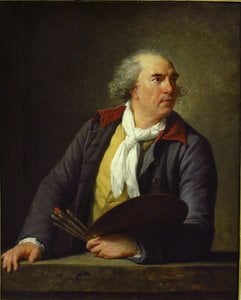
Hubert Robert: A Painter of Ruins and Visions
Hubert Robert, en namn synonymt med suggestiva landskap och den romantiska locken av ruiner, upptar en unik position i 1800-talets franska konst. Född i Paris 1733, utspelade hans liv sig mot en bakgrund av förskjutna konstnärliga stilar och monumentala historiska omvälvningar – från Rococos lekfulla elegans till Neoklassicismens gryning, och slutligen genom de stormiga åren under den franska revolutionen. Han var inte bara dokumenterare av förfall; han skapade visioner, blandade observation med fantasi för att skapa scener som resonerade med både en nostalgisk längtan efter det förflutna och en förväntan på framtiden. Hans resa började inom den strukturerade världen av konstnärlig utbildning, initialt under skulptören Michel-Ange Slodtz, som erkände Roberts talang men klokt vägledde honom mot målarverket, kände hans sanna kall låg i att fånga ljus, atmosfär och den subtila poesin hos formen.
Roman Reveries: Shaping an Artistic Identity
Den avgörande punkten i Roberts konstnärliga utveckling inträffade med hans förlängda vistelse i Rom 1754. I sällskap av Étienne-François de Choiseul, fördjupade han sig i en värld genomsyrad av historia och arkitektonisk prakt. I hela elva år blev staden den antika som sin utomhusstudio, dess sammanrasade tempel, majestätiska valv och övervuxna trädgårdar brände hans fantasi. Detta var inte bara att kopiera det han såg; det handlade om att tolka det, omarbeta det och infusa det med en känsla av melankolisk skönhet. Han arbetade tillsammans med Giovanni Paolo Panini, vars inflytande är synligt i Roberts tidiga *capriccio*-kompositioner – dessa fantasifulla vyer som placerade klassiska ruiner bredvid samtida liv. Men Robert rörde sig snabbt bortom imitationen, utvecklade sin egen distinkta stil präglad av noggrann detalj, atmosfärisk perspektiv och en djup känsla för ljusets lek och skuggans dans. Han målade inte bara ruiner; han målade tiden själv, fångade den plågsamma skönheten i flyktighet och den bestående kraften hos minnet. Hans skissböcker från denna period är ovärderliga register över hans observationer, fyllda med noggranna studier av romerska landmärken som Villa d’Este och Caprarola, vilket visar en skarp blick för arkitektonisk nyans och landskapskomposition.
Parisian Acclaim and Royal Patronage
Roberts återkomst till Paris 1765 markerade en vändpunkt i hans karriär. Han fick snabbt erkännande inom den konstnärliga etablissemanget, säkrade inträde i Académie Royale de Peinture et de Sculpture med “The Port of Rome, Ornamented with Different Monuments of Architecture, Ancient and Modern.” Hans efterföljande utställningar på Salon fick omfattande beröm, fångade publikens uppmärksamhet med sina suggestiva representationer av ruiner och pittoreska landskap. Denis Diderot, en framstående figur i Upplysningen, hyllade entusiastiskt Roberts målade prakt, erkände hans förmåga att transportera tittarna till en annan tid och plats. Detta ledde till kunglig beskydd, med uppdrag för dekorativa projekt och befordran till “Designer of the King’s Gardens” och senare, “Keeper of the King’s Pictures.” Han blev en eftertraktad konstnär, inte bara för sina dukmålningar utan också för sina innovativa utformningar av trädgårdar och palats interiörer. Hans verk resonerade med den rådande smaken för *capriccio*-måleri – ett genre som lockade samlare fascinerade av historia, arkeologi och det pittoreska – men Robert infogade en unik känsla, lyfte den bortom rent dekorativ konst.
Revolution, Resilience, and Lasting Legacy
Den franska revolutionen presenterade en osedvanlig utmaning för Robert. Medan många konstnärer kämpade med att navigera i det turbulenta politiska klimatet, fann han sig själv fångad i strömmen av förändringar. Han blev till och med fängslad under Terrorns tid, en skrämmande upplevelse som ändå inspirerade en serie teckningar som dokumenterade hans tid i fängelset. Trots detta fortsatte han att måla flitigt under denna period, vilket visade ett outtröttligt engagemang för sin konst. Efter Revolutionen utsågs Robert till kurator för det nyetablerade Muséum Central des Arts – den framtida Louvren – ett testamente till hans expertis och dedikation till att bevara kulturellt arv. Han spelade en viktig roll i att organisera och katalogisera museets samling, säkerställa att Frankrikes konstskatter skyddades för kommande generationer. Hubert Robert dog i Paris 1808, lämnade efter sig ett otroligt verk som fortsätter att inspirera beundran och uppskattning. Hans arv ligger inte bara i hans tekniska behärksamhet utan också i hans unika förmåga att blanda historisk noggrannhet med fantasifull vision. Han banade väg för en genre av måleri som firade både skönheten i förfall och den bestående kraften hos mänsklig kreativitet, vilket etablerade honom som en nyckelperson som broderar samman Rococo- och Neoklassicismens perioder och förutspår aspekter av Romantik med sin fascination för historia och fantasi.
- Key Influences: Giovanni Paolo Panini, Piranesi, the architectural landscape of Rome.
- Major Themes: Ruins, landscapes, *capriccio* paintings, historical memory, the passage of time.
- Artistic Style: Meticulous detail, atmospheric perspective, evocative lighting, blending observation with imagination.



 Visa i rummet
 Köp handmålat konstverk
 Skicka
 Dela
Dela
 Detaljer
 Studentguide för konstverk

 Ladda ner
 Liknande objekt
 Röntgen
 Bildspel
 Besökstatistik


 Läs mer






































 Glasalternativet är endast tillgängligt i storlekar under 110 cm.