Visa i rummet Se i AR Byt till tryckta exemplar Köp handmålat konstverk Skicka
Detaljer Studentguide för konstverk Lägg till i favoriter Ladda ner Liknande objekt Röntgen Bildspel Besökstatistik

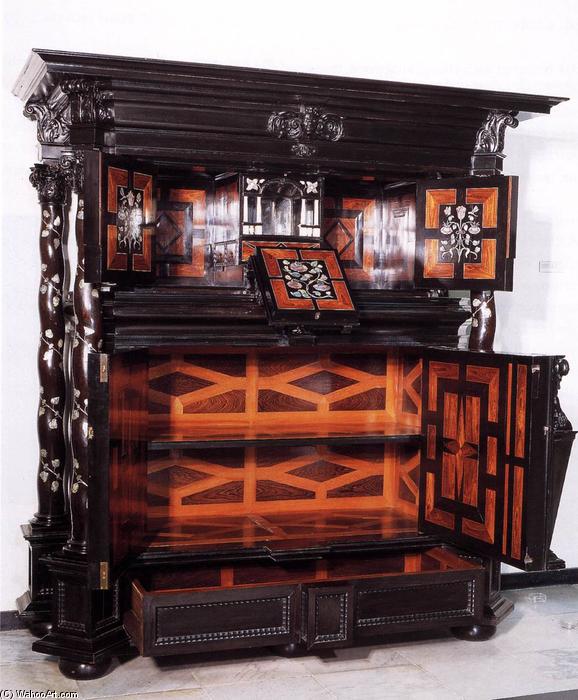
Cupboard (interior)

Marvel at Herman Doomer's 'Cupboard (Interior)' – a stunning 17th-century masterpiece showcasing intricate ebony, mother-of-pearl, and vibrant wood details from the Rijksmuseum. A true Dutch golden age treasure!

A prominent Dutch Golden Age craftsman known for his exquisite ebony-veneer furniture and the celebrated Cupboard (Interior), discover the intricate artistry that defined an era of opulent craftsmanship.

Köp en högupplöst, förbättrad digital bild med betydligt högre kvalitet än förhandsvisningen online.

Varje fil är noggrant förberedd av våra interna specialister med hjälp av avancerade verktyg och professionell manuell retuschering. Vi säkerställer att varje bild har exceptionell skärpa, exakt färgåtergivning och fina detaljer.

Den slutgiltiga filen levereras via e-post inom 72 timmar, optimerad för omedelbar användning i professionella sammanhang, redaktionellt bruk och tryckmiljöer. Detta är samma kvalitet som med förtroende används av ledande designstudior, förlag och gallerier.

Digital bild

Ladda ner en högupplöst fil för personlig visning, utskrift och kreativa projekt. ( Byt till tryckta exemplar Köp handmålat konstverk)

Totalpris

Skr 246,70

Ingår i varje beställning av digital bild

Professionell digital leverans, garanterad

När du väljer WahooArt.com får du inte bara en bild – du får ett professionellt förädlat digitalt konstverk, skapat med precision och med en garanterad tillfredsställelse. Här är allt som ingår i din beställning, automatiskt:

Snabb leverans via e-post

Din högupplösta digitala bild skickas till dig via e-post inom 72 timmar efter beställning – redo för omedelbar användning.

AI-förbättrad digital fil

Ditt konstverk optimeras professionellt med hjälp av avancerade AI-verktyg och manuell redigering, vilket garanterar maximal detaljrikedom, skärpa och färgnoggrannhet.

Gratis livstidsåterutskick

Har du råkat radera eller tappa bort din fil? Ingen oro – vi skickar den kostnadsfritt till dig när som helst.

Inga importavgifter – någonsin

Njut av ditt konstverk omedelbart utan tull, importavgifter eller leveranskostnader – digitala nedladdningar är alltid skattefria.

Garanterad färgåtergivning

Vi säkerställer att din digitala bild återger de ursprungliga färgerna så exakt som möjligt med hjälp av professionella verktyg och färghantering.

100 dagars nöjdhetsgaranti

Om du inte är nöjd med din digitala bild kommer vi att revidera den eller återbetala 100% inom 100 dagar – utan frågor.

100% pengarna-tillbaka-garanti

Inte nöjd? Få full återbetalning inom 100 dagar efter att du mottagit din digitala fil – utan frågor.

Rabatt vid storköp

Köp 3 bilder, spara 10% – Köp 5, spara 15% – Köp 10+, spara 20%. Perfekt för kreativa projekt, gallerier och byråer.

Snabbfakta

  • Dimensions: 218x196x84cm
  • Year: 1640
  • Influences: Rembrandt
  • Location: Rijksmuseum, Amsterdam
  • Medium: Oak & Ebony

A Glimpse into Dutch Opulence: The Cupboard (Interior) by Herman Doomer

Herman Doomer’s “Cupboard (Interior),” a remarkable piece housed within the hallowed halls of the Rijksmuseum in Amsterdam, is more than just a display case; it's a meticulously crafted window into 17th-century Dutch artistry and the lavish tastes of its wealthy patrons. Completed around 1640, this cupboard offers a breathtaking immersion into a world of intricate detail, vibrant color, and masterful craftsmanship – a testament to Doomer’s exceptional skill as a cabinetmaker and his profound understanding of materials and design.

The piece immediately captivates with its scale—measuring an impressive 218 x 196 cm. Constructed primarily from oak veneered with ebony, kingwood, and rosewood, the cupboard’s exterior speaks to a sophisticated appreciation for exotic woods, reflecting the burgeoning trade routes that connected Europe with distant lands. However, it is the interior that truly commands attention. The use of contrasting materials—the dark, rich tones of ebony juxtaposed against the warmer hues of rosewood and the shimmering accents of mother-of-pearl—creates a dramatic visual interplay, drawing the eye deeper into its depths.

A Symphony of Materials: Technique and Craftsmanship

Doomer’s mastery lies not only in his selection of materials but also in the techniques he employed to transform them. The intricate marquetry, painstakingly inlaid with mother-of-pearl and ivory, is a marvel of precision. Each tiny piece is carefully positioned to create delicate floral patterns and geometric designs—a testament to the artist's patience and skill. The use of baleen, a material derived from whalebone, adds another layer of textural complexity, demonstrating Doomer’s innovative approach to ornamentation. The cabinetmaker skillfully combined these materials, creating a harmonious blend of textures and colors that elevates the piece beyond mere functionality.

Furthermore, the cupboard's construction reveals a deep understanding of woodworking principles. The use of dovetail joints—a hallmark of fine craftsmanship—ensures structural integrity while allowing for seamless assembly. The subtle curves and flowing lines of the design contribute to its overall elegance and grace, reflecting the prevailing aesthetic sensibilities of the period.

Symbolism and Context: A Reflection of Status

To fully appreciate “Cupboard (Interior),” it’s crucial to understand the historical context in which it was created. The Dutch Golden Age—the 17th century—witnessed an unprecedented flourishing of art, commerce, and culture. Wealthy merchants and aristocrats sought to demonstrate their status through opulent furnishings like this cupboard, a symbol of prosperity and refined taste. The use of exotic woods and precious materials underscored the owner’s connections to global trade networks and his ability to afford luxury goods.

The cabinet itself served as more than just storage; it was a statement piece—a focal point within a grand interior, designed to impress guests and reflect the homeowner's position in society. The intricate details and lavish ornamentation were intended to evoke admiration and convey a sense of wealth and sophistication.

A Legacy Enduring: Doomer’s Influence

Herman Doomer’s work profoundly influenced the development of Dutch furniture making, establishing him as one of the era's most celebrated cabinetmakers. His innovative use of materials, combined with his impeccable craftsmanship and artistic vision, set a new standard for quality and design. The portrait by Rembrandt, painted around the same time, further cemented Doomer’s place in art history, capturing not only the artist’s likeness but also the essence of his character and creative spirit.

Today, “Cupboard (Interior)” stands as a remarkable example of 17th-century Dutch artistry—a captivating blend of technical skill, aesthetic beauty, and historical significance. It offers a rare glimpse into the world of wealthy merchants and aristocrats, revealing their aspirations, tastes, and values.

Frågor och svar

Hur förhåller sig färgerna i "Cupboard (interior)" till varandra?

"Cupboard (interior)" av Herman Doomer uppvisar en Balanced Harmony färgharmoni.

Är "Cupboard (interior)" av Herman Doomer en målning, en teckning eller ett tryck?

"Cupboard (interior)" är ett verk av typen WallArt.

Vilken form och vilka mått har "Cupboard (interior)" av Herman Doomer?

"Cupboard (interior)" av Herman Doomer har proportionerna hos ett Portrait-verk på 218 x 196 cm.


Konstnärsbiografi

The Artisan of the Golden Age

While history often reserves its most luminous spotlights for the painters who captured the light of the Dutch Golden Age, the story of Herman Doomer offers a profound glimpse into the skilled hands that framed and built that very era. Born in Anrath, near Venlo, Doomer was not a visual artist in the traditional sense, but rather a master craftsman whose life was defined by the tactile beauty of ebony and wood. As a successful furniture maker and framemaker, his work provided the physical structure for the burgeoning culture of 17th-century Amsterdam. He operated a prosperous business specializing in ebony-veneer furniture and intricate frames, navigating the bustling streets of the Kalverstraat, Gasthuismolensteeg, and Hartenstraat with the confidence of a man at the heart of a global trading hub.

Craftsmanship and Connection

The legacy of Herman Doomer is inextricably linked to the artistic giants of his time. His mastery of materials like ebony and colored baleen allowed him to contribute to the aesthetic opulence of the Dutch Republic, creating pieces that reflected the wealth and taste of a new middle class. His professional network was deeply embedded in the highest circles of Amsterdam's creative community; he was known to collaborate with figures such as Pieter Quast and Johannes Lutma. Perhaps most significantly, his role as a supplier of frames placed him in direct contact with Rembrandt van Rijn. This connection resulted in one of the most enduring portraits of the era, where Rembrandt captured Doomer not merely as a subject, but as a dignified professional, immortalizing the quiet strength of the craftsman behind the canvas.

A Lasting Material Legacy

Though his name may not be found on the signatures of canvases, Doomer’s influence persists through the enduring physical objects he created. His work, such as the remarkable Cupboard (Interior) housed in the Rijksmuseum, serves as a window into the lavish tastes and meticulous artistry of the period. These pieces were more than mere utility; they were embodiments of Dutch innovation and skill. Through his specialized trade, Doomer helped shape the visual environment of the 17th century, leaving behind a material history that continues to speak of an age defined by prosperity, intricate detail, and an unparalleled devotion to the beauty of fine craftsmanship.
Herman Doomer

Herman Doomer

1595 - 1650