Visa i rummet Se i AR Byt till tryckta exemplar Köp handmålat konstverk Skicka
Detaljer Guide Lägg till i favoriter Ladda ner Liknande objekt Röntgen Bildspel Besökstatistik

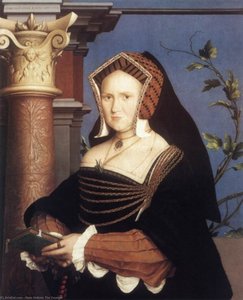
untitled (5751)

Witness the masterful portraiture of Hans Holbein the Younger! This iconic painting, likely depicting royalty, showcases his unparalleled realism and psychological depth – a cornerstone of the Northern Renaissance. Explore a timeless masterpiece!

Hans Holbein the Younger (1497-1543): Nordens mästare inom realistisk porträttkonst, född i Augsburg och känd för sina detaljerade verk av Tudorkungar som Henry VIII samt hans förmåga att fånga människans psykologi.

Köp en högupplöst, förbättrad digital bild med betydligt högre kvalitet än förhandsvisningen online.

Varje fil är noggrant förberedd av våra interna specialister med hjälp av avancerade verktyg och professionell manuell retuschering. Vi säkerställer att varje bild har exceptionell skärpa, exakt färgåtergivning och fina detaljer.

Den slutgiltiga filen levereras via e-post inom 72 timmar, optimerad för omedelbar användning i professionella sammanhang, redaktionellt bruk och tryckmiljöer. Detta är samma kvalitet som med förtroende används av ledande designstudior, förlag och gallerier.

Digital bild

Ladda ner en högupplöst fil för personlig visning, utskrift och kreativa projekt. ( Byt till tryckta exemplar Köp handmålat konstverk)

Totalpris

$ 24,90

Ingår i varje beställning av digital bild

Professionell digital leverans, garanterad

När du väljer WahooArt.com får du inte bara en bild – du får ett professionellt förädlat digitalt konstverk, skapat med precision och med en garanterad tillfredsställelse. Här är allt som ingår i din beställning, automatiskt:

shipping_icon
Snabb leverans via e-post

Din högupplösta digitala bild skickas till dig via e-post inom 72 timmar efter beställning – redo för omedelbar användning.

canvas_icon
AI-förbättrad digital fil

Ditt konstverk optimeras professionellt med hjälp av avancerade AI-verktyg och manuell redigering, vilket garanterar maximal detaljrikedom, skärpa och färgnoggrannhet.

insurance_icon
Gratis livstidsåterutskick

Har du råkat radera eller tappa bort din fil? Ingen oro – vi skickar den kostnadsfritt till dig när som helst.

tax_icon
Inga importavgifter – någonsin

Njut av ditt konstverk omedelbart utan tull, importavgifter eller leveranskostnader – digitala nedladdningar är alltid skattefria.

color_icon
Garanterad färgåtergivning

Vi säkerställer att din digitala bild återger de ursprungliga färgerna så exakt som möjligt med hjälp av professionella verktyg och färghantering.

return_icon
100 dagars nöjdhetsgaranti

Om du inte är nöjd med din digitala bild kommer vi att revidera den eller återbetala 100% inom 100 dagar – utan frågor.

guarantee_icon
100% pengarna-tillbaka-garanti

Inte nöjd? Få full återbetalning inom 100 dagar efter att du mottagit din digitala fil – utan frågor.

discount_icon
Rabatt vid storköp

Köp 3 bilder, spara 10% – Köp 5, spara 15% – Köp 10+, spara 20%. Perfekt för kreativa projekt, gallerier och byråer.

Snabbfakta

  • Location: Private Collection
  • Medium: Painting
  • Artistic style: Portraiture, Religious
  • Subject or theme: Religious scene
  • Notable elements or techniques: Realistic detail
  • Movement: Northern Renaissance

Konstquiz

Det finns endast ett korrekt svar på varje fråga.

Fråga 1:
What is the primary subject depicted in "untitled (5751)"?
Fråga 2:
The description mentions a distinctive red ribbon around one figure's neck. What does this likely symbolize?
Fråga 3:
Hans Holbein the Younger is best known for which artistic style?
Fråga 4:
According to the provided information, in what city was Hans Holbein the Younger born?
Fråga 5:
The description highlights a ‘carpeted floor and an ornate design’ in the background. What does this suggest about the setting?

The Ambassadors: A Window into Tudor Ambition

Hans Holbein the Younger’s “The Ambassadors,” painted in 1533 during the artist's second and most significant period in England, is far more than a mere portrait of two men. It’s a meticulously constructed tableau – a visual embodiment of humanist ideals, intellectual ambition, and the precarious political landscape of Henry VIII’s court. The painting, currently residing within the National Gallery in London, continues to captivate viewers with its astonishing detail and subtle layers of meaning, offering a rare glimpse into the mindset of a pivotal era.

  • Subject & Composition: The central figures are Jean de Dinteville, the French ambassador to England, and Charles Brandon, 1st Duke of Suffolk, a prominent member of Henry VIII’s court. They stand shoulder-to-shoulder, engaged in what appears to be a scholarly discussion, yet their postures subtly reveal an underlying tension – a reflection of the complex diplomatic relations between England and France at the time. The composition is remarkably balanced, drawing the eye across the meticulously rendered details.
  • Technique & Materials: Holbein’s mastery of oil paint is immediately apparent. He employed a glazing technique, layering thin washes of color to achieve an unparalleled luminosity and depth of tone. The textures – from the velvet of the cushions to the sheen of the silver – are rendered with astonishing realism. Note the use of black chalk for the detailed drawing under the paint layers, a common practice in Holbein’s work that adds to the painting's richness and longevity.

Symbolism Woven into the Scene

“The Ambassadors” is saturated with symbolism, reflecting the intellectual currents of the Renaissance and the specific concerns of Tudor England. The objects scattered across the table are not merely decorative; they carry profound significance. The globe represents the world’s knowledge and ambition, while the celestial sphere symbolizes divine order and human aspiration. The musical instruments – a lute, a recorder, and a viola da gamba – represent the pursuit of artistic excellence and intellectual refinement. The presence of the book, open to a passage from Euclid's *Elements*, underscores the importance of mathematics and reason in understanding the universe.

  • The Skull: Perhaps the most unsettling element is the small skull resting on the table. It serves as a stark reminder of mortality – a subtle yet powerful commentary on the fleeting nature of earthly achievements and the vanity of human ambition.
  • The Dutch Delftware: The distinctive blue and white Delftware vases are not just decorative items; they represent the burgeoning trade between England and the Netherlands, highlighting the economic opportunities available during this period.

A Portrait of a Court – And Its Uncertainties

Beyond its individual portraits, “The Ambassadors” offers a valuable insight into the atmosphere of Henry VIII’s court. The painting reflects the era's fascination with humanism, classical learning, and worldly pursuits. However, beneath this veneer of sophistication lies an undercurrent of uncertainty – symbolized by the skull and the tense expressions of the figures. Holbein was acutely aware of the political machinations surrounding him, and his work subtly acknowledges the dangers inherent in navigating the treacherous waters of courtly life.

Painted during a period of immense change—the break with Rome, the dissolution of monasteries, and the expansion of England’s influence on the world stage— “The Ambassadors” stands as a powerful testament to the ambition, intellect, and anxieties of a nation at a critical juncture in its history. It is a masterpiece that continues to challenge and inspire viewers centuries later.


Konstnärsbiografi

A Life Etched in Detail: The World of Hans Holbein the Younger

Hans Holbein the Younger (1497/8 – 1543) was a German-Swiss painter and printmaker who worked in the Northern Renaissance—a master portraitist whose work continues to resonate with breathtaking realism and psychological depth. His upbringing within an artistically gifted family laid the foundation for his exceptional talent; his father, Hans Holbein the Elder, was a respected painter and printmaker who instilled in young Hans a meticulous approach to observation and technique. This early training wasn’t merely about mastering brushstrokes or mixing pigments—it was about learning to *see*, to capture not just likeness but the very essence of a subject. Holbein's initial artistic explorations occurred within his father’s workshop, where he honed his skills before embarking on a journey that would lead him through Switzerland and ultimately to the heart of the English court.

From Basel to the Tudor Court: A Rising Star

Holbein’s formative years were spent in Basel, Switzerland, where he established himself as an independent artist with a burgeoning reputation. He excelled not only in portraiture but also in religious art—creating monumental murals and stained glass windows that showcased his mastery of color and composition. Perhaps most strikingly, Holbein designed the *Dance of Death* series, a macabre depiction of mortality featuring exquisitely detailed figures representing every stratum of society. These early works reveal a profound fascination with capturing human emotion and exploring themes of life and death—qualities that would permeate his entire artistic career. The influence of Italian Renaissance humanist ideals is palpable in Basel’s artistic milieu during this period, shaping Holbein's stylistic choices and broadening his intellectual horizons.

The Art of Perception: Style and Masterpieces

Holbein’s distinctive style is characterized by an unparalleled commitment to realism—a pursuit achieved through painstaking attention to detail in rendering textures, fabrics, and the subtle nuances of facial expressions. He didn’t simply *paint* portraits; he meticulously constructed them, layering upon layer, capturing not just physical appearances but also the personality and inner life of his sitters. His innovative compositions further enhanced the impact of his work—often employing symbolic objects or backgrounds to convey deeper meaning. The Ambassadors (1533), arguably Holbein’s most celebrated masterpiece, exemplifies this approach—a complex and symbolically rich double portrait showcasing both Holbein’s technical brilliance and intellectual depth. The anamorphic skull subtly embedded within the painting serves as a stark *memento mori*, reminding viewers of the inevitability of death. This masterful use of perspective and detail elevates the image beyond mere representation, inviting contemplation on themes of mortality and human ambition. His portraits of Henry VIII—particularly his depiction of the king’s coronation robes—became iconic representations of royal power and solidified Holbein's reputation as one of the foremost portraitists of his time.

Historical Significance: A Legacy Enduring Through Time

Holbein’s artistic journey coincided with a period of profound intellectual and religious upheaval—the Reformation—and he skillfully utilized his art to convey messages of faith and authority. His depictions of Erasmus of Rotterdam capture the humanist scholar's erudition and moral integrity, reflecting the values of the Renaissance humanism movement. Furthermore, Holbein’s meticulous documentation of historical events—such as Henry VIII’s reign—provides invaluable insights into the political landscape and cultural sensibilities of Tudor England. He remains one of the most admired and studied painters of the Renaissance—a master whose legacy continues to inspire artists today. His work transcends mere technical skill; it embodies intellectual curiosity, artistic innovation, and a profound understanding of the human condition—qualities that cemented his place as a cornerstone of Northern Renaissance art history. He didn't merely record appearances—he captured moments in time, preserving them for posterity.
Hans Holbein den yngre

Hans Holbein den yngre

1497 - 1543 , Tyskland

Kortfattad info

  • Artistic Movement Or Style: Nordländska renässansen
  • Artists Or Movements Influenced By This Artist: ['Later portrait artists']
  • Artists Who Influenced This Artist: ['Albrecht Dürer']
  • Date Of Birth: c. 1497
  • Full Name: Hans Holbein den Yngre
  • Nationality: Tysk
  • Notable Artworks:
    • Ambrosius Holbein
    • Nikolaus Kratzer
    • The Ambassadors
  • Place Of Birth: Augsburg, Germany