Visa i rummet Se i AR Byt till tryckta exemplar Köp handmålat konstverk Skicka
Detaljer Guide Lägg till i favoriter Ladda ner Liknande objekt Röntgen Bildspel Besökstatistik

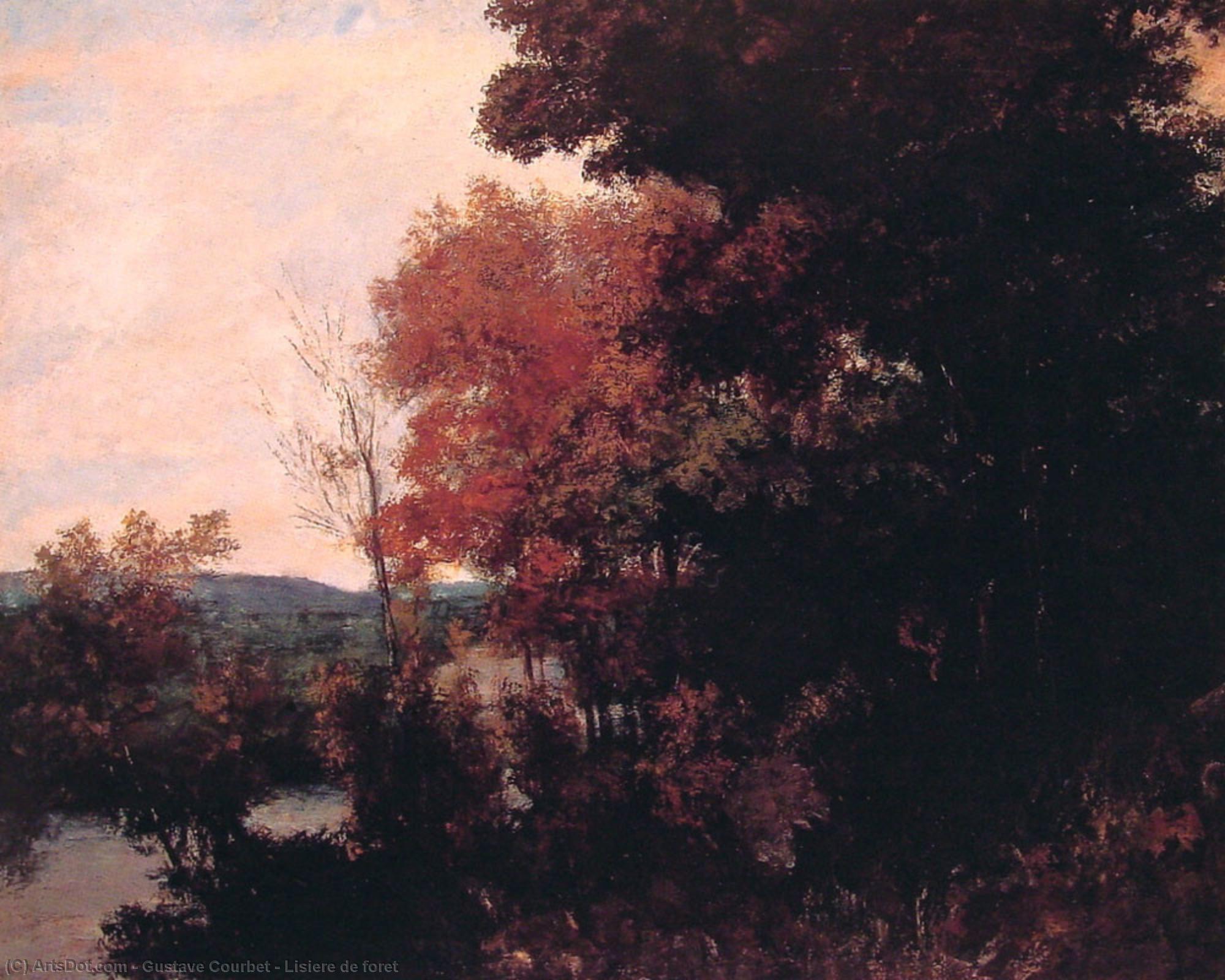
Lisiere de foret

Lisière de forêt - Gustave Courbet's painting captures the essence of rural France with its depiction of trees and water, featuring two figures amidst the serene landscape. A bold rejection of Romantic idealism, Courbet’s work embodies realism and unflinching observation.

Gustave Courbet (1819-1877): Konstnär som banade väg för realism och skapade mästerverk som 'En begravning i Ornans'. Upptäck hans revolutionära inflytande på 1800-talets konst!

Köp en högupplöst, förbättrad digital bild med betydligt högre kvalitet än förhandsvisningen online.

Varje fil är noggrant förberedd av våra interna specialister med hjälp av avancerade verktyg och professionell manuell retuschering. Vi säkerställer att varje bild har exceptionell skärpa, exakt färgåtergivning och fina detaljer.

Den slutgiltiga filen levereras via e-post inom 72 timmar, optimerad för omedelbar användning i professionella sammanhang, redaktionellt bruk och tryckmiljöer. Detta är samma kvalitet som med förtroende används av ledande designstudior, förlag och gallerier.

Digital bild

Ladda ner en högupplöst fil för personlig visning, utskrift och kreativa projekt. ( Byt till tryckta exemplar Köp handmålat konstverk)

Totalpris

$ 24,90

Ingår i varje beställning av digital bild

Professionell digital leverans, garanterad

När du väljer WahooArt.com får du inte bara en bild – du får ett professionellt förädlat digitalt konstverk, skapat med precision och med en garanterad tillfredsställelse. Här är allt som ingår i din beställning, automatiskt:

shipping_icon
Snabb leverans via e-post

Din högupplösta digitala bild skickas till dig via e-post inom 72 timmar efter beställning – redo för omedelbar användning.

canvas_icon
AI-förbättrad digital fil

Ditt konstverk optimeras professionellt med hjälp av avancerade AI-verktyg och manuell redigering, vilket garanterar maximal detaljrikedom, skärpa och färgnoggrannhet.

insurance_icon
Gratis livstidsåterutskick

Har du råkat radera eller tappa bort din fil? Ingen oro – vi skickar den kostnadsfritt till dig när som helst.

tax_icon
Inga importavgifter – någonsin

Njut av ditt konstverk omedelbart utan tull, importavgifter eller leveranskostnader – digitala nedladdningar är alltid skattefria.

color_icon
Garanterad färgåtergivning

Vi säkerställer att din digitala bild återger de ursprungliga färgerna så exakt som möjligt med hjälp av professionella verktyg och färghantering.

return_icon
100 dagars nöjdhetsgaranti

Om du inte är nöjd med din digitala bild kommer vi att revidera den eller återbetala 100% inom 100 dagar – utan frågor.

guarantee_icon
100% pengarna-tillbaka-garanti

Inte nöjd? Få full återbetalning inom 100 dagar efter att du mottagit din digitala fil – utan frågor.

discount_icon
Rabatt vid storköp

Köp 3 bilder, spara 10% – Köp 5, spara 15% – Köp 10+, spara 20%. Perfekt för kreativa projekt, gallerier och byråer.

Snabbfakta

  • Location: Musée d'Orléans, France
  • Year: 1870-1871
  • Dimensions: 73 x 91 cm
  • Title: Gustave Courbet
  • Influences: Jean-François Millet
  • Artistic style: Naturalist
  • Subject or theme: Landscape

Konstquiz

Det finns endast ett korrekt svar på varje fråga.

Fråga 1:
What artistic movement is Gustave Courbet primarily associated with?
Fråga 2:
The painting depicts a forest scene featuring trees with red leaves. What does this detail suggest about Courbet's artistic approach?
Fråga 3:
Courbet famously rejected the Salon system of art exhibitions. Why was this significant?
Fråga 4:
What technique is Courbet known for utilizing in his paintings?
Fråga 5:
The presence of two figures adds to the artwork's atmosphere. What is one possible interpretive meaning conveyed by this compositional element?

A Threshold of Reality

In "Lisière de Forêt," Gustave Courbet invites us to stand at the very edge of the known world, where the dense, shadowed woodland meets the light of an open meadow. This is not the idealized, dreamlike landscape of the Romantic era; instead, it is a profound encounter with the tangible and the true. The scene captures a quiet, transitional moment, featuring a serene body of water in the foreground that reflects the soft, filtered light of the forest. Amidst the verdant greens and the occasional striking splash of red leaves, two solitary figures are nestled within the landscape, providing a sense of human scale and a poignant connection to the natural environment. It is a painting that breathes with the stillness of the earth itself, offering a sense of quiet grandeur that captivates the soul.

The Tactile Revolution

To behold this work is to experience the sheer physicality of Courbet’s rebellion. Eschewing the smooth, polished finishes favored by his contemporaries, Courbet utilized a heavy impasto technique, applying thick layers of paint that create a rugged, palpable texture on the canvas. This tactile approach allows the viewer to feel the weight of the forest and the roughness of the bark through the very surface of the art. His palette is masterfully restrained, relying on deep earthy tones—rich ochres, mossy greens, and somber browns—to capture the nuanced interplay of light and shadow with remarkable accuracy. For the collector or interior designer, this technique offers a remarkable depth that brings an organic strength to any space, making a high-quality reproduction feel like a living, breathing piece of the natural world.

A Legacy of Resilience

Beyond its visual beauty, "Lisière de Forêt" serves as a silent witness to the social tremors of 1865 France. As the nation grappled with the rapid shifts of industrialization and urbanization, Courbet used the landscape to champion the dignity of the real and the unadorned. The forest edge acts as a liminal space—a threshold between the certainty of the past and the ambiguity of an approaching modern age. The scattered trees, standing firm against the elements, become symbols of resilience and endurance, mirroring the artist's own defiant spirit against academic convention. This masterpiece offers more than mere decoration; it provides an emotional anchor of serenity and strength, making it an evocative choice for those seeking art that resonates with both historical depth and timeless grace.

Konstnärsbiografi

A Rebel’s Brush: The Life and Legacy of Gustave Courbet

Jean Désiré Gustave Courbet, born in Ornans, France, on June 10, 1819, stands as a monumental figure in the history of art – a defiant iconoclast who irrevocably altered the trajectory of nineteenth-century painting. More than simply capturing visual impressions; his artistic journey embodies a profound engagement with social realities and an unwavering conviction that art should reflect the world without embellishment. His formative years were marked by a familial upbringing that fostered artistic ambition, nurtured by his mother’s encouragement – a crucial element in shaping him into the revolutionary artist he would become. Formal training commenced at the École des Beaux-Arts in Paris in 1839, yet Courbet swiftly recognized the limitations of academic dogma and Romantic idealism, rejecting them as antithetical to his artistic vision. While acknowledging debts to artists like Eugène Delacroix and Théodore Géricault – figures who championed dramatic emotion and historical narrative – Courbet forged a singular path, prioritizing observation and truthful representation above all else.

The Birth of Realism: Challenging Artistic Conventions

Courbet’s artistic trajectory was defined by an uncompromising rejection of prevailing aesthetic standards. He eschewed mythological tales and heroic portrayals; his gaze remained firmly fixed on the everyday lives of ordinary individuals – particularly laborers and rural communities – a deliberate decision that would propel him to the forefront of Realism. This commitment wasn't merely stylistic; it represented a radical assertion about the inherent dignity and importance of subjects often dismissed by artistic circles of the time. Early canvases explored landscapes and portraits, yet he soon transitioned towards depicting scenes of working-class existence on an unprecedented scale – typically reserved for monumental historical paintings. Critics initially scorned his approach, accustomed to idealized depictions that smoothed over social disparities. Yet Courbet persisted in his conviction that art should bear witness to reality, unflinchingly confronting uncomfortable truths. The masterpiece *The Stone Breakers*, completed in 1849 but tragically destroyed during World War II, exemplifies this ethos – a stark portrayal of two laborers engaged in arduous toil, their faces obscured by exhaustion and grime. This painting served as a powerful rebuke to the prevailing artistic preoccupation with grandeur and beauty, insisting instead on portraying the human condition with uncompromising honesty.

Influences and Artistic Development

Courbet’s artistic sensibilities were undeniably shaped by encounters with earlier masters, notably Caravaggio for his masterful use of chiaroscuro – dramatic contrasts between light and dark – which conveyed emotional intensity and psychological depth. However, Courbet transcended mere imitation, forging a distinctive style characterized by thick impasto brushstrokes that emphasized the materiality of pigment and canvas. He deliberately rejected academic conventions, prioritizing direct observation over imaginative embellishment—a stance that resonated deeply with fellow artists who sought to liberate painting from restrictive formulas. His unwavering dedication to portraying the world as he perceived it fueled his artistic evolution, culminating in groundbreaking works like *A Burial at Ornans* (1850), which provoked considerable controversy due to its monumental scale and unflinching realism. This canvas challenged prevailing notions of acceptable subject matter for art, demonstrating that beauty could reside in the commonplace—a conviction that profoundly impacted subsequent generations of artists.

Major Achievements and Legacy

Courbet’s artistic accomplishments extended beyond stylistic innovation; he actively engaged with pressing social issues of his era, advocating for artistic freedom and challenging institutional hierarchies. His participation in the Salon des Refusés in 1863 – an audacious defiance of official censorship—solidified his reputation as a rebellious artist committed to upholding artistic integrity. He continued to explore diverse themes throughout his career, from landscapes imbued with subtle tonal nuances to portraits capturing psychological complexity. Courbet’s influence on Impressionism and Post-Impressionism is undeniable; he liberated painters from the constraints of academic tradition, encouraging them to experiment with new techniques and perspectives—a legacy that continues to inspire artists today. Gustave Courbet died in Paris on December 31, 1877, leaving behind a vast oeuvre that stands as a testament to his unwavering conviction that art should serve as a conduit for truth and social awareness – an enduring contribution to the history of modern art.
Gustave Courbet

Gustave Courbet

1819 - 1877 , Frankrike

Kortfattad info

  • Artistic Movement Or Style: Realism
  • Artists Or Movements Influenced By This Artist:
    • Impressionism
    • Post-Impressionism
  • Artists Who Influenced This Artist:
    • Delacroix
    • Géricault
    • Caravaggio
  • Date Of Birth: 10 juni 1819
  • Date Of Death: 31 december 1877
  • Full Name: Gustave Courbet
  • Nationality: Französisk
  • Notable Artworks:
    • Slottet Chillon
    • Porträtt av en ung flicka från Salins
    • A Burial at Ornans
  • Place Of Birth: Orléans, Frankrike