En Florensisk Vändpunkt: Giovanni da Milanos Liv och Konst
Giovanni da Milano, ett namn som klingar mjukt i italiensk renässanskonsts annaler, representerar en avgörande punkt – en bro mellan den graciösa lyriken i gotiken och den spirande realismen som skulle definiera renässansen. Född Giovanni di Jacopo di Guido da Caversaccio i Lombardiet omkring 1346, vecklades hans konstnärliga resa främst ut i Florens pulserande kulturella landskap under en tid av enorm förändring och innovation. Trots att hans liv tragiskt förkortades vid 1369, lämnade han efter sig ett relativt litet men djupt inflytelserikt oeuvre, är Giovannis bidrag till italiensk målars utveckling obestridligt. De tidigaste dokumenterade spåren av hans närvaro syns i florentinska arkiv från den 17 oktober 1346, där han listas som Johannes Jacobi de Commo bland utländska målare bosatta i Toscana – ett bevis på Florens magnetiska dragningskraft för konstnärer som sökte nya möjligheter och en blomstrande konstmiljö. Denna flytt antyder ett medvetet sökande efter framsteg, där han lämnade sina lombardiska rötter för att fördjupa sig i konstnärlig innovationens epicentrum.
Giotto’s Ekon: Stil och Influenser
Giovanni da Milanos stil är oskiljaktigt knuten till Giotto di Bondones, den revolutionerande artist som redan decennier tidigare börjat bryta ner konventionerna inom medeltida målning. Han var inte blott en kopist; snarare absorberade han Giottos innovationer – betoningen på naturalistisk representation, emotionellt uttryck och rumslig djup – och filtrerade dem genom sin egen konstnärliga känslighet. Hans målningar visar ett tydligt försök att gå bortom de stiliserade figurerna och platta perspektiven i gotisk konst, och istället sträva efter en större grad av realism vid skildringen av mänskliga former och förmedla äkta känsla genom ansiktsuttryck och gester. Detta sökande är uppenbart i den noggranna draperimodelleringen, de subtila nyanserna av ljus och skugga, och den övergripande känslan av vikt och volym som karakteriserar hans figurer. Han arbetade inte isolerat; Giovanni samarbetade med andra framstående konstnärer under sin tid, inklusive Giottino – Giottos egen son – och sönerna till Taddeo Gaddi, vilket ytterligare exponerade honom för banbrytande konstnärliga metoder och bidrog till hans stilistiska utveckling. Dessa samarbeten främjade ett dynamiskt utbyte av idéer som formade hans unika vision. Även om han var djupt skyldig Giotto, avslöjar Giovanni även inslag av sienesiskt inflytande, särskilt i sin delikata användning av färg och förfinade detaljer, vilket tyder på ett bredare engagemang med de olika konstnärliga strömningarna som cirkulerade genom Italien.
Huvudverk och Konstnärlig Arv
Trots att hans karriär var kort lämnade Giovanni da Milano flera betydande verk som visar upp sin utvecklande stil och tekniska skicklighet.
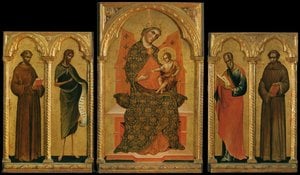
Ognissanti Polyptyk, särskilt dess laterala paneler, som finns i Galleria degli Uffizi i Florens, står som ett utmärkt exempel på hans mogna arbete. Den noggranna detaljrikedomen inom detta religiösa sammanhang är slående, vilket visar hans förmåga att ingjuta heliga ämnen med en känsla av mänsklig värdighet och emotionellt resonans. Andra anmärkningsvärda verk inkluderar
Madonna and Child with Donors, ett fantastiskt renässansmästerverk som exemplifierar naturalism och hängivenhetens skönhet i milanesisk konst, och den gripande
St Francis of Assisi, kännetecknad av dess lugna komposition, jordnära toner och symboliska djup.
Coronation of the Virgin, en oljemålning som visar intrikat detaljrikedom och symbolisk skönhet, befäster ytterligare hans plats i den konstnärliga landskapet under perioden. Hans fresker i Rinuccini-kapellet i Santa Croce, Florens – särskilt de som föreställer scener från Jungfru Marias liv och Maria Magdalenas – avslöjar en mäktig behärskning av narrativ komposition och uttrycksfull figurering.
En Övergångsfigur
Giovanni da Milanos historiska betydelse ligger i hans roll som en avgörande övergångsfigur inom den proto-renässanskonsten. Han var ingen revolutionär som Giotto, men han syntetiserade skickligt befintliga konsttraditioner samtidigt som han subtilt flyttade gränserna mot större realism och emotionellt djup. Han banade väg för senare renässanskonstnärer genom att demonstrera kraften i observation, vikten av mänskliga känslor och potentialen hos målning att förmedla komplexa berättelser. Hans verk förkroppsligar det utvecklande konstlandskapet i 1300-talets Italien – en period som präglades av ett växande intresse för klassisk antikviteter, en förnyad betoning på humanism och en gradvis övergång från de rigida konventionerna inom medeltidens konst. Även om hans liv var tragiskt kort, lever Giovannis arv kvar som ett bevis på den konstnärliga innovationens kraft och skönhetens bestående tilltalande, tron och mänskligt uttryck. Hans målningar fortsätter att fängsla betraktare med sin delikata grace, emotionella intensitet och djupa andliga resonans, vilket ger en inblick i ett avgörande ögonblick i västerländsk konsthistoria.
Ytterligare Utforskning
- Museum San Giovanni in Siena: Hyser en imponerande samling inklusive verk av Giovanni da Milano tillsammans med konstnärer som Lorenzo Ghiberti och Domenico di Pace Beccafumi.
- The Metropolitan Museum of Art: Innehåller "Madonna and Child with Donors", vilket ger insikt i hans stil och teknik.
- Web Gallery of Art (WGA): Tillhandahåller en omfattande biografi och tillgång till digitaliserade bilder av hans konstverk.



 Visa i rummet
 Byt till tryckta exemplar
 Skicka
 Dela
Dela
 Detaljer
 Guide
Guide

 Ladda ner
 Liknande objekt
 Röntgen
 Bildspel
 Besökstatistik


 Läs mer






































 Glasalternativet är endast tillgängligt i storlekar under 110 cm.