KOSTNADSFRI KONSTRÅDGIVNING

x
Beställ målning Beställ målningKöp högupplöst digital bild Köp högupplöst digital bild SkickaSkicka
DetaljerDetaljer Lägg till i favoriter Lägg till i favoriter Ladda nerLadda ner Liknande objektLiknande objekt RöntgenRöntgen BildspelBildspel

Christ Blessing

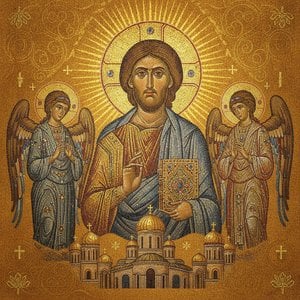
Experience the spiritual grace of Gerard David's 'Christ Blessing.' This exquisite 1505 panel, inspired by Byzantine icons, showcases Christ’s serene blessing with remarkable detail and a touch of Renaissance innovation.

Gerard David (c. 1460-1523) var en framstående flamländsk konstnär känd för sin ljusa färgpalett och detaljerade religiösa scener samt banbrytande landskapsteckningar. Hans verk präglar tidig nordlig renässans.

Giclée / Konsttryck

Giclée- eller canvasprint av museumskvalitet med snabb produktion och flexibla ytbehandlingsalternativ.

P118B $10
P118H $10
P118W $10
P438Z $10
P508JH $12
P508YH $12
P805H $10
P805Z $10
P919BZ $10
P919G $10
P919XJ $10
P959ZH $10
P968JZ $12
W106C $8
W218G $10
W218JH $8
W218Y $10
W307PJ $10
W316G $10
W316PJ $8
W316Y $10
W398PJ $8
W4111J $10
W500HY $15
W500JH $15
W692G $12
W849H $8
W940BG $15
W953PJ $8

Standard
custom
CM
INCH

Välj bland våra förinställda storlekar som motsvarar konstverkets ursprungliga proportioner.

bredd
höjd

Du kan ange egna mått för att passa en specifik ram eller yta. Om det valda måttet inte överensstämmer med originalbildens proportioner kommer vi antingen att beskära konstverket eller utöka bilden med en speglad eller enfärgad kant. En digital mockup skickas för ditt godkännande innan produktionen påbörjas.
Vänligen notera att förhandsvisningen på skärmen inte återspeglar den faktiska beskärningen eller utökningen. Endast mockuppen visar den slutgiltiga kompositionen korrekt.
Även om anpassade storlekar är möjliga, rekommenderar vi att du väljer ett mått från den fördefinierade listan för att bevara de ursprungliga proportionerna.

Leverans över hela världen () på 2 veckor istället för standard 4/5 veckor. (3 juli)

why_choose_icon
Fri expressfrakt över hela världen
why_choose_icon
Högkvalitativ linnecanvas
why_choose_icon
Fullständig fraktförsäkring
why_choose_icon
Garantier för återbetalning av tullavgifter
why_choose_icon
Garantier för exakt färgåtergivning
why_choose_icon
60 dagars returrätt (endast vid fabrikationsfel)
why_choose_icon
100% pengarna tillbaka-garanti
why_choose_icon
Mängdrabatt erbjuds

Totalpris

-

reproduction

Christ Blessing

Giclée / Konsttryck

Storlek på reproduktion

-

Slutgiltigt pris

-

Kortfakta

  • Notable elements: Fresh face, delicate hands
  • Artist: Gerard David
  • Dimensions: 12 x 9 cm
  • Subject or theme: Religious blessing
  • Location: Metropolitan Museum
  • Medium: Oil on wood
  • Artistic style: Early Netherlandish

Konstquiz

Det finns endast ett korrekt svar på varje fråga.

Fråga 1:
What is the primary subject depicted in ‘Christ Blessing’?
Fråga 2:
According to the description, what distinguishes this panel from typical Byzantine icons?
Fråga 3:
Which artist is credited with influencing the articulation of the hands in ‘Christ Blessing’?
Fråga 4:
In what century was ‘Christ Blessing’ created?
Fråga 5:
The panel differs from the Byzantine models in what way?

Beskrivning av samlarobjektet

A Window to Byzantium: Gerard David’s “Christ Blessing”

Gerard David's "Christ Blessing," painted around 1505 in the Low Countries, isn’t merely a depiction of Jesus; it’s a portal – a carefully constructed window offering a glimpse into the spiritual heart of the late medieval and early Renaissance worlds. This exquisite panel, adapted from Byzantine icons, transcends simple representation, embodying a profound sense of serenity and divine grace. Unlike its austere predecessors, David's version breathes with an unprecedented freshness, evident in Christ’s remarkably lifelike face – a detail achieved through meticulous observation and a revolutionary approach to anatomical accuracy, informed by the artist’s own detailed drawings from life.

The painting’s genesis lies within the rich artistic traditions of Byzantium. Byzantine icons, renowned for their symbolic power and flattened perspective, served as models for artists across Europe during the 15th century. However, David masterfully departs from these established conventions. He introduces a dynamism previously absent – a subtle movement in Christ's posture, a delicate articulation of his hands that speaks to an understanding of human anatomy far surpassing the rigid formality of earlier iconographic styles. This shift reflects the burgeoning humanist interest in naturalism and observation that was transforming European art at the time.

The Master’s Touch: Technique and Materials

David's skill is immediately apparent in his masterful use of oil paint on wood panel. The colors, rich and luminous – deep blues, vibrant reds, and earthy greens – are applied with a remarkable sensitivity to light and shadow. Notice the subtle gradations of tone that define Christ’s face, conveying both solemnity and an almost palpable warmth. The artist's attention to detail extends beyond mere color; the texture of Christ’s garments is rendered with astonishing realism, suggesting the weight and flow of fabric.

Crucially, David’s technique draws upon the innovations of Gerard van Eyck, a pioneer in oil painting. Van Eyck’s development of layering techniques allowed for greater depth, luminosity, and detail than previously possible. David skillfully builds up his image through multiple thin layers of paint, creating an effect of incredible richness and visual complexity. The frame itself, a carefully considered element, further enhances the artwork's impact, framing the scene within a space that invites contemplation.

Symbolism and Spiritual Resonance

The gesture depicted – Christ’s hand raised to his face – is laden with symbolic meaning. It’s often interpreted as an act of blessing, but also carries connotations of prayer, humility, and divine grace. The upward movement suggests a connection between the earthly realm and the heavens, reflecting the central theological theme of salvation through faith. The composition, too, contributes to this sense of spiritual resonance: Christ is positioned centrally, dominating the space with his serene presence, inviting the viewer into an intimate dialogue with divinity.

Furthermore, the painting’s roots in Byzantine iconography are significant. The gesture itself echoes common depictions found in Byzantine art, linking David's work to a vast and enduring artistic tradition. However, David doesn’t simply replicate these images; he transforms them, imbuing them with his own unique vision and stylistic flair. This blending of established traditions with innovative techniques is characteristic of the artist’s genius.

A Timeless Masterpiece: Reproduction and Beyond

"Christ Blessing" stands as a testament to Gerard David's extraordinary talent and his pivotal role in bridging the gap between late medieval artistic conventions and the burgeoning Renaissance. WahooArt offers meticulously crafted, hand-painted reproductions that capture the essence of this iconic work – its luminous colors, exquisite detail, and profound spiritual depth. Whether you’re an art collector, a design enthusiast seeking inspiration, or simply someone captivated by beauty, our reproduction allows you to experience the timeless power of David's masterpiece in your own space.

Consider how this painting might complement your interior décor – its serene colors and contemplative subject matter creating a focal point for quiet reflection. The rich textures and subtle details will undoubtedly draw the eye and add an element of sophistication to any room. Explore our range of sizes and framing options to find the perfect way to bring "Christ Blessing" into your life.


Konstnärsbiografi

A Master of Flemish Light: The Enigmatic World of Gerard David

Gerard David, a name that resonates with the brilliance of early Netherlandish painting, remains an artist shrouded in intriguing mystery. Born around 1460 in Oudewater, Netherlands, his life story is pieced together from fragmented archival records and the eloquent testimony of his art. Unlike some contemporaries whose lives are richly documented, David’s personal narrative is sparse, allowing his paintings to speak volumes where biographical details fall silent. What is known suggests a remarkably successful career, likely managing workshops in both Antwerp and Bruges – centers of artistic innovation during the Renaissance. His reputation experienced an ebb in the 17th century, only to be gloriously resurrected by 19th-century art historians who recognized his unique contributions to the Northern Renaissance. He was inducted as a free master into the Corporation of Imagemakers and Saddlers in Bruges in 1484, marking a pivotal moment in his ascent. His later involvement with the Antwerp guild in 1515 further solidifies his standing within the artistic community.

Formative Influences and Artistic Development

David’s artistic journey began under influences that shaped the very foundation of his style. Early works reveal a clear debt to painters like Jacob Janszoon, Dieric Bouts, and Geertgen tot Sint Jans – masters who instilled in him a meticulous attention to detail and a sensitivity to religious narrative. It is believed he spent time in Haarlem absorbing these lessons before relocating to Bruges, a vibrant hub of artistic exchange attracting talent from across Europe. Here, David encountered the masterpieces of Jan van Eyck, Rogier van der Weyden, and Hans Memling, absorbing their techniques while forging his own distinct path. He didn’t merely imitate; he synthesized these influences into something uniquely his own – a style characterized by luminous color, serene compositions, and an increasingly sophisticated understanding of landscape. His early paintings demonstrate this evolution, moving from the doll-like figures reminiscent of Haarlem traditions towards more sculptural forms grounded in their environment. This transition is visible in works like *Christ Nailed to the Cross*, where the influence of Bouts’ spatial construction blends with David’s emerging coloristic sensibility.

Innovation in Landscape and Religious Narrative

Gerard David’s artistic signature lies in his innovative approach to both landscape and religious subject matter. He wasn't simply depicting backgrounds; he was creating immersive environments that enhanced the emotional resonance of his scenes. His landscapes are not merely decorative, but integral components of the narrative, often imbued with symbolic meaning. This fascination with natural settings – dense forests, rolling hills, expansive skies – set him apart from many of his contemporaries and foreshadowed the development of landscape painting as an independent genre. Consider *View in a Forest*, outer wing of a triptych; it’s not simply a backdrop but a world unto itself, rendered with meticulous detail and atmospheric perspective. Within his religious works, David demonstrated a remarkable ability to convey both profound spirituality and human emotion. Paintings like *The Marriage of St. Catherine* exemplify this skill. The scene is rendered with exquisite detail, yet it's the subtle expressions on the figures’ faces – their piety, contemplation, or gentle joy – that truly captivate the viewer. He possessed a gift for imbuing his sacred subjects with a sense of quiet dignity and relatable humanity. The *Triptych of the Madonna Enthroned and Saints* in Genoa showcases this mastery, presenting a harmonious composition filled with vibrant color and delicate detail. His *Virgin Among the Virgins*, donated to the Carmelite nuns of Sion at Bruges, is another testament to his skill, featuring a self-portrait within the painting itself – a rare and intimate gesture from an artist of his time.

Major Achievements and Notable Works

David’s career spanned several decades, during which he produced a remarkable body of work that reflects his evolving style and artistic vision. His most celebrated achievements include:
  • The Judgment of Cambyses (two panels): This monumental altarpiece, housed in the Groeningemuseum in Bruges, showcases David’s mastery of color, composition, and dramatic storytelling.
  • The Triptych of the Madonna Enthroned and Saints: A complex and richly decorated triptych that exemplifies David's skill in creating layered narratives and integrating multiple figures within a single space.
  • The Virgin Among Virgins: A highly personal work, featuring a self-portrait alongside depictions of the Virgin Mary and other saints, offering a rare glimpse into the artist’s own life and beliefs.
  • The Annunciation: A serene and elegant depiction of the angel Gabriel announcing to Mary that she will conceive Jesus, demonstrating David's refined style and attention to detail.
These works, along with numerous smaller paintings and drawings, demonstrate David’s versatility as an artist and his ability to adapt to diverse commissions and patrons. His output reveals a consistent commitment to quality, innovation, and emotional depth.

Legacy and Enduring Influence

Though his fame waned for a period after his death in 1523, Gerard David’s influence on subsequent generations of artists is undeniable. His innovative use of color, his masterful handling of light and shadow, and his pioneering approach to landscape all left an indelible mark on the development of Flemish painting. He paved the way for artists who would further explore the expressive potential of natural settings, such as Jacob Patinir and Jacob van Ruisdael.
  • A Bridge Between Traditions: David successfully bridged the gap between the late medieval tradition and the emerging Renaissance style.
  • Influence on Landscape Painting: His detailed and atmospheric landscapes foreshadowed the development of landscape as a distinct genre.
  • Masterful Colorist: He was renowned for his vibrant palette and skillful use of color to create emotional impact.
Today, David’s works are celebrated in museums and collections around the world, including the Groeninge Museum in Bruges, which houses an impressive collection of his paintings. His art continues to inspire awe and admiration, offering a glimpse into the spiritual and artistic landscape of the Northern Renaissance. Exploring his oeuvre is not merely studying art history; it’s entering a world of luminous beauty, profound contemplation, and enduring human emotion – a testament to the genius of Gerard David, a master of Flemish light.

Exploring Further

  • WahooArt.com: Discover an extensive collection of Gerard David’s paintings, including *The Adoration of the Magi*.
  • View in a Forest: Explore this stunning Northern Renaissance landscape painting.
  • The Early Netherlandish Art Movement: Delve deeper into the artistic context of David’s work.
Gerard David

Gerard David

1450 - 1523 , Nederländerna

Kortfattad information

  • Artistic Movement Or Style: Tidig flamsk målning
  • Artists Or Movements Influenced By This Artist:
    • Jan van Eyck
    • Rogier van der Weyden
  • Artists Who Influenced This Artist:
    • Jacob Janszoon
    • Dieric Bouts
    • Geertgen tot Sint Jans
  • Date Of Birth: c. 1460
  • Date Of Death: 1523
  • Full Name: Gerard David
  • Nationality: Nederländsk
  • Notable Artworks:
    • Bröllop av Katarina
    • Madonnatriptyk
    • Jungfruframvänt
  • Place Of Birth: Oudewater, Nederl.
Utforska konstverk organiserade efter teman, stilar och egenskaper.