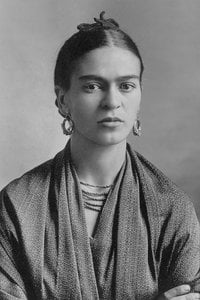
Om konstnären
Frida Kahlo: En Livslång Kamp och Konstnärlig Blomstring
Magdalena Carmen Frida Kahlo y Calderón, känd världen över som Frida Kahlo, var mer än bara en konstnär; hon var en kraftfull personlighet, en trotsig själ vars liv blev oupplösligt sammanvävt med hennes konst. Född den 6 juli 1907 i Coyoacán, Mexico City, präglades hennes existens av fysiskt lidande och emotionell turbulens – erfarenheter som skulle komma att driva den intensivt personliga och symboliska bildspråket hon är känd för. Hennes far, Guillermo Kahlo, en tysk-mexikansk fotograf, uppmuntrade hennes intellektuella nyfikenhet och konstnärliga begåvning från tidig ålder. Men Fridas barndom skuggades av sjukdom; vid sex års ålder insjuknade hon i polio, vilket lämnade henne med en permanent halt och påverkade hennes fysiska utveckling. Detta tidiga möte med sårbarhet och begränsningar skulle bli ett återkommande tema i hennes verk, forma hennes syn på kroppen, smärta och motståndskraft. Även innan den förödande olyckan som definierade mycket av hennes konstnärliga bana, hade Frida en skarp medvetenhet om sin egen kroppslighet och dess inneboende bräcklighet.
Den Krossade Kroppen, Den Blomstrande Konsten
År 1925 förändrades Fridas liv för alltid när hon var arton år gammal. En fruktansvärd bussolycka lämnade henne med katastrofala skador – frakturer i ryggraden, bäckenet och benet, bland annat. Införd till en långvarig återhämtningsperiod, ofta sängbunden och innesluten i gipsbandager, vände hon sig inåt och fann tröst och uttryck genom målning. Hennes mor försåg henne med ett staffli anpassat för användning medan hon låg ner, vilket förvandlade begränsningarna av hennes fysiska tillstånd till en plats för konstnärlig utforskning. Det var under denna tid som Frida började utforska självporträtt med obeveklig intensitet. Oförmögen att vandra ut i världen, vände hon sin blick inåt och dokumenterade noggrant sin egen bild som ett sätt att förstå och konfrontera sin smärta, både fysisk och emotionell. Dessa tidiga verk var inte bara representationer av hennes likhet; de var visceral utforskningar av identitet, sårbarhet och den bestående kraften i den mänskliga anden. Olyckan var inte bara en tragedi; det var en katalysator som frigjorde hennes konstnärliga potential och tvingade henne att konfrontera sin egen dödlighet och finna mening i lidandet.
En Stormig Union och Konstnärlig Uppblomstring
Fridas liv tog ytterligare en avgörande vändpunkt 1929 när hon gifte sig med den berömde mexikanske muralmålaren Diego Rivera. Deras förhållande var ett passionerat men stormigt affär, präglat av intensiv kärlek, otrohet, konstnärlig rivalitet och perioder av separation och försoning. Trots de emotionella turbulenserna visade sig Rivera vara en betydande inflytelse på Fridas konstnärliga utveckling. Han uppmuntrade hennes unika vision och erbjöd konstruktiv kritik samtidigt som han erkände den råa kraften och originaliteten i hennes arbete. Under hans vägledning, och genom sin egen obevekliga experimentering, började Fridas stil att ta form, vilket blandade element av mexikansk folkkonst, realism och surrealism till ett distinkt visuellt språk. Hennes målningar blev alltmer symboliska, utforskade teman som identitet, den mänskliga kroppen, smärta, död och komplexiteten i kvinnlig erfarenhet. Hon skydde sig inte från att avbilda sitt eget lidande; istället omfamnade hon det som ett centralt tema i sitt arbete och förvandlade personligt trauma till universella uttalanden om den mänskliga tillvaron.
Symboler för Lidande, Motståndskraft och Identitet
Frida Kahlo är kanske bäst känd för sina självporträtt, som kännetecknas av deras orubbliga ärlighet och symboliska djup. Verk som De två Fridorna (1939), en kraftfull skildring av hennes dubbla identitet efter hennes skilsmässa från Rivera, visar hennes förmåga att externalisera interna konflikter genom slående visuella metaforer. Självporträtt med törnekrans och kolibri (1940) är laddat med symbolik – törnarna representerar smärta, kolibrien symboliserar hopp och motståndskraft, och den svarta katten en budbärare av otur. Den trasiga kolumnen (1944), en hjärtskärande skildring av hennes fysiska lidande, visar Frida med öppen torso som avslöjar en smulande jonisk pelare i stället för hennes ryggrad, hållna ihop av remmar och genomborrade med spikar. Även Henry Ford Hospital (1932), en rå och djupt personlig skildring av hennes missfall, visar hennes vilja att konfrontera tabubelagda ämnen med orubblig ärlighet. Dessa målningar är inte bara representationer av smärta; de är handlingar av trots, påståenden om självständighet inför motgångar.
En Bestående Arv
Frida Kahlos inflytande sträcker sig långt bortom konstens värld. Hon var en kulturell ikon som utmanade traditionella könsroller och samhällsförväntningar genom sitt liv och sitt arbete. Hennes omfamning av mexikansk kultur och identitet hjälpte till att höja dess profil på den internationella scenen, och hennes orubbliga skildring av smärta resonerade med publik över hela världen, vilket gjorde henne till en symbol för motståndskraft och styrka. Hon blev en viktig figur för Chicanos i USA, som representerade deras kulturella arv och kampanjer. Även om hon vägrade att kategoriseras som surrealist, delar hennes verk likheter med rörelsens utforskning av det undermedvetna och drömlika bilder. Idag firas Frida Kahlo som en av de viktigaste konstnärerna under 1900-talet, vars arv fortsätter att inspirera generationer att omfamna sina identiteter, konfrontera motgångar och uttrycka sig autentiskt. Hennes konst förblir ett bevis på den bestående kraften i den mänskliga andens förmåga att finna skönhet och mening även under de mörkaste tider.



 Visa i rummet
 Byt till tryckta exemplar
 Skicka
 Dela
Dela
 Detaljer
 Studentguide för konstverk

 Ladda ner
 Liknande objekt
 Röntgen
 Bildspel
 Besökstatistik

 Läs mer






































 Glasalternativet är endast tillgängligt i storlekar under 110 cm.