Ett liv i det Viscerala
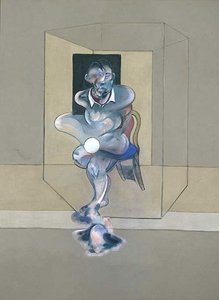
Francis Bacon, ett namn som är synonymt med den råaste emotionaliteten inom 1900-talets konst, föddes i Dublin, Irland, år 1909. Hans konstnärliga anda fann dock sitt sanna uttryck i efterkrigstidens turbulenta Storbritannien. Hans tidiga liv var långt ifrån stabilt; frekventa flyttar på grund av moderns hälsa ingav en känsla av förflyttning som djupt skulle forma hans världsbild och slutligen genomsyra hans dukar. En komplex relation till sin stränge far och ett nära band till barnsköterskan Jessie Lightfoot färgade ytterligare den emotionella terrängen i hans formativa år. Till en början drogs Bacon till hästkapplöpningar och ett liv i spel, men han irrade runt i olika yrken innan han slutligen ägnade sig åt måleriet i slutet av tjugoårsåldern – en försenad start som kanske intensifierade brådskan och intensiteten i hans senare verk. Han var inte formellt utbildad, utan smidde sin egen väg, absorberade influenser från olika källor och utvecklade ett unikt oroande visuellt språk.
Krysselden av Tidiga Influenser
Bacons konstnärliga uppvaknande var inte omedelbart, utan snarare en gradvis ackumulering av intryck. Pablo Picassos verk, särskilt de förvridna figurerna från hans tidiga kubistiska period, visade sig vara avgörande för att befria honom från traditionell representation. Han fann ytterligare inspiration i Egon Schieles kusliga fotografi, vars uttrycksfulla förvrängningar av den mänskliga formen resonerade med Bacons egen spirande fascination för existensens bräcklighet och sårbarhet. Det var dock ett slumpartat möte med Sergei Eisensteins film *Potemkins slagskepp* som gav en avgörande katalysator. Filmens viscerala bilder, särskilt ett närbildsfoto av ett skrikande ansikte, blev ett bestående motiv i Bacons verk och representerade uråldrig terror och människans djupaste lidande. Han beundrade också de gamla mästarna, framför allt Diego Velázquez, vars *Porträtt av påven Innocent X* han berömt skulle omtolka under hela sin karriär och förvandla den auktoritära påvefiguren till ett plågat spöke. Dessa influenser var inte bara stilistiska appropriationer; de absorberades och omvandlades genom Bacons egen unika känslighet, vilket resulterade i en konstnärlig vision som var både djupt personlig och universellt resonant.
Smide av en Signaturstil: Förvrängning och Isolation
Bacons genombrott kom med *Tre studier för figurer vid korsfästelsens bas* (1944), ett verk som chockade och fängslade publiken i efterkrigstidens London. Denna triptyk etablerade hans signaturstil – förvridna, fragmenterade figurer isolerade inom klaustrofobiska utrymmen. Dessa var inte skildringar av religiös martyrdom utan snarare viscerala utforskningar av mänsklig ångest, berövade alla tröstande berättelser eller andlig tröst. Hans målningar har ofta suddiga eller upplösta former som förmedlar en känsla av psykologisk turbulens och fysisk sårbarhet. Han använde frekvent geometriska strukturer – burar, lådor – för att begränsa sina motiv och betona deras isolering och maktlöshet. Bacons palett var vanligtvis dämpad och sorgsen, vilket återspeglade de mörka teman han utforskade, men accentuerades av utbrott av intensiv färg som förstärkte den emotionella effekten. Användningen av dessa burar var inte bara en kompositionell anordning; det symboliserade de inneboende begränsningarna och tvången som påläggs mänsklig existens. Han strävade efter att fånga inte bara *hur* saker såg ut utan *hur de kändes*, och översatte inre tillstånd av ångest, rädsla och förtvivlan till duken med brutal ärlighet.
Teman om Dödlighet, Ångest och Människans Villkor
Under sin produktiva karriär återvände Bacon upprepade gånger till vissa motiv: korsfästelsen som en symbol för lidande; porträtt som grävde i den psykologiska intensiteten hos sina motiv, ofta vänner och älskare som George Dyer; och självporträtt som tjänade som introspektiva utforskningar av identitet och dödlighet. Hans *Studie efter Velázquez’s Porträtt av påven Innocent X* (1953) är kanske en av hans mest ikoniska prestationer, som förvandlar Velázquez värdiga porträtt till ett skrikande spöke, som förkroppsligar existentiell ångest. Porträtten av George Dyer, hans volatila älskare, är särskilt gripande och fångar både intensiteten i deras koppling och den hotande skuggan av tragedi. Bacons verk handlade inte om att skildra specifika individer; det handlade om att utforska universella teman som mänsklig sårbarhet, isolering och oundvikligheten av döden. Han undvek inte existensens mörkare aspekter utan konfronterade dem direkt och tvingade betraktarna att möta sin egen dödlighet och ångest.
Ett Bestående Arv: Utmanande Konventioner
Francis Bacons inverkan på 1900-talets konst är obestridlig. Han utmanade traditionella föreställningar om representation, avvisade idealiserad skönhet till förmån för en rå, oförsonlig skildring av människans villkor. Hans verk har djupt influerat generationer av konstnärer och banat väg för nya former av uttryck och utmanat konventionella konstgränser.
- Efterkrigsexpressionismen: Bacon anses vara en nyckelperson inom denna rörelse, som påverkar konstnärer med sin djärva stil och psykologiska djup.
- Auktionsrekord & Museiutställningar: Hans målningar fortsätter att kräva höga priser på auktioner och ställs ut i stora museer över hela världen, vilket befäster hans plats i konsthistorien.
- Konfrontera sanningar: Bacons arv ligger i hans förmåga att konfrontera obekväma sanningar om människans existens och översätta dessa upplevelser till kraftfulla och oförglömliga bilder.
Trots ett turbulent personligt liv präglat av spel, drickande och komplexa relationer förblev han hängiven sin konst fram till sin död 1992. Han lämnade efter sig ett verk som fortsätter att resonera med publiken idag, påminner oss om existensens bräcklighet och konstens bestående kraft att konfrontera själens mörkaste hörn. Hans målningar är inte bara bilder; de är viscerala upplevelser – ett bevis på konstens bestående kraft att provocera, störa och slutligen belysa komplexiteten i det mänskliga varandet.



 Visa i rummet
 Köp handmålat konstverk
 Skicka
 Dela
Dela
 Detaljer
 Studentguide för konstverk

 Ladda ner
 Liknande objekt
 Röntgen
 Bildspel
 Besökstatistik

 Läs mer






































 Glasalternativet är endast tillgängligt i storlekar under 110 cm.