A Dynamic Interplay of Form: Exploring Fernand Léger’s “Dance”
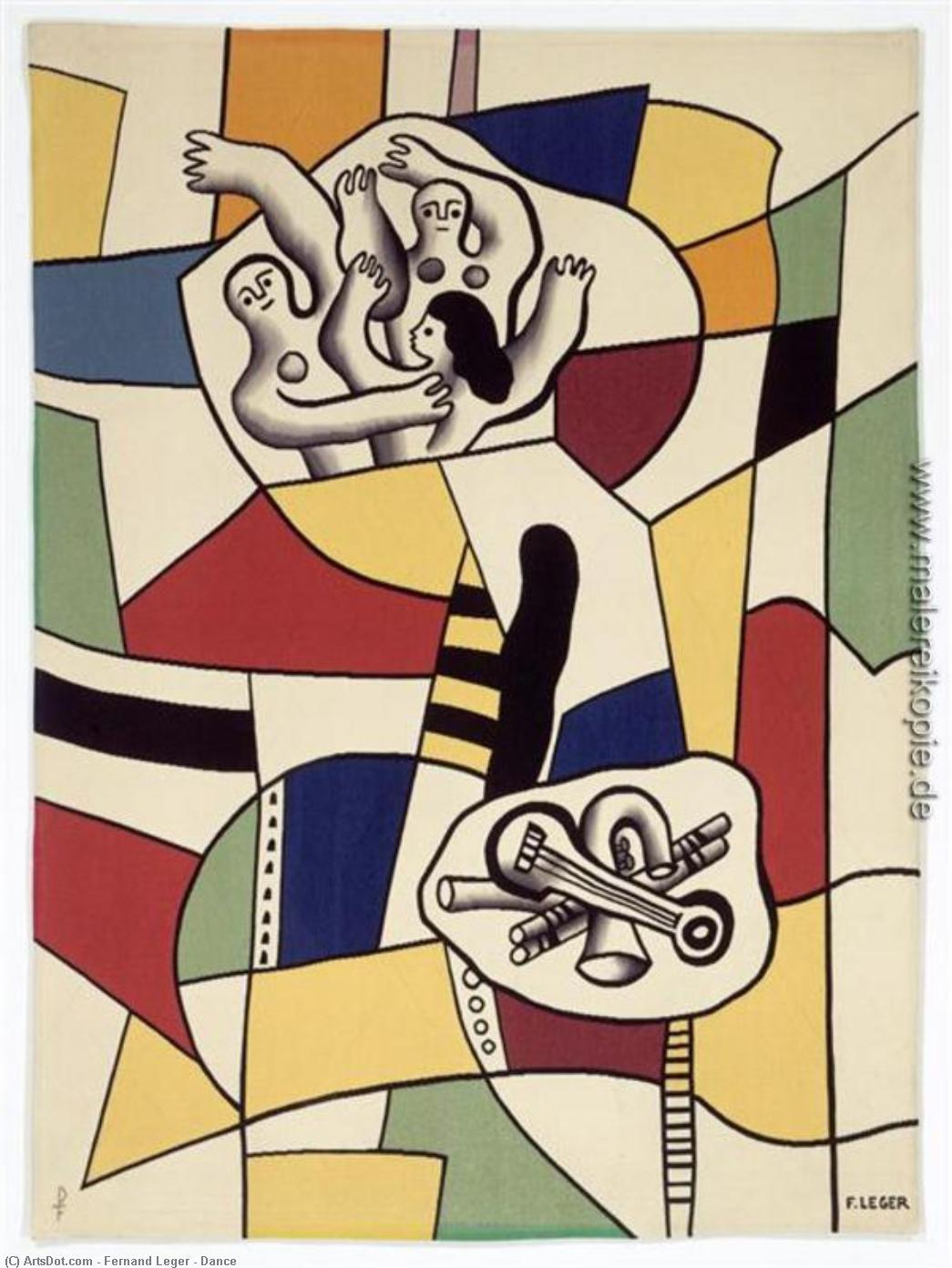
“Dance,” a monumental work by Fernand Léger measuring 272 x 198 cm, is a captivating example of his distinctive Cubist-inspired style. This painting doesn't depict a literal dance as much as it *embodies* the energy and rhythm of movement through fragmented forms and bold geometric shapes. It’s a powerful statement on modernity, human interaction, and the very essence of performance.
Stylistic Innovation: Beyond Traditional Cubism
While deeply rooted in the principles of Cubism, Léger's approach diverges from the more analytical phase pioneered by Picasso and Braque. Instead of breaking down objects into purely intellectual facets, Léger constructs his composition using simplified, often cylindrical or trapezoidal forms – a style sometimes referred to as “Tubism.” This emphasis on machine-like shapes reflects the artist’s fascination with the modern industrial world and its impact on human life. The flattened perspective and limited depth further contribute to the painting's dynamic quality, creating a sense of immediacy and visual compression. It leans heavily into Synthetic Cubism, building up forms through collage-like arrangements of color and shape.
Technique & Materials: A Bold Application of Color
“Dance” is believed to be executed in oil paint on canvas. Léger’s technique involves layering colors in broad brushstrokes or flat planes, deliberately rejecting traditional methods that prioritized illusionistic representation. The result is a surface that feels both vibrant and structurally sound. The interplay of color – though specifics are unavailable without further research – likely contributes significantly to the work's emotional impact, creating visual tension and highlighting the fragmented forms. Shadows aren’t used for modeling but rather as integral elements defining the geometric planes.
Historical Context: Léger & The Puteaux Group
Fernand Léger (1881-1955) was a pivotal figure in early 20th-century art, bridging Impressionism and the avant-garde movements that followed. Beginning his artistic journey with landscapes influenced by Impressionism – such as “Le Jardin de ma Mère” (My Mother’s Garden) from 1905 – he quickly embraced Cubism around 1910. He became associated with the *Puteaux Group*, a collective of artists exploring abstraction and machine aesthetics, solidifying his place at the forefront of artistic innovation. “Dance,” likely created during this period of experimentation, embodies Léger’s unique contribution to the development of modern art.
Symbolism & Emotional Resonance
The subject matter – two figures engaged in an abstracted dance – is rich with symbolic potential. The dance itself can be interpreted as a metaphor for human interaction, collaboration, and the dynamic energy of life. The fragmented forms might represent the complexities of modern existence or the breakdown of traditional structures. While not overtly narrative, the painting evokes a sense of dynamism, rhythm, and perhaps even a touch of controlled chaos. It’s an artwork that prioritizes *feeling* over literal depiction, inviting viewers to engage with its abstract language on an emotional level.
For Collectors & Designers
- A Statement Piece: “Dance” is a commanding work due to its size and bold aesthetic, making it a striking focal point in any collection or interior.
- Modernist Appeal: Its Cubist-inspired style aligns perfectly with modernist design principles – clean lines, geometric forms, and a focus on abstraction.
- Color Palette Versatility: The painting’s color scheme (details pending further research) likely offers versatility, complementing a range of interior palettes from neutral tones to bolder, more vibrant schemes.
- Investment Potential: Fernand Léger is a highly regarded artist with a strong market presence. A high-quality reproduction of “Dance” would be a valuable addition to any art collection.
This artwork isn’t simply a depiction of dancers; it's an exploration of form, movement, and the spirit of modernity – a testament to Léger’s enduring artistic vision.
Frågor och svar
Vem säljer handmålade kopior av "Dance" av Fernand Léger?
"Dance" finns tillgänglig som en handmålad oljereproduktion på linneväv. Beställningen kan göras på denna sida, med valmöjlighet mellan olika storlekar.
Var kan jag köpa ett tryck av "Dance" av Fernand Léger?
För att beställa ett tryck av "Dance" av Fernand Léger, gör helt enkelt din beställning på denna sida: ett konsttryck på bomullscanvas eller arkivbeständigt canvaspapper.
Hur kan jag se "Dance" av Fernand Léger som ett bildspel?
"Dance" av Fernand Léger kan visas som ett bildspel på verkets Bildspel-sida.
Var bör en reproduktion av "Dance" av Fernand Léger hängas?
Format (Portrait) och rekommenderat utrymme (Living Room) är de två placeringsfakta som finns registrerade för "Dance" av Fernand Léger.
Vilken konstnär tillskrivs "Dance"?
"Dance" tillskrivs Fernand Léger.
Vilken färgpalett används i "Dance" av Fernand Léger?
Färgerna i "Dance" utgör en Neutrals palett. Denna klassificering beskriver de dominerande färggrupperna.
Kan jag se "Dance" av Fernand Léger på min egen vägg innan jag köper den?
"Dance" har en förhandsvisning med förstärkt verklighet: konstverkets AR-förhandsvisning-sida visar det i ditt eget utrymme på en kompatibel enhet.