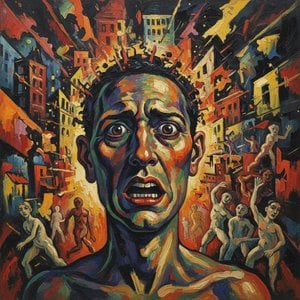
A Life Forged in Expression: The World of Ernst Ludwig Kirchner
Ernst Ludwig Kirchner, ett namn synonymt med den råa känslomässiga kraften i tysk expressionism, föddes in i en värld på gränsen till dramatiska förändringar. Hans ankomst till Aschaffenburg, Bayern, 1880, markerade början på ett liv djupt sammanflätat med konstnärlig innovation och personliga motgångar. De föränderliga landskapen i hans barndom – dikterade av hans fars yrke – etsade in en känsla av förflyttning inom honom, som senare skulle genomsyra hans konst. Från Frankfurt till Perlen och slutligen att bosätta sig i Chemnitz, absorberade den unga Kirchner de växande oron över ett snabbt moderniserande Tyskland. Trots att han initialt var inriktad på arkitektur vid Königliche Technische Hochschule i Dresden, blev det draget efter måleriet, drivet av beundran för mästare som Albrecht Dürer och en växande missnöje med akademisk konvention, som slutligen definierade hans väg. Han fann likasinnade rebeller – Fritz Bleyl, Karl Schmidt-Rottluff och Erich Heckel – och knöt band som oåterkalleligt skulle förändra konstens gång i 20:e århundrade.
The Bridge Between Worlds: Die Brücke and Artistic Revolution
År 1905 blev Kirchner medgrundare av *Die Brücke* (“The Bridge”), en konstnärsgrupp dedikerad till att överbrygga klyftan mellan traditionell estetik och ett mer visceral, känslomässigt laddat former av uttryck. Detta var inte bara ett stilval; det var en filosofisk ståndpunkt. Gruppen sökte inspiration från källor ofta bortglömda av den etablerade konstvärlden – primitiv konst från Afrika och Oceanien, Vincent van Goghs djärva färger och Edvard Munchs kusliga psykologiska djup. De förkastade de idealiserade representationerna av skönhet som föredrogs av akademisk målning och omfamnade istället förvrängningar, skrikiga färgpaletter och uttrycksfull penseldragning för att förmedla oron och främlingskänslan i det moderna livet. Kirchners tidiga verk, födda ur denna samarbetsanda, pulserade med en rastlös energi, återspeglande gruppens delade önskan att bryta sig loss från konstnärliga begränsningar. Ateljen blev en kruka för experiment, ett utrymme där samhällsnormer utmanades tillsammans med konstkonventioner. Utforskningen av den mänskliga figuren, särskilt den nakna kvinnan, i både stadsbilder och landskap, blev ett återkommande motiv, vilket tillät Kirchner att undersöka rörelse, känslor och komplexiteten i det moderna livet.
Urban Anxieties and Bold Visions: Defining a Style
Kirchners konststil är omedelbart igenkännbar genom sina distinkta drag. Han behärskade färg inte som ett medel för trogen representation, utan som ett verktyg för att väcka känslor – livfulla, ofta icke-naturliga nyanser som förstärkte känslan av oro eller intensitet i hans kompositioner. Hans penseldrag var energiska och synliga, vilket bidrog till den övergripande känslan av omedelbarhet och rå känsla. Figurer och objekt förvrängdes ofta eller förlängdes, vilket återspeglade en subjektiv snarare än objektiv verklighet. Framför allt fångade Kirchner den psykologiska effekten av det moderna stads livet i början av 20:e århundrade. Målningar som *The Street* (1908) är inte bara skildringar av stadsscener; de är porträtt av alienation, som fångar den frenetiska energin och känslan av främlingskap i en snabbt föränderlig värld. Han tvekade inte att måla upp de mörkare aspekterna av moderniteten – ensamheten, anonymiteten, känslan av att bli överväldigad av själva storleken på stadsbefolkningen. Detta okonventionella perspektiv etablerade honom som en skildrare av sin tid, en konstnär som vågade konfrontera oron som bubblade under ytan av samhälls framsteg.
Influences and Artistic Development
Kirchner’s artistic development was profoundly shaped by a diverse range of influences. He deeply admired the works of Albrecht Dürer, whose meticulous detail and symbolic imagery resonated with Kirchner's own desire to imbue his art with meaning. The bold colors and expressive brushwork of Vincent van Gogh served as a crucial inspiration, encouraging Kirchner to embrace vibrant hues and dynamic compositions. Furthermore, Kirchner was captivated by the psychological depth and emotional intensity of Edvard Munch’s paintings, particularly *The Scream*, which profoundly influenced his exploration of anxiety and alienation. Beyond these Western masters, Kirchner also drew inspiration from non-European art forms, specifically African and Oceanic tribal masks and sculptures. These primitive artworks, with their simplified forms and powerful symbolism, offered a counterpoint to the academic traditions he rejected and provided him with a new visual vocabulary for expressing raw emotion. The influence of Paul Gauguin’s use of color and flattened perspective was also significant, as was the work of Henri Matisse, whose emphasis on pure color and decorative design encouraged Kirchner to experiment with bold palettes and simplified forms.
Tragedy and Legacy: A Lasting Impact
Kirchner's life was tragiskt präglad av personliga strider. Första världskrigets fasor utlöste en allvarlig psykisk nedbrytning, vilket tvingade honom att dra sig tillbaka till Schweiz i sökandet efter tröst. Trots detta fortsatte han att skapa, och hans konst återspeglade den kvarvarande traumatiska upplevelsen och isoleringen han upplevde. Nazisternas framväxt medförde ytterligare svårigheter; över 600 av hans verk konfiskerades och betecknades som "degenererad" konst – en förödande åtgärd som understrykte den politiska klimats fiendskap mot modern konstuttryck. Striden mot sjukdom och förtvivlan ledde slutligen till att Kirchner tog sitt eget liv i Davos, Schweiz, 1938. Trots detta hjärtskärande slut är Ernst Ludwig Kirchners arv djupt inflytelserikt. Han står som en central figur i tysk expressionism, inspirerar generationer av konstnärer med sin mångfaldiga stil, känslomässigt resonanta skildringar av det moderna livet och sitt oböjliga engagemang för konstens sanning. Hans verk visas fortfarande idag i stora museer över hela världen, vilket fungerar som en kraftfull påminnelse om den bestående kraften hos konsten att konfrontera, utmana och slutligen belysa den mänskliga tillståndets komplexitet.
- Influenced By: Albrecht Dürer, Vincent van Gogh, Edvard Munch, Primitive Art (African & Oceanic)
- Influenced: Kirchner’s work profoundly impacted subsequent generations of Expressionist and Modern artists. His exploration of psychological themes and his innovative use of color and form continue to inspire contemporary art practices.



 Visa i rummet
 Byt till tryckta exemplar
 Skicka
 Dela
Dela
 Detaljer
 Guide
Guide

 Ladda ner
 Liknande objekt
 Röntgen
 Bildspel
 Besökstatistik

 Läs mer






































 Glasalternativet är endast tillgängligt i storlekar under 110 cm.