


x

 Beställ målning Köp högupplöst digital bild
 Skicka
 Detaljer
 Lägg till i favoriter
 Ladda ner
 Liknande objekt
 Röntgen
 Bildspel
Giclée- eller canvasprint av museumskvalitet med snabb produktion och flexibla ytbehandlingsalternativ.
Välj bland våra förinställda storlekar som motsvarar konstverkets ursprungliga proportioner.

Du kan ange egna mått för att passa en specifik ram eller yta. Om det valda måttet inte överensstämmer med originalbildens proportioner kommer vi antingen att beskära konstverket eller utöka bilden med en speglad eller enfärgad kant. En digital mockup skickas för ditt godkännande innan produktionen påbörjas.
Vänligen notera att förhandsvisningen på skärmen inte återspeglar den faktiska beskärningen eller utökningen. Endast mockuppen visar den slutgiltiga kompositionen korrekt.
Även om anpassade storlekar är möjliga, rekommenderar vi att du väljer ett mått från den fördefinierade listan för att bevara de ursprungliga proportionerna.
Leverans över hela världen () på 2 veckor istället för standard 4/5 veckor. (3 juli)


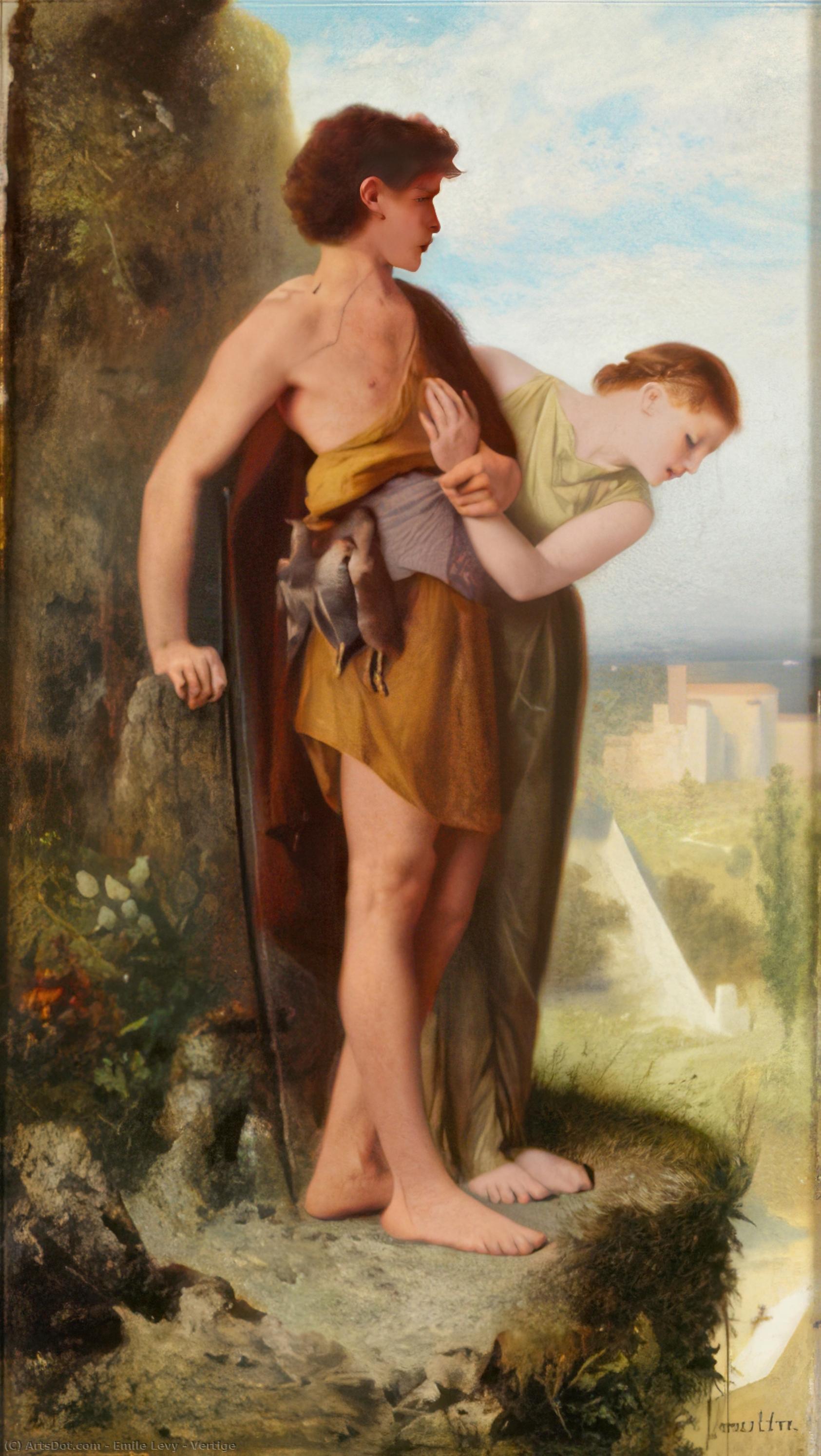
Vertige
Storlek på reproduktion


Émile Lévy, a French genre and portrait painter born in Paris on August 29, 1826, tragically passed away in 1890 at the young age of sixty-four. Despite his brief artistic career, Lévy left an indelible mark on the Impressionist movement, capturing fleeting moments of Parisian life with remarkable sensitivity and detail.
Lévy’s formative years were spent studying under François-Éouard Picot and Abel de Pujol at the École des Beaux-Arts in Paris. These influential teachers instilled in him a foundational understanding of classical technique alongside an appreciation for capturing atmospheric effects—a crucial element that would define his distinctive style.
His artistic breakthrough arrived with the prestigious Grand Prix de Rome in 1854, securing him considerable recognition and propelling him into the Parisian art scene. Immediately following his return from Italy, Lévy established himself as a dedicated portraitist, diligently documenting the faces of his era.
Lévy’s exhibitions at the Salon garnered critical acclaim, notably earning him a first-class medal in 1878 and subsequently receiving the Legion of Honor in 1867. Among his most celebrated works are “Noah cursing Canaan” (1855), depicting biblical drama with dramatic lighting and compositional dynamism; “Supper of the Martyrs” (1859), a poignant portrayal of religious devotion rendered with meticulous realism; “Death of Orpheus” (1866), housed in the Luxembourg Museum, showcasing his masterful handling of color and texture; “Love and folly” (1874); “Infancy” (1885); “The elements,” presented at the Ministry of State Salon, capturing the grandeur of nature; and “Presentation of the Virgin,” adorning Trinity Church in Paris.
Lévy’s artistic legacy resides primarily in his evocative depictions of everyday life—scenes from Parisian streets and interiors imbued with a palpable sense of atmosphere. His ability to convey emotion through subtle brushstrokes and nuanced tonal gradations cemented his position as a significant contributor to Impressionism, ensuring that his paintings continue to resonate with viewers today.
Despite his tragically short life span, Émile Lévy’s artistic vision endured, leaving behind a collection of paintings that offer invaluable glimpses into the spirit of Belle Époque Paris and exemplify the enduring power of Impressionist art.

1888 - 1890


Håll dig uppdaterad med de senaste konstnyheterna, exklusiva erbjudanden och inredningsidéer.
Berätta om ditt projekt så kommer våra konstexperter att ge dig 3 personliga konstförslag.
Vi skapar ett urval av 3 alternativ helt anpassat för dig – gratis!
 Dela
Dela


 Visa mer




































 Glasalternativet är endast tillgängligt i storlekar under 110 cm.


